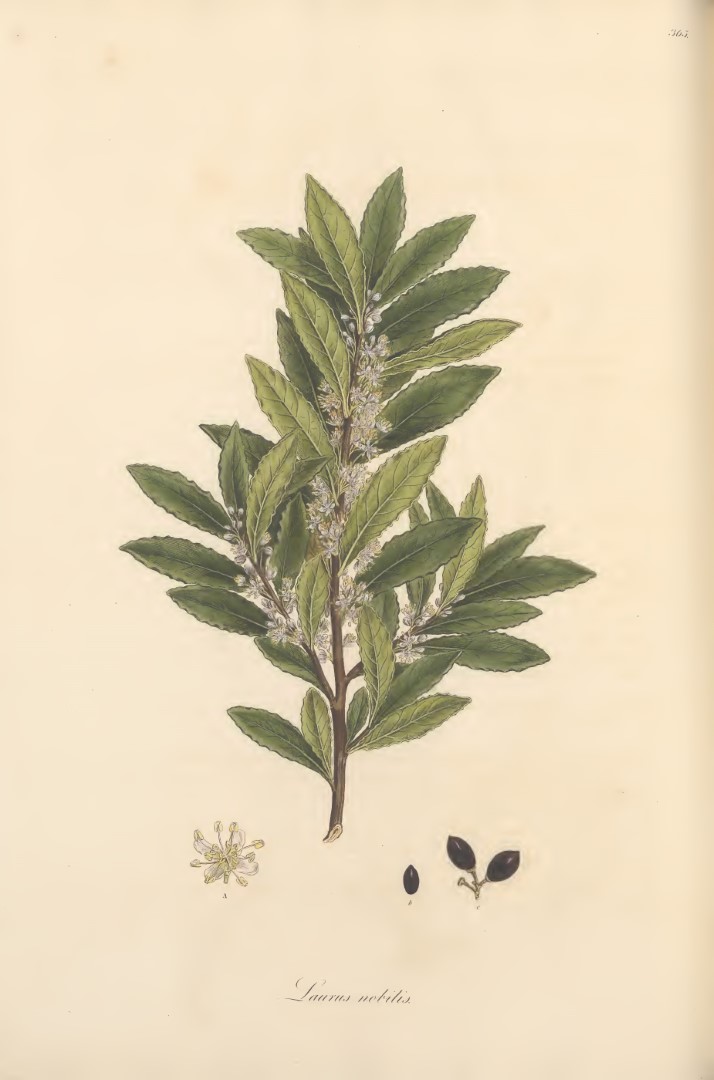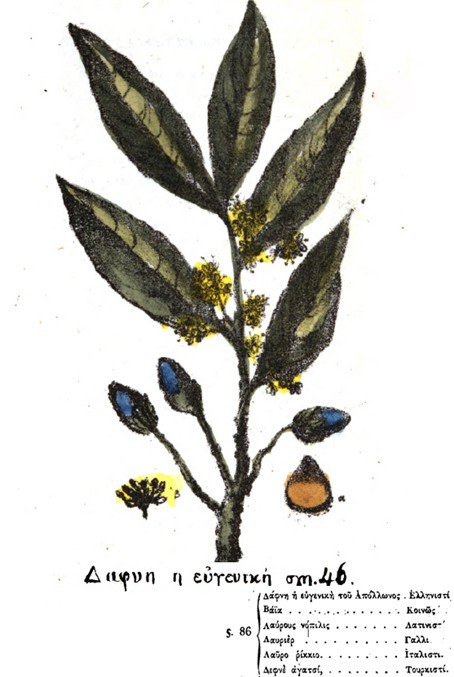


Laurus nobilis is classified as a Phanerophyte (P) and its habitat is defined as “Forests and woodlands/shrublands (W)”. Natural populations are found in rocky scrublands, ravines, and areas near water sources. The species thrives in sunny locations, is sensitive to frost and cold winds, and tolerates drought and atmospheric pollution.
(height, leaf arrangement, leaf shape, root system)
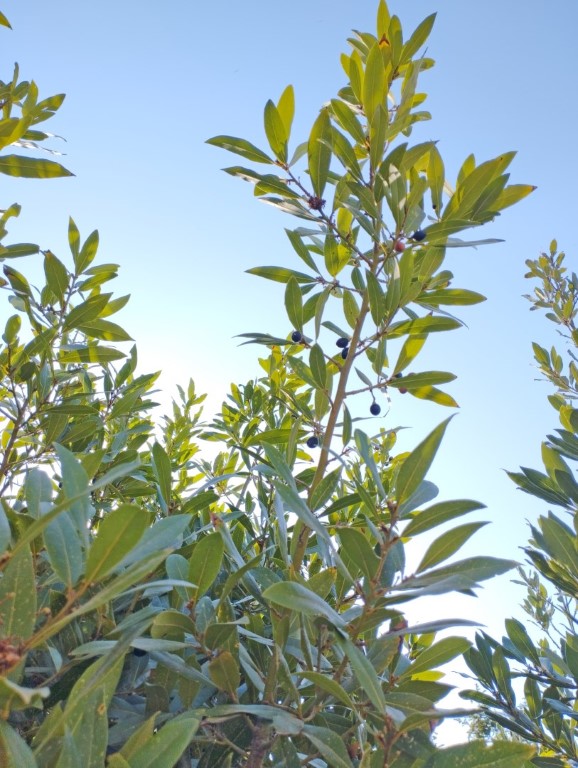
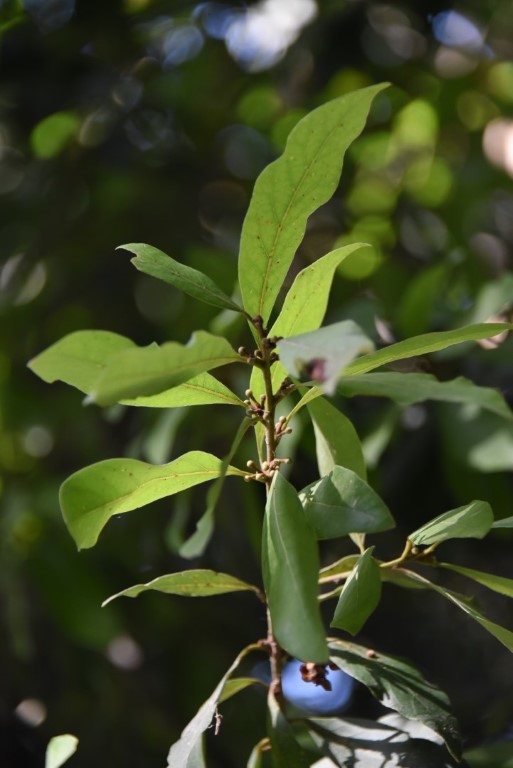
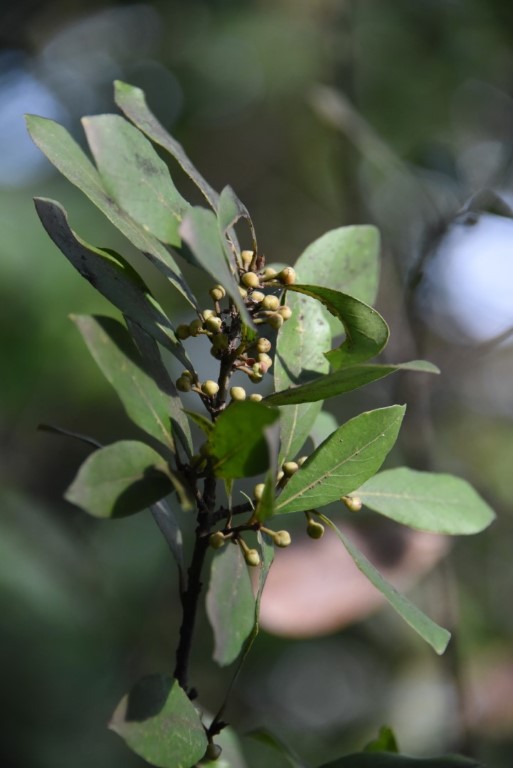
Evergreen shrubs or small trees that can reach a maximum height of up to 20 m, with dark brown bark and a dense canopy. The leaves are arranged alternately; they are simple, lanceolate, coriaceous (leathery), dark green in color, slightly undulate (wavy), and aromatic. The length of the leaf blade (lamina) ranges from 5 to 12 cm. They possess a shallow root system that spreads significantly along the horizontal soil axis.
(flowering period, flowers, seeds)
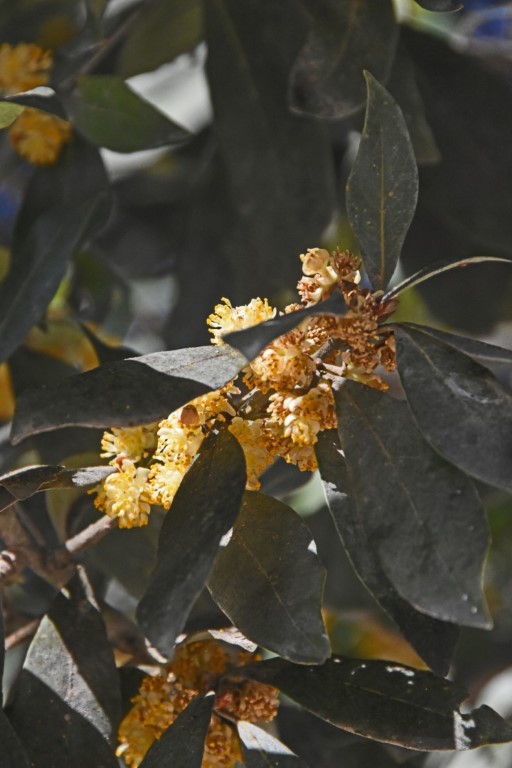
Dioecious species with small yellow or yellow-green flowers. The fruits are black, ovoid to ellipsoid, with a length of up to 2 cm and a width of 1 cm. They are classified as drupes, indicating that each fruit contains a single seed. The flowering season spans from April to May, followed by the fruiting period that extends into the summer months and continues into early autumn.
Laurel leaves are highly aromatic due to their substantial concentration of essential oil, which amounts to 2%.
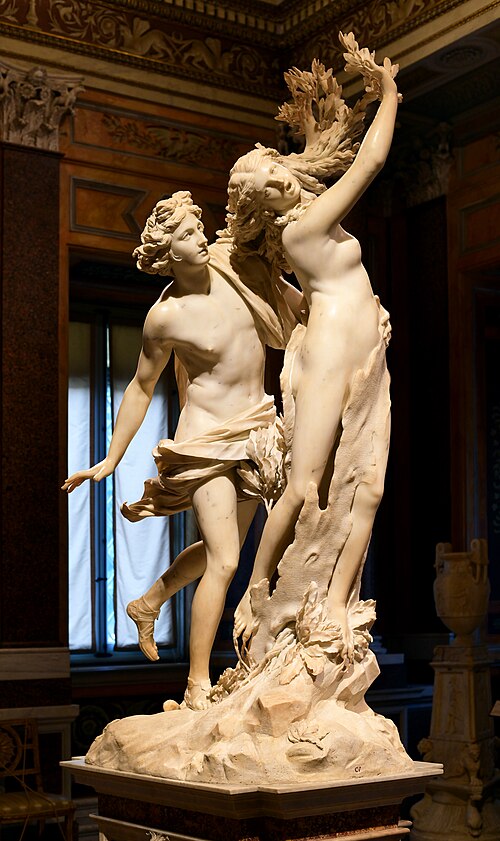
According to myth, Daphne (Laurel) was a nymph, daughter of the river-god Peneus (according to Ovid) or, according to others (Baumann), daughter of the river Ladon. The god Eros, wishing to teach the arrogant Apollo a lesson, struck him with his arrow, igniting within him an irresistible lust for the nymph Daphne. Despite her rare beauty, she possessed an untamable character and loathed the idea of submitting to any man. This aversion was not accidental; it was also the result of Eros’s intervention, who had been angered by Apollo’s arrogance when they met after the slaying of Python, the fearsome monster guarding Delphi. After Leucippus, son of King Oenomaus, who also claimed the nymph, was killed by Apollo through deceit, the god pursued her. His speed allowed him to catch up to her, and when he grasped her in his arms, Daphne invoked the help of her mother, Gaia (Earth). The earth then opened and the girl vanished within, leaving in her place a new tree: the laurel. Devastated, Apollo cut a branch, wove it into a wreath, and adorned his head. Since it was impossible to make her his wife, Apollo decided to designate the Daphne (Laurel) as his sacred tree. According to the Roman author Claudius Aelianus, the Oracle of Delphi was originally dedicated to the goddess Gaia. However, Apollo killed Python, the serpent-like son of Gaia who guarded the sanctuary. After cleansing himself of the blood in the nearby Vale of Tempe, he returned to Delphi a victor, wearing a wreath of laurel leaves on his head, and since then he is called “Daphnephoros” (Laurel-bearer).
Since then, the laurel became a symbol of victory and purification (catharsis). Victors of the games held in honor of Apollo, the famous Pythian Games, were awarded laurel wreaths, while priests fed the “immortal fire” at the Oracle of Delphi with wood and leaves from the laurel, as well as fir. The Pythia then entered a trance state through the smoke of these plants to deliver her oracles. Its branches were used for the cleansing of sacred spaces, the purification of homes following a person’s death, and the care of those seeking help from the gods.
The laurel, due to its close relationship with Apollo, was also used in the construction of the eiresione. This is a laurel wreath woven with wool, carried by singing boys during the Pyanepsia and Thargelia festivals, and subsequently hung on the house door, as mentioned by Aristophanes. The Pyanepsia was a festival, part of the Theseia, in ancient Athens in honor of Apollo. It involved a bloodless sacrifice of fruits and produce, the first fruits after the harvest (October-November). The Thargelia was the birthday festival of Apollo and Artemis held “in the city” in ancient Athens, during the season of fruit ripening (May-15 June).
The earliest known mention of the laurel tree appears in Homer’s Odyssey, where it is described as covering the Cyclops’ cave. Aeschylus also mentions that gods are honored with raised laurel branches. Ovid mentions the existence of laurels on Hymettus, and Pliny informs us in his writings that he encountered laurels, vines, and all fruits produced in Greece among the Astacani nation in the region of Bactria.
Pliny states in an entire chapter regarding the laurel that it is a symbol of peace, as when a branch is extended, it signifies a truce between enemies in war. For the Romans specifically, the laurel is a messenger of joyful news and victory, accompanying the general’s orders. Branches from this tree are deposited in the lap of Jupiter whenever a new victory brings universal joy, and this is not because the laurel is evergreen or because it represents peace, as in these areas the olive would have priority, but because it is the most beautiful tree of Parnassus, pleasing even to Apollo. He also describes that of all plants planted and kept in our homes, the bay tree is the only one never struck by lightning. It is even said that when lightning struck, Emperor Tiberius used to wear a laurel wreath to mitigate his fears of potential destructive consequences. Furthermore, he adds that the laurel and the olive are not allowed to be profaned for secular purposes, so much so that not even for the appeasement of gods should a fire be lit with them at any altar or oracle. And indeed, the laurel itself seems to react to such use: it crackles in the fire, expressing, in a way, its aversion to this treatment. Its wood, when consumed, is beneficial as medicine for internal diseases and tendon disorders.
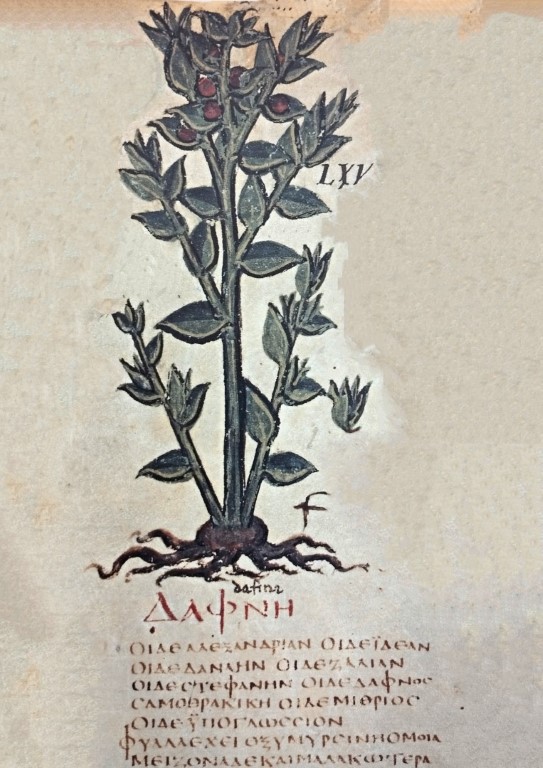
In ancient Greece and Rome, Laurus nobilis was not only honored for its beauty and religious significance, but it was also dedicated to Asclepius, the god of Medicine. They believed it could protect the world from evil spirits and that the drying up of a laurel tree presaged serious calamities. In therapeutic practice, Hippocrates used it as an analgesic after childbirth and for various gynecological problems. Additionally, laurel oil was believed to be effective in treating sterility. Dioscorides recommended consuming a decoction of its leaves for bladder and uterine conditions, its crushed fruits for asthma and tuberculosis, and their juice for cases of hearing loss and fatigue.
Laurus nobilis, a species renowned for its potent antiseptic properties, obtains its essential oil through distillation of its leaves. Chewing laurel fruits, which have a slightly bitter and intense taste, triggers a sensation of heat and increased saliva production due to the laurel oil they contain. On the market, laurel oil is commonly found as an essential oil derived from laurel leaves, often dissolved in olive oil. Renowned for its rich Vitamin E and fatty acid content, it is a popular traditional cosmetic product. Laurel oil’s emollient and moisturising properties protect and strengthen the hair structure, nourishing and strengthening it while imparting shine. Additionally, it is believed to contribute to hair loss prevention. This yellow-green oil exudes a robust aroma and is widely used in pharmaceutical industries, particularly for alleviating indigestion and loss of appetite. Beyond its medicinal uses, bay leaves are also utilised as condiments in cooking. In regions with a Mediterranean climate, bay trees thrive as ornamental plants.
(Note: Ethnobotanical data regarding the medicinal uses of plants must be handled with caution, and their application should be carried out exclusively under medical supervision).
- https://powo.science.kew.org
- https://www.worldfloraonline.org
- https://zeliosgi.gr
- https://www.votanikoparkoattikis.gr
- https://www.greekflora.gr
- https://temperate.theferns.info
- https://blog.metmuseum.org
- Dimopoulos P., Raus Th., Bergmeier E., Constantinidis Th., Iatrou G., Kokkini S., Strid A. & Tzanoudakis D. 2013: Vascular plants of Greece: An annotated checklist. – Berlin: Botanic Garden and Botanical Museum Berlin-Dahlem; Athens: Hellenic Botanical Society. – Englera 31. https://doi.org/10.3372/en.31
- Aelianus. “Varia Historia” 10.18.
- Aeschylus. “The Suppliants”, line 704.
- Aristophanes. “Plutus”, line 191.
- Aristophanes. “The Knights”, line 729.
- Athenaeus. “Deipnosophistae”, 4.17–18.
- Bauman, E. (1993). “Greek flora in myth, art, and literature” (P. Brousalēs, Trans.; 2nd ed.). Athens: Hellenic Society for the Protection of Nature. ISBN 9780008423506.
- Christodoulakis, N. S., & Gargeraki, K. E. (2023). “Plant stories with the scent of Greece” (2nd ed., revised). Broken Hill Publishers Ltd. ISBN 9789925351053.
- Dioscorides. “De Materia Medica” XLIX, CVI.
- Duhamel du Monceau, H.-L. (1755). “Traité des arbres et arbustes qui se cultivent en France en pleine terre”. Paris: H.L. Guerin & L.F. Delatour.
- Euripides. “Iphigenia in Tauris”, line 1234.
- Herodotus. “Histories”, 4.15.
- Hesiod. “Theogony”, line 29.
- Homer. “Odyssey”, Book 1, line 108.
- Ovidius. “Ars Amandi”, Book 3, lines 687–746.
- Ovidius. “Metamorphoses” 1.452–1.567.
- Pindar. “Pythian Odes”, 8.1.
- Pliny the Elder. “Natural History”, 6.23, 15.40.
- Pyrrhos, D. o. Thettalos. (1838). “Botanical Practice: Adapted to Medicine and Economy”. Athens: Angelos Angelidou Press.
- Sibthorp, J., & Smith, J. E. (1806–1840). “Flora Graeca” (Vols. 1–10). London: Taylor.
- Strabo. “Geographica”, 1.2.
- Theophrastus. “Characters”, 16.
During each season you will see:
References in Αrt
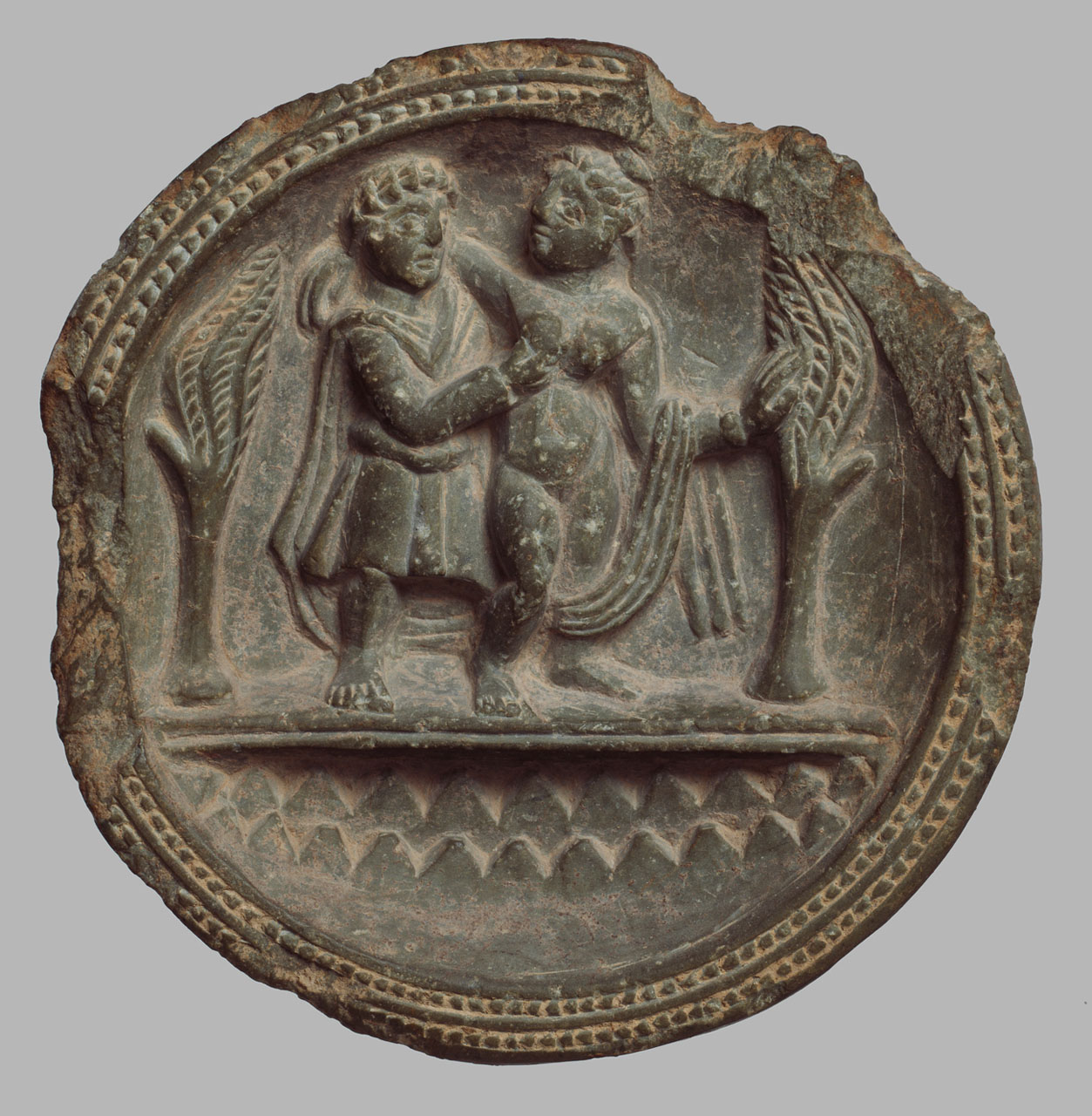
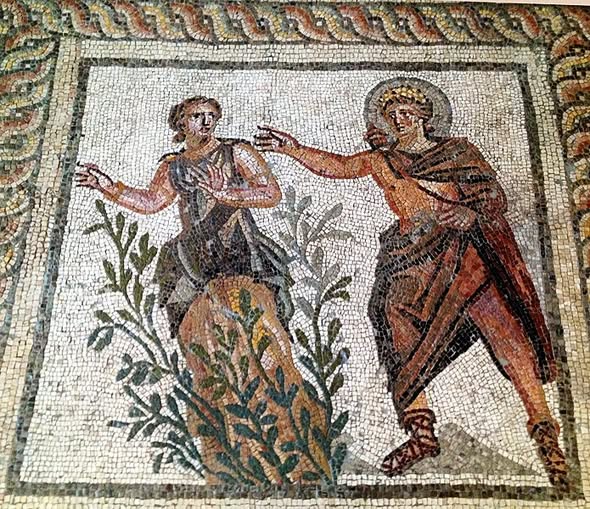
Due to its symbolic significance and connection with Greek mythology, the story of Daphne and Apollo is frequently presented in paintings and other works of art. Since antiquity, scenes of the myth have been depicted on vases and mosaics, while it has even been found on a schist plate from the 2nd century BC in Pakistan! The famous sculpture “Apollo and Daphne” by Bernini is exhibited at the Villa Borghese. The work “Daphne, Bucolic Tragedy in One Act” (Daphne, Bukolische Tragödie in einem Aufzug) is an opera by Richard Strauss, which premiered in 1938.
The laurel, as a sign of victory, was used in the relief decoration of the Altar of Peace, “Ara Pacis”, which had been erected by Augustus as a monument to the end of the civil war in Rome.