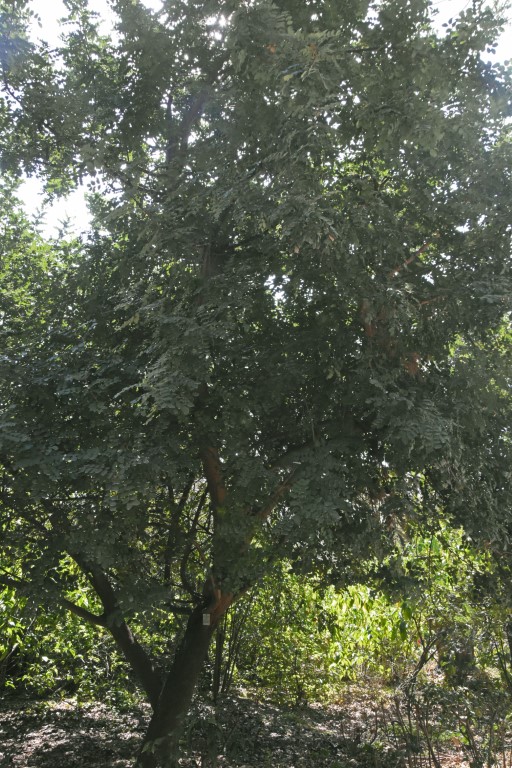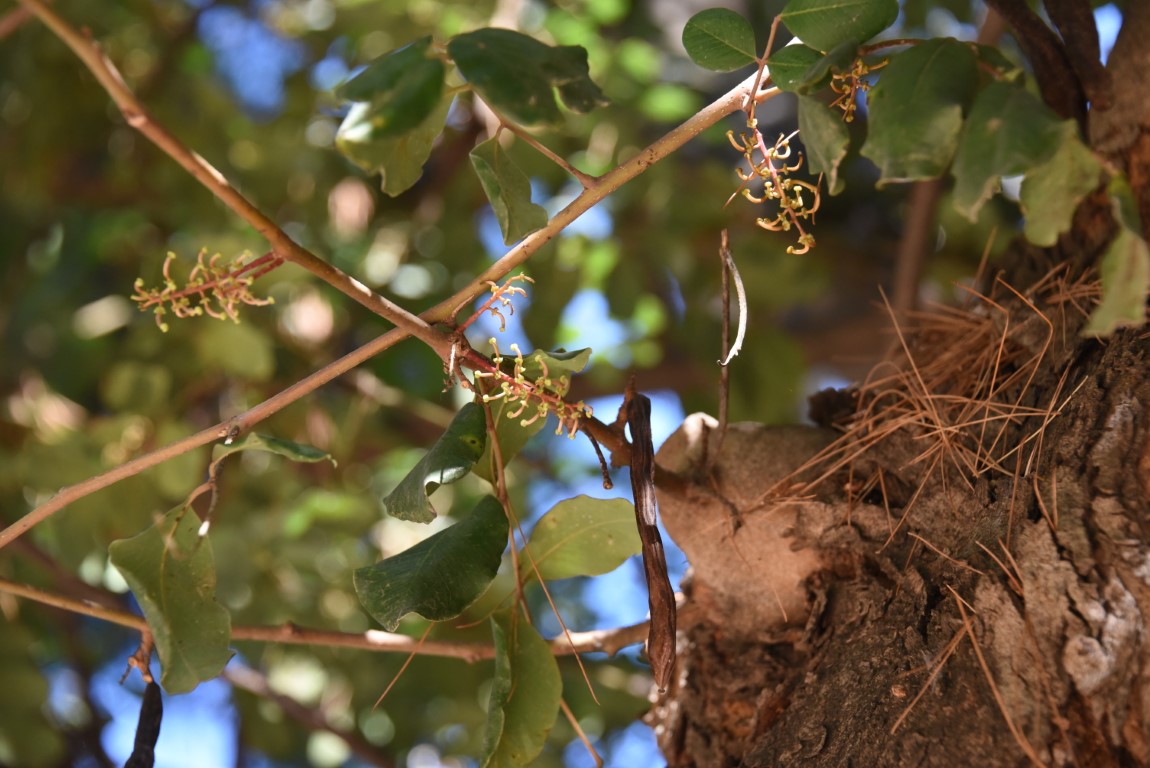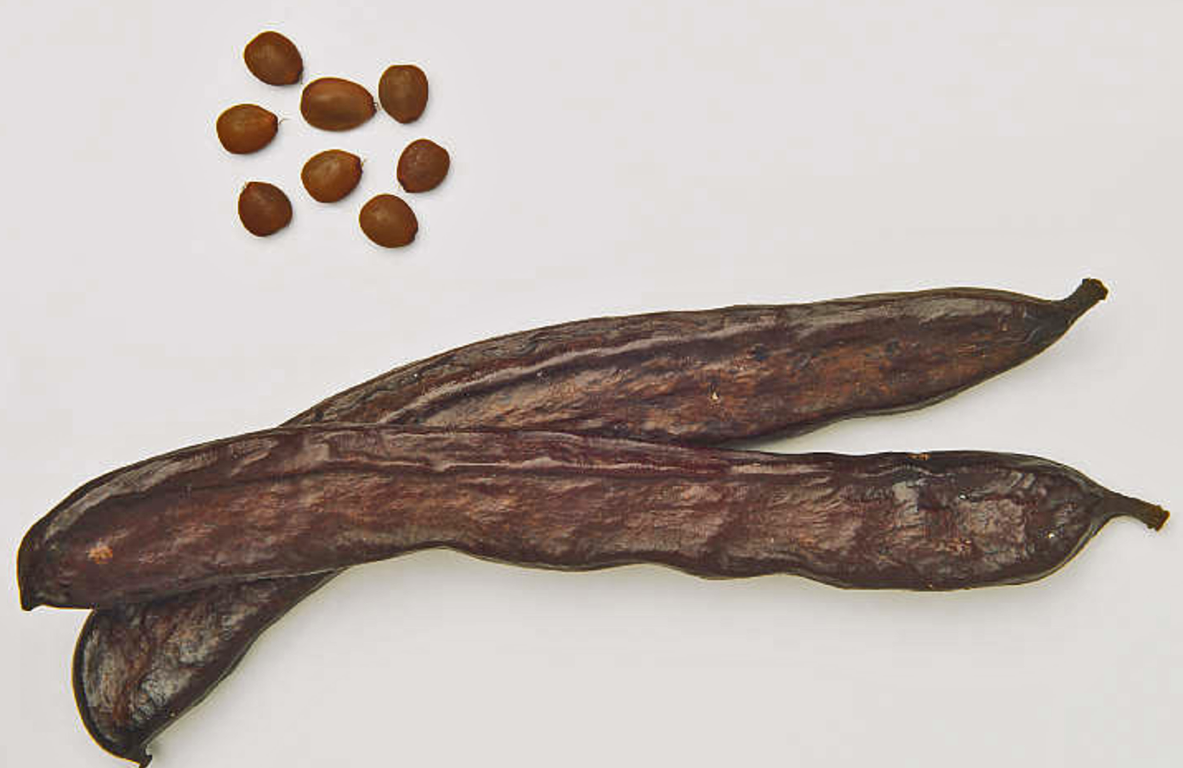


Classified as a “Phanerophyte (P)”. Its habitat is “Forests and shrublands (W)” and “Xeric Mediterranean phrygana and grasslands (P)”. It thrives in shrublands, rocky slopes, and rocky scrub. It is xeromorphic, a trait that makes it ideal for regions with heatwaves and droughts like the Mediterranean, where annual rainfall can amount to 250-500 mm. It does not have any requirements regarding soil composition and fertility.
(height, leaf arrangement, leaf shape, root system)
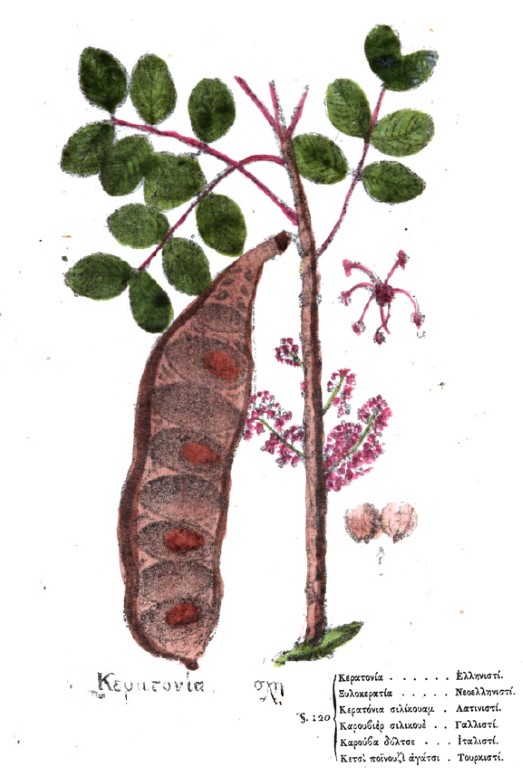
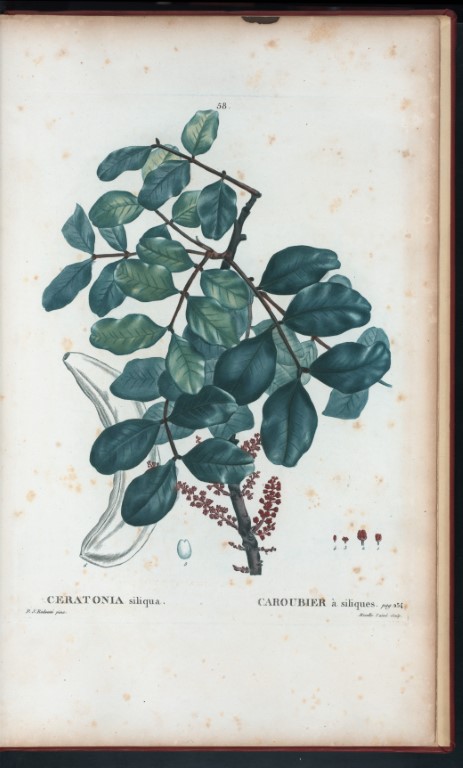
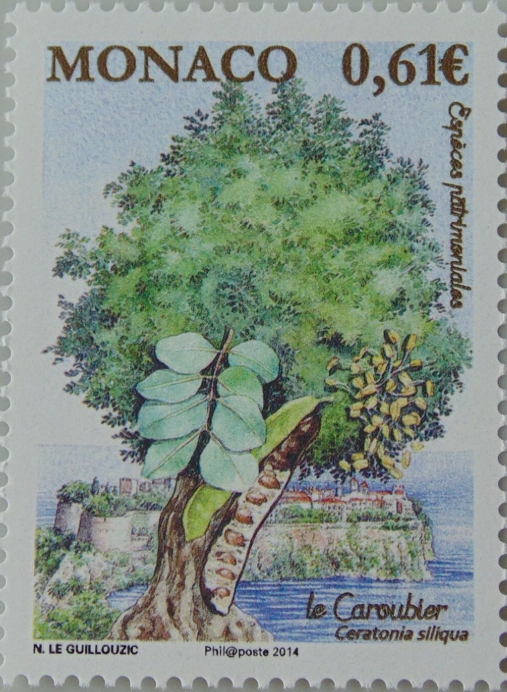
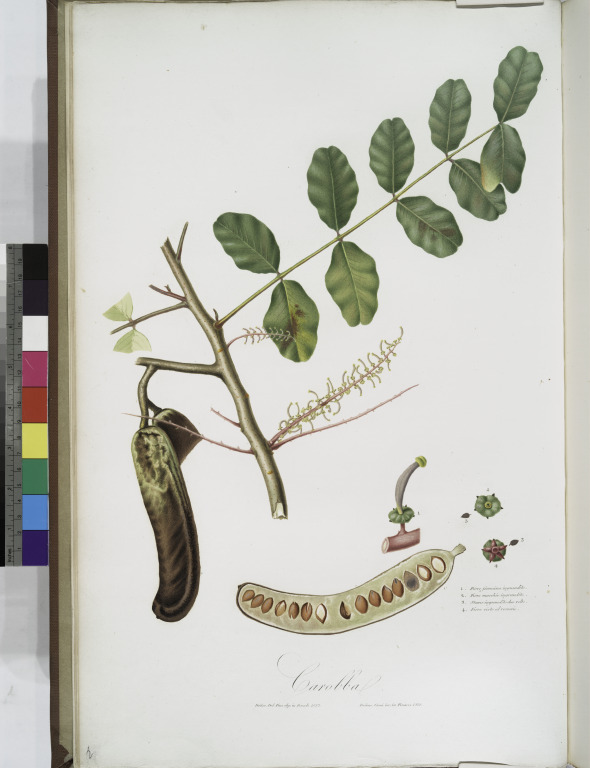
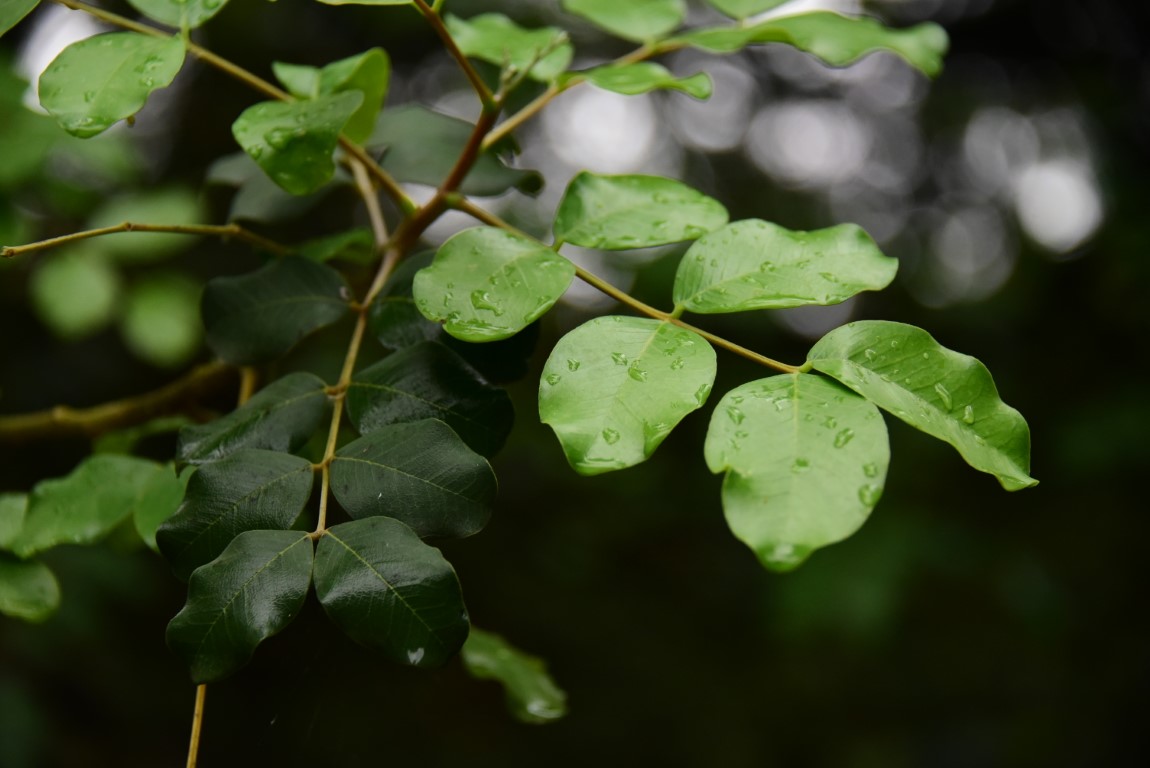
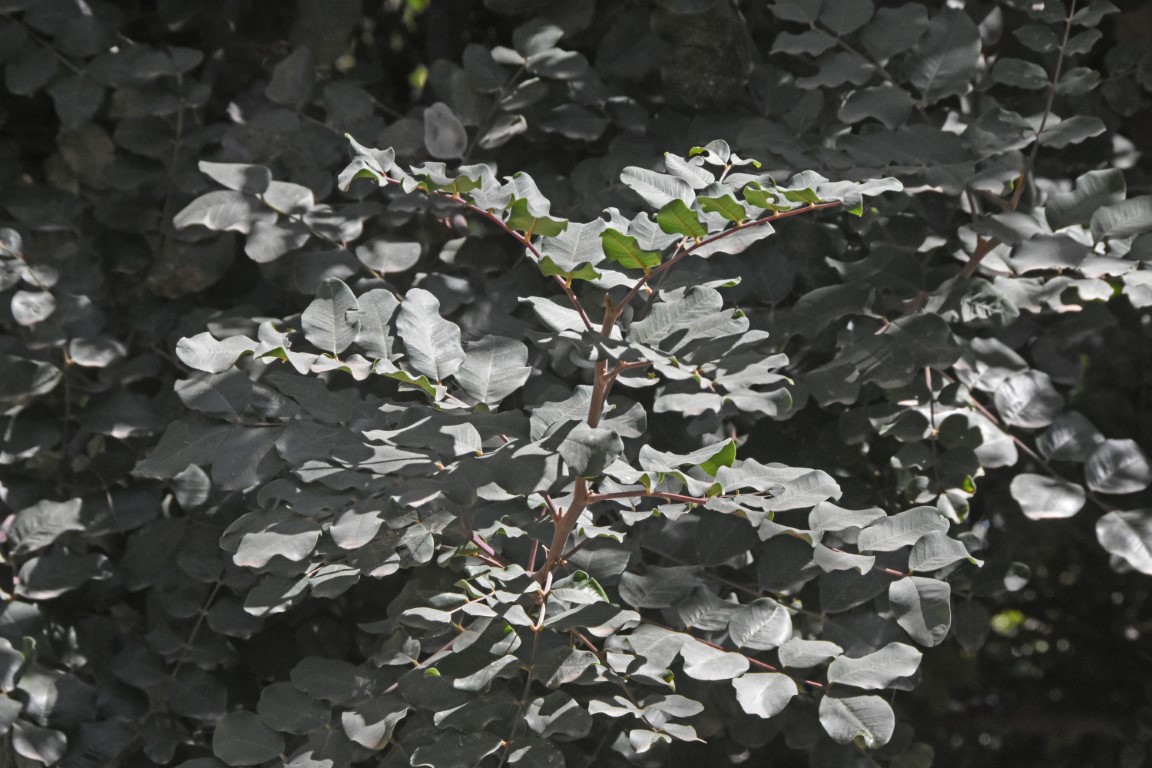
Evergreen tree that can attain a height of 10-17 m, with a hemispherical crown that can reach a width of up to 14 m and a thick and rough brown trunk. The leaves grow alternately, are compound, 10-20 cm in length, consisting of 4-8 leathery leaflets of obovate shape, with their abaxial (lower) surface having a dark green color and the adaxial (upper) surface a lighter green. The species has an extensive taproot system with lateral roots that can reach a depth of 18 m, allowing the tree to draw water from deep soil layers.
(flowering period, flowers, seeds)
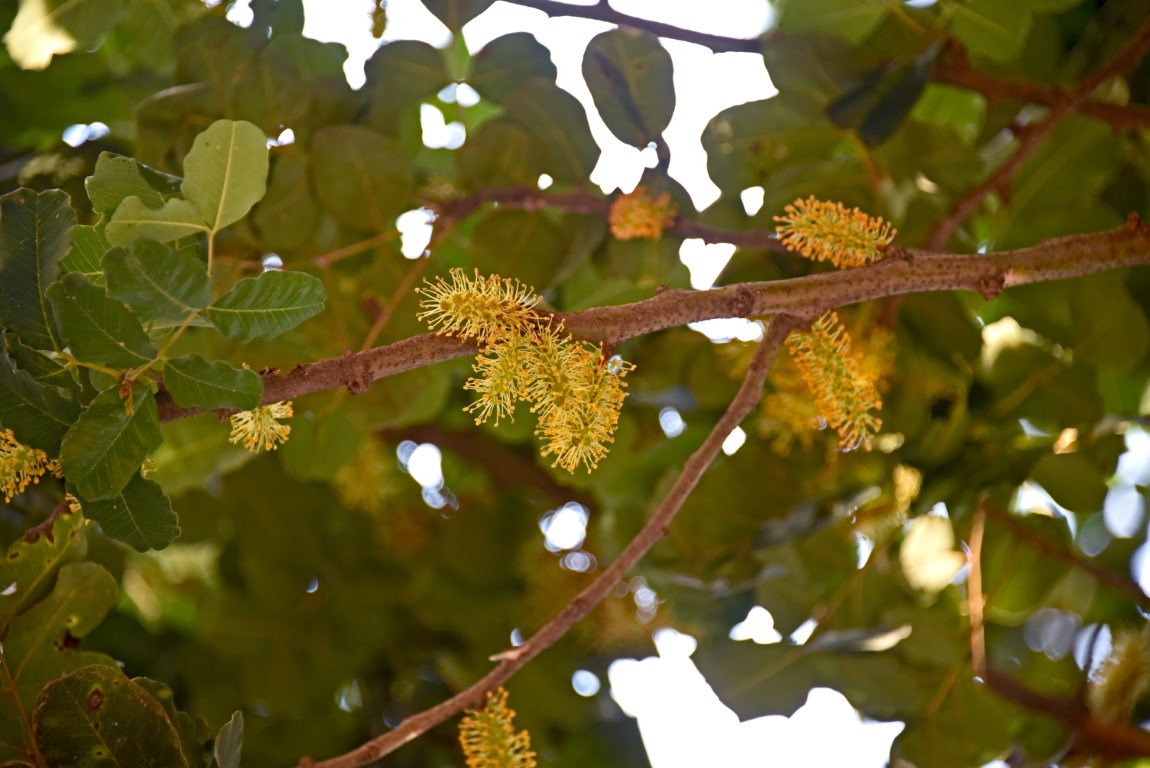
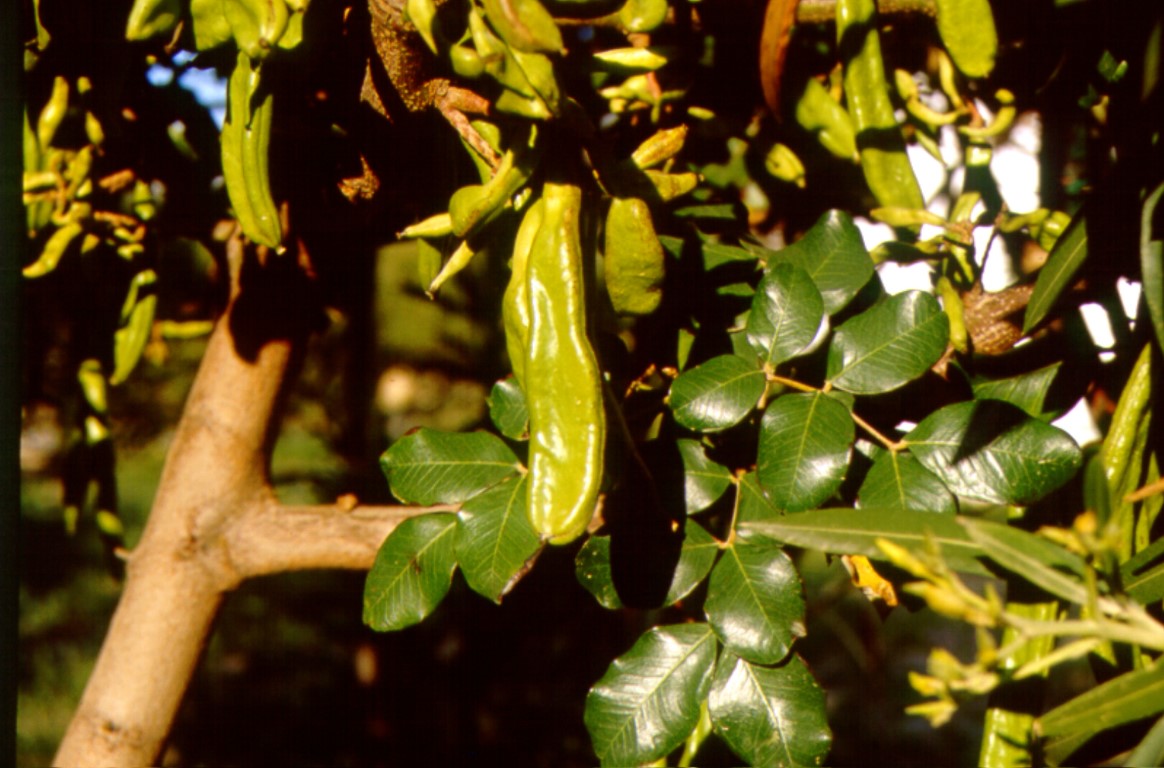
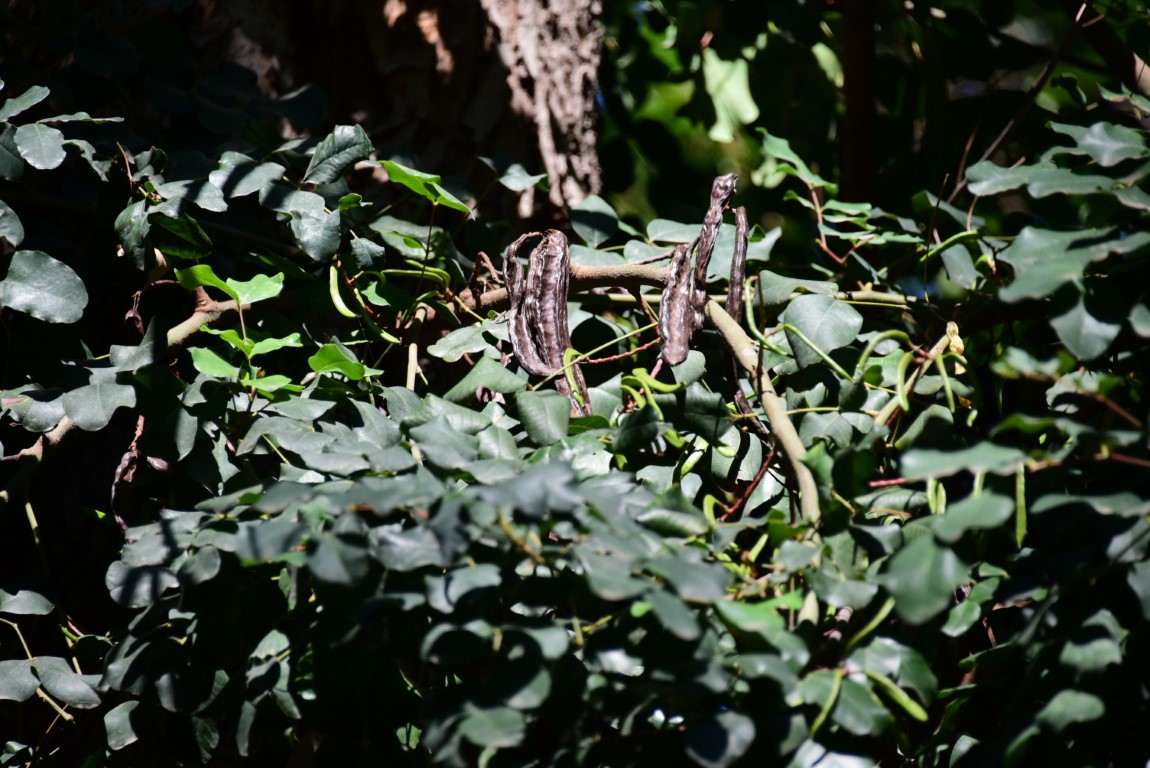
A dioecious species that is capable of reproducing vegetatively as well. The flowering period lasts from August to October. Initially, the flowers are hermaphroditic but later retain either the female or male reproductive organs. They are small (6-12 mm), yellowish-green or reddish in color, and organized in racemose inflorescences. Each fruit is a leathery legume, up to 30 cm long, containing 4-15 seeds of a brown hue.
The carat is the unit of measurement for gold and precious stones. Arab merchants used the seeds of the carob tree (kharoub in Arabic), due to their constant weight, to weigh spices and gold. It is speculated that the word “carat” comes from this use, as one carat corresponds to 0.200 g of gold, which is also the weight of one carob seed.
Carobs in ancient Greece were known as “keratia”. The species originates from the eastern Mediterranean. It was disseminated to other Mediterranean countries by the ancient Greeks, Phoenicians, and Romans and spread further, later on, by the Arabs during their conquests. The word “charoupi” (carob) is of Arabic origin and was spread to Greece by the Turks. Theophrastus notes that the carob tree is a species whose seeds are contained within a pod, but its fruits appear primarily on the trunk and less so on the branches—an unusual characteristic that distinguishes it from most trees, which bear fruit mainly at the tips of their branches. Furthermore, he mentions that the carob tree was also known by another name, such as the “Egyptian fig,” indicating that it was recognized by different peoples and across various regions. Strabo, describing Egypt, mentions that in the areas around the Nile, carobs are found in abundance together with palm trees and ebony.
Pliny mentions that the Ionians called the carob tree “keraunion”, and many mistakenly connected it with the Egyptian fig. He gives information that it thrives in Egypt, Syria, and Ionia, near Knidos and the island of Rhodes, and describes the plant: “The tree is always covered with leaves and bears white flowers with a very strong smell. It develops shoots at the lower part of the trunk, causing the surface to take on a yellow color, as the new shoots absorb the necessary moisture from the trunk. When the fruits of the previous year are collected, approximately at the rising of the Dog Star (Sirius), new fruits appear immediately. Subsequently, the tree blooms while the constellation of Arcturus is above the horizon, and Winter offers nourishment to the fruits”.
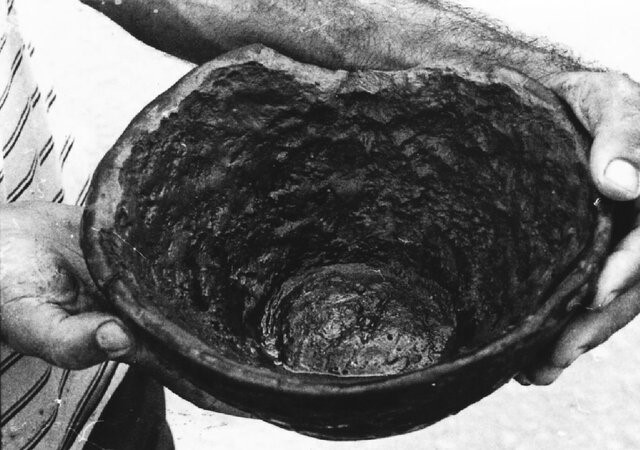
Dioscorides describes those fresh carobs (“keratia”), when consumed, have an unpleasant taste and cause loosening of the belly. Dried carobs, conversely, are more pleasant in taste and have diuretic properties, especially when the hard shell has been removed. During the 1989 excavations in Israel, in the Kfar Samir area, a storage container made of carob wood was discovered. It dates back to the 14th century BCE.
According to Gospel passages, the Evangelist John in the desert fed on carobs and a viscous wild honey (carob honey/syrup). Finally, the reference in the parable of the Prodigal Son (Luke) is characteristic, describing the desperate situation of the son who, having squandered his inheritance, was so hungry that he desired to eat the pods of the carob tree that the pigs ate, but no one gave him anything! Indeed, to this day, carobs constitute food for pigs!
During the German – Italian occupation, carob flour and carob syrup saved thousands of Greeks from starvation.
The carob tree constitutes a valuable plant from an industrial perspective as well. Its leaves, and particularly their peels, contain significant tannins. The extract of its fruits, known as carob syrup, is rich in sugars and has not only supported entire populations in times of famine, such as during the German occupation, but is also used today in varied applications, mainly for the preparation of alcoholic beverages. The seeds of the carob tree are ground to yield carob flour, rich in nutrients and excellent animal feed. From this, a tasty soup is also prepared. The seeds are used to produce cellulose, which is intended mainly for the industry of manufacturing photographic plates and films, but finds application in other sectors as well. Furthermore, various parts of the seed are utilized to produce tannins, dyes, and adhesives. From the seeds themselves, oil is produced which is used in soap making. The thick and translucent endosperm of the seeds contains galactomannans, which as a natural product constitute today the only permitted bulking agent and stabilizer with extensive use in the ice cream industry and other foods. Finally, the wood of the carob tree is used to produce quality charcoal, while its heartwood, hard and heavy, has been utilized in wood carving and furniture making since ancient times. The leaves of the carob tree are highly resistant to pollution and extreme temperatures, making it a resilient species suitable for urban planting and for reforestation in areas affected by wildfires.
(Note: Ethnobotanical data regarding the medicinal uses of plants must be handled with caution, and their application should be carried out exclusively under medical supervision).
- Christodoulakis, N. S., & Gargeraki, K. E. (2023). Plant stories with the scent of Greece (2nd ed., rev.). Broken Hill Publishers Ltd.
- Dimopoulos, P., Raus, Th., Bergmeier, E., Constantinidis, Th., Iatrou, G., Kokkini, S., Strid, A., & Tzanoudakis, D. (2013). Vascular plants of Greece: An annotated checklist. Botanic Garden and Botanical Museum Berlin-Dahlem; Hellenic Botanical Society. https://doi.org/10.3372/en.31
- Dioscorides, “De material medica”, CLVIII
- Duhamel du Monceau, M. (1801). Traité des arbres et arbustes qui se cultivent en France en pleine terre. Chez Didot ainé, Michel, et Lamy.
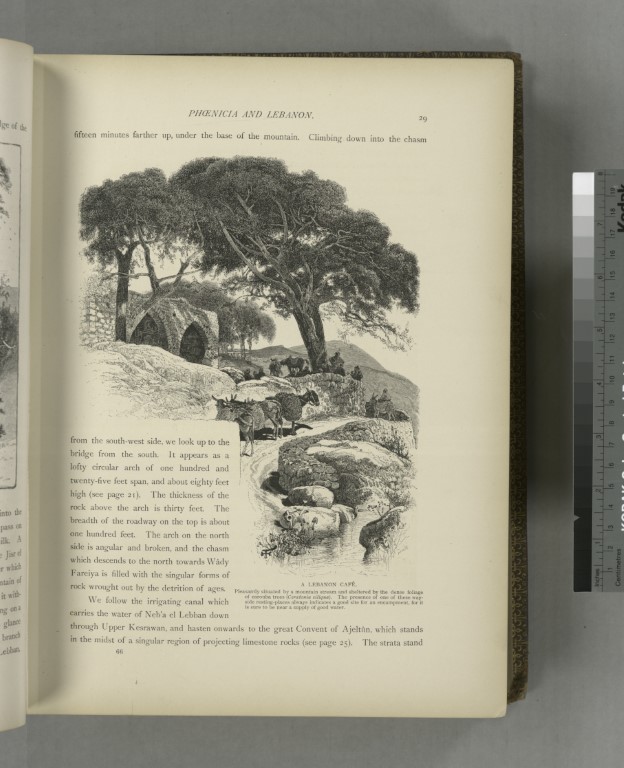
- Fenn, H. (1881). A Lebanon café [Wood engraving]. In Picturesque Palestine, Sinai and Egypt (p. 29). D. Appleton and Company.
- Gallesio, G. (1820). Pomona italiana: Trattato degli alberi fruttiferi contenente la descrizione delle migliori varietà dei frutti coltivati in Italia, accompagnato da figure disegnate e colorite sul vero. Niccolò Capurro.
- Galili, E., Rosen, B., Evron, M. W., Hershkovitz, I., Eshed, V., & Horwitz, L. K. (2020). Israel: Submerged prehistoric sites and settlements on the Mediterranean coastline—the current state of the art. In G. Bailey, N. Galanidou, H. Peeters, H. Jöns, & M. Mennenga (Eds.), The archaeology of Europe’s drowned landscapes (Coastal Research Library, Vol. 35, pp. 429–450). Springer. https://doi.org/10.1007/978-3-030-37367-2_23
- Heldreich, T. von (1925). Popular names of plants scientifically identified. Ioannis D. Kollaros, Estia Bookstore.
- Luke 15:16 (King James Bible, 1769/2017). [Ή την έκδοση που χρησιμοποιείτε].
- Mahdad, Y. M., & Gaouar, S. B. S. (2023). Origin, distribution and domestication of the carob tree (Ceratonia siliqua L.). Turkish Journal of Botany, 47(2), 89–96. https://doi.org/10.55730/1300-008x.2748
- Mark 1:6.
- Matthew 3:4.
- Menconi, M. E., Abbate, R., & Grohmann, D. (2024). Exploring the uses and landscape value of Ceratonia siliqua L.: A systematic review. Forests, Trees and Livelihoods, 33(3), 231–247. https://doi.org/10.1080/14728028.2024.2346725
- Plinius secundus, “Naturalis Historia”, 13.16, 15.26.1, 17.30.4, 23.79.1
- Pyrrhus of Thessaly. (1838). Botanical practice: Adapted to medicine and economy. Angelos Angelidou Press.
- Sorolla y Bastida, J. (1899). Carob tree (Algarrobo) [Oil on canvas]. Christie’s. https://www.christies.com
- Stefi, A. L., Kalampokis, E., Ntroumpogianni, G. C., Katsiadrami, I., Nikou, T., Katsifas, E. A., Gkikas, D., Christodoulakis, N. S., & Halabalaki, M. (2025). The impact of temperature on the leaves of Ceratonia siliqua L.: Anatomical aspect, secondary metabolite analysis, and antimicrobial activity of the extracts. Plants, 14(4), 557. https://doi.org/10.3390/plants14040557
- Strabo, “Geography”, 17.2
- Theophrastus. “Enquiry into Plants”, 1.11.2, 1.14.2, 4.2.4
- Turnbull, L. A., Santamaria, L., Martorell, T., Rallo, J., & Hector, A. (2006). Seed size variability: From carob to carats. Biology Letters, 2(3), 397–400. https://doi.org/10.1098/rsbl.2006.0476
During each season you will see:
References in Αrt
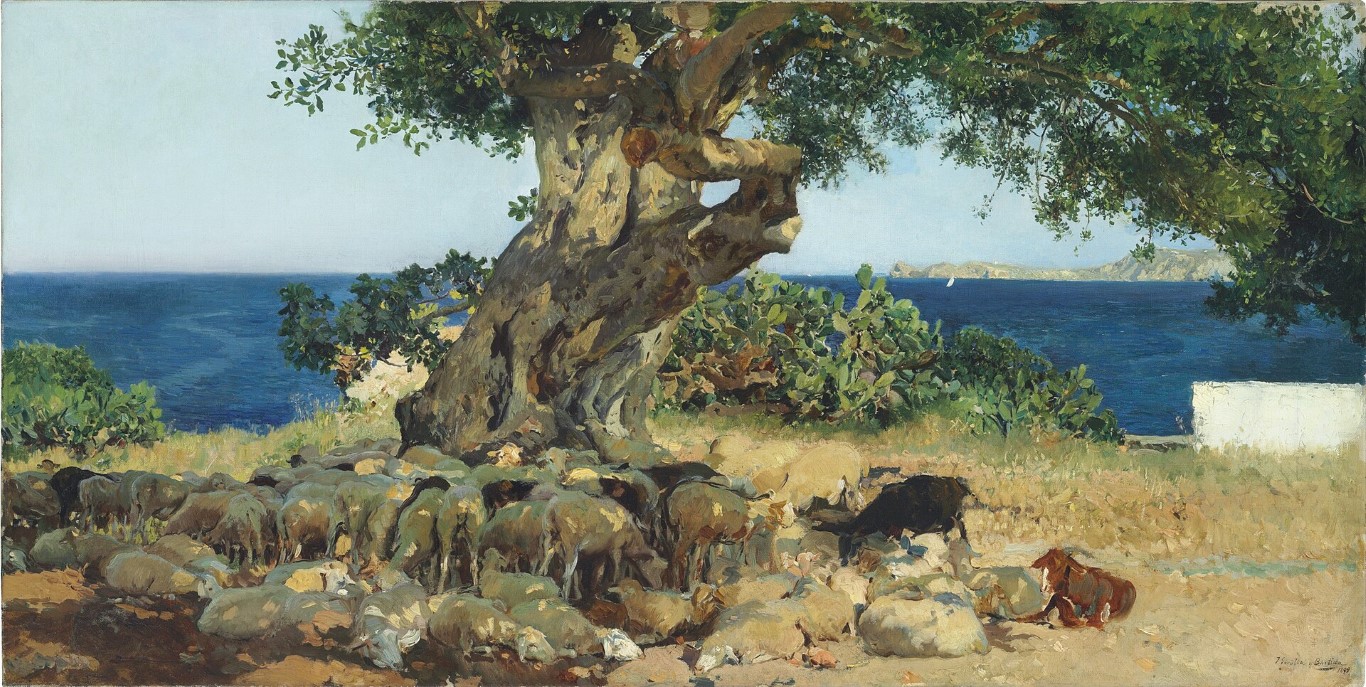
Trees of the species are frequently encountered in paintings, while references to the species are also made in poems. One of the most famous examples is the painting by the Spanish painter Joaquín Sorolla titled “Algarrobo”, which translates to Greek as Carob Tree.