

Classified as a “Phanerophyte (P)”. Its habitat is “Forests and shrublands (W)”. It can also be observed in areas with maquis vegetation.
(height, leaf arrangement, leaf shape, root system)
Deciduous shrub or small tree that can reach a height of up to 10 m. The trunk has a dark grey hue and shallow grooves. The leaves are simple, petiolate, and arranged alternately. They are heart-shaped, glabrous, 6-10 cm long and up to 12 cm wide. The species has a deep root system that makes it drought resistant, as the roots can draw water from the lower soil layers; They are also particularly thick, providing stability to the trees and allowing them to grow even on rocky substrates.
(flowering period, flowers, seeds)
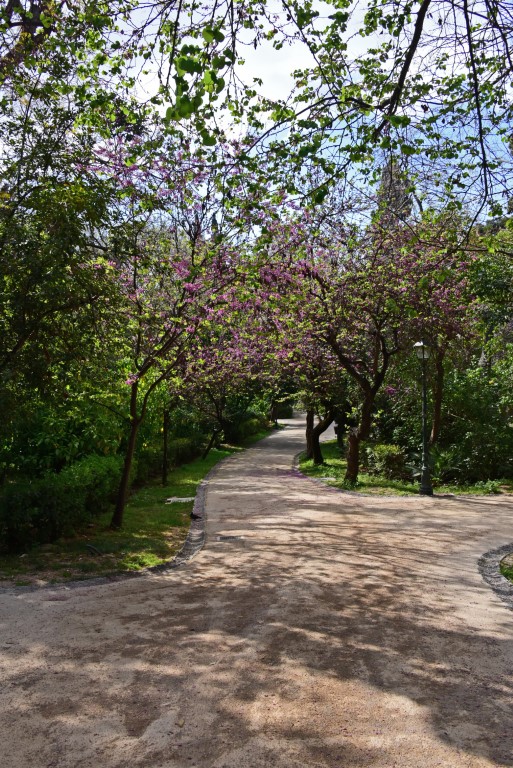
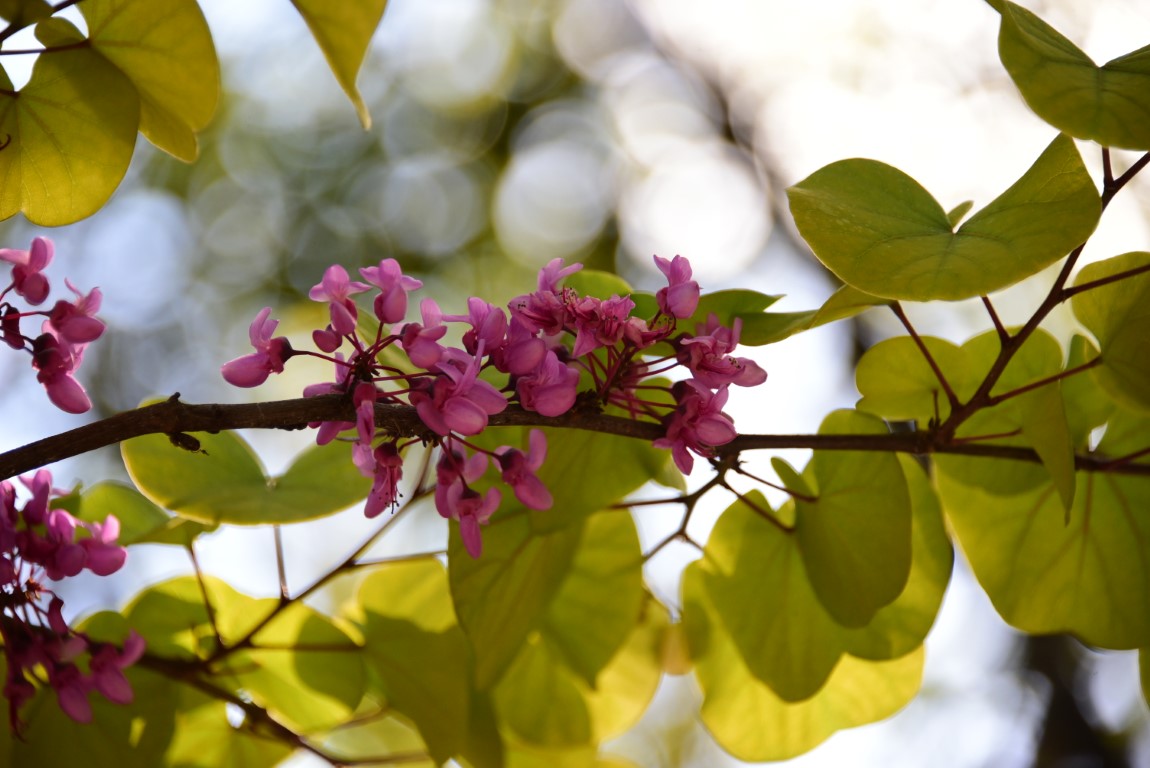
The Judas tree is a monoecious species with flowers containing both male and female reproductive organs. These pink-violet flowers are 1-2 centimetres long and typically grow on the trunk and branches in dense racemose inflorescences. The flowering period lasts from March to April.
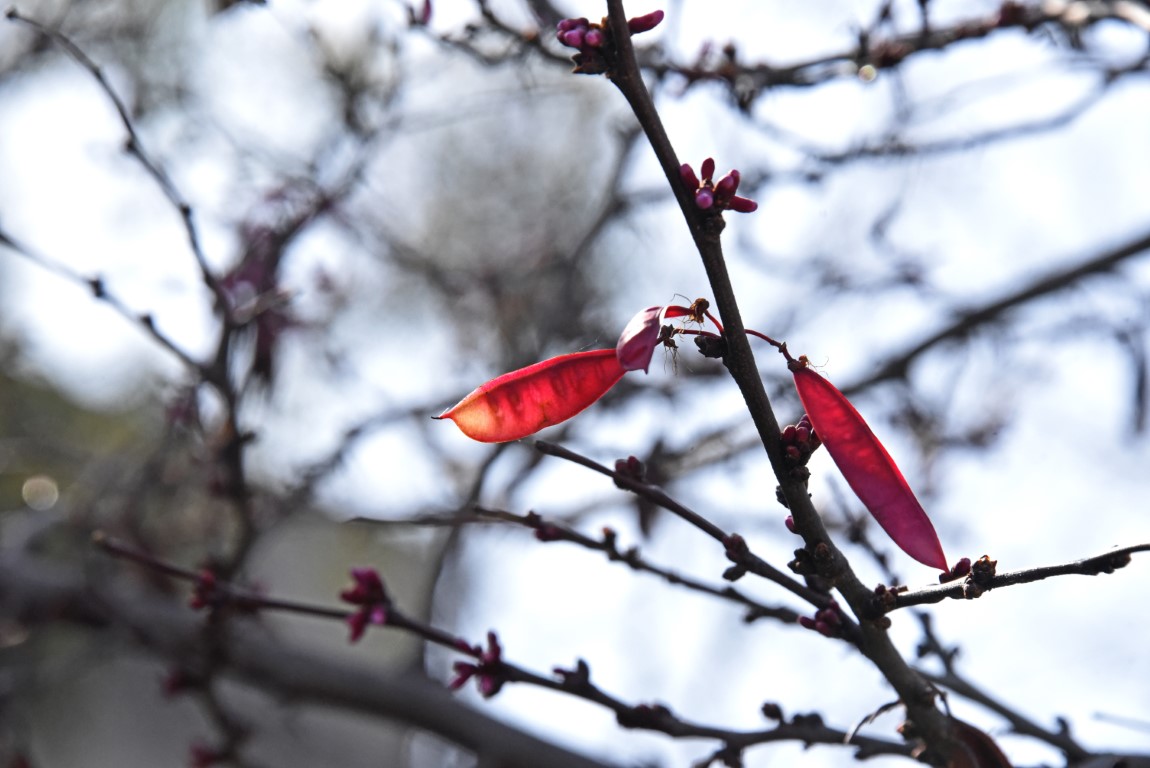
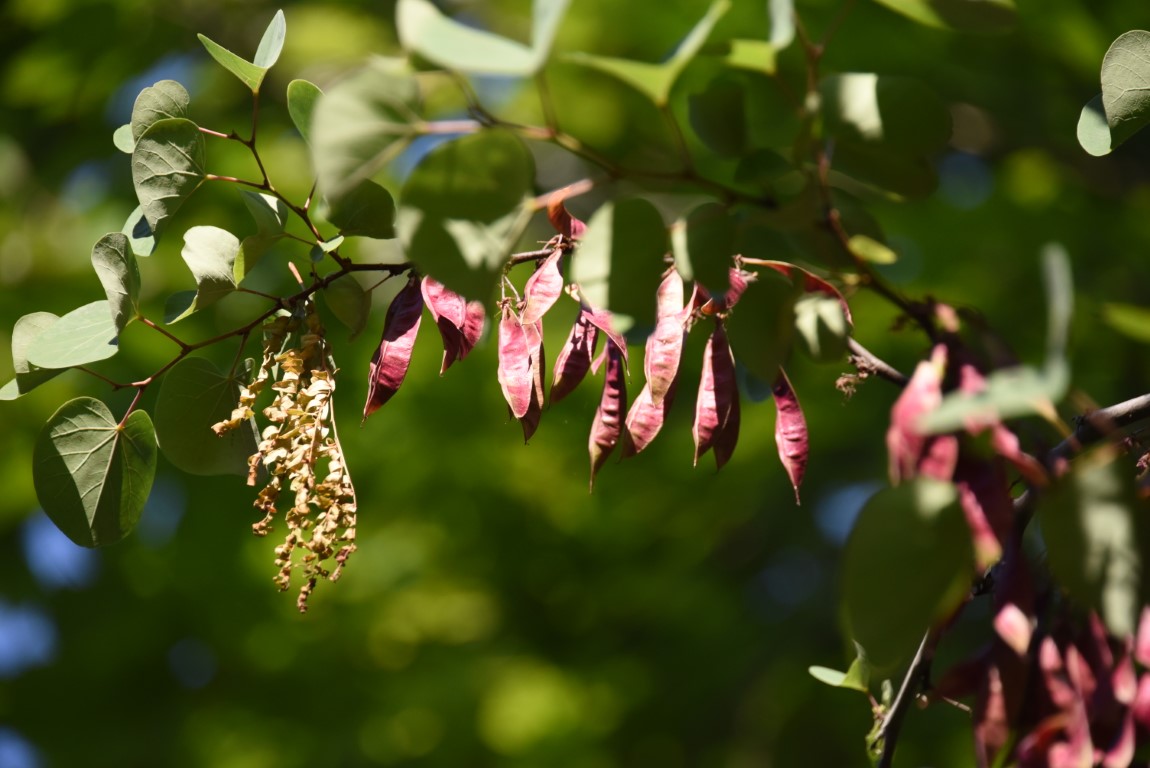
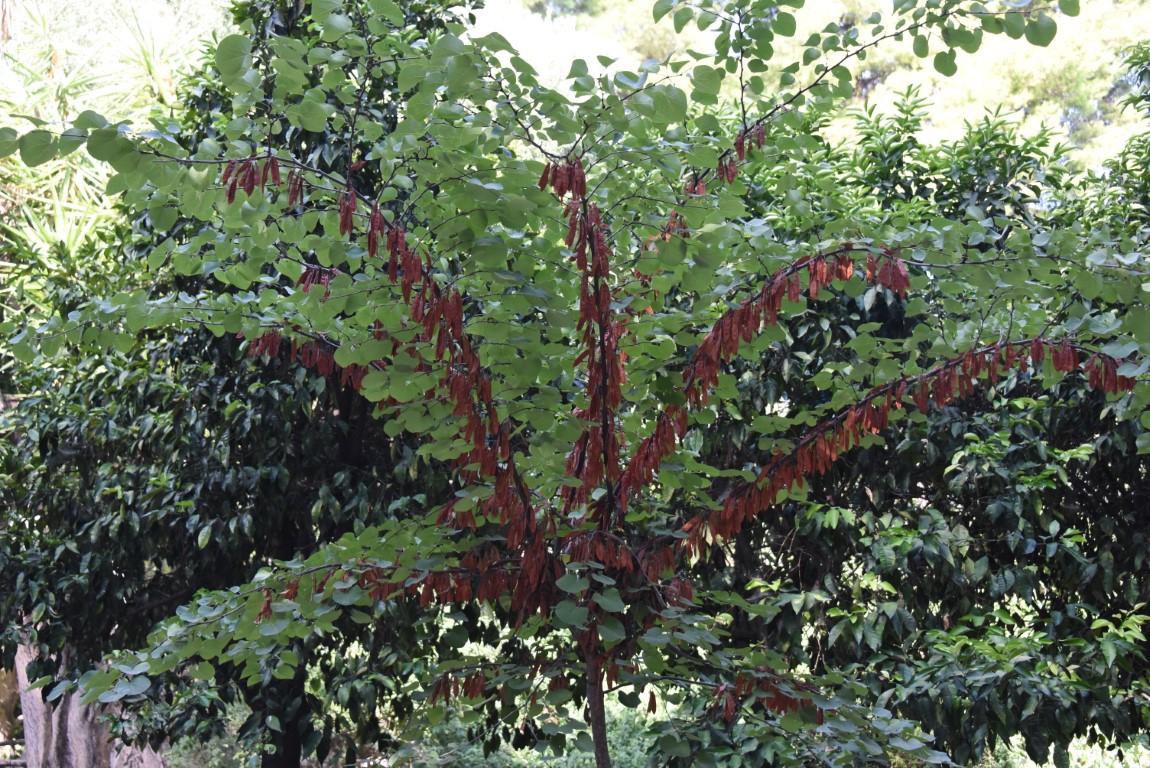
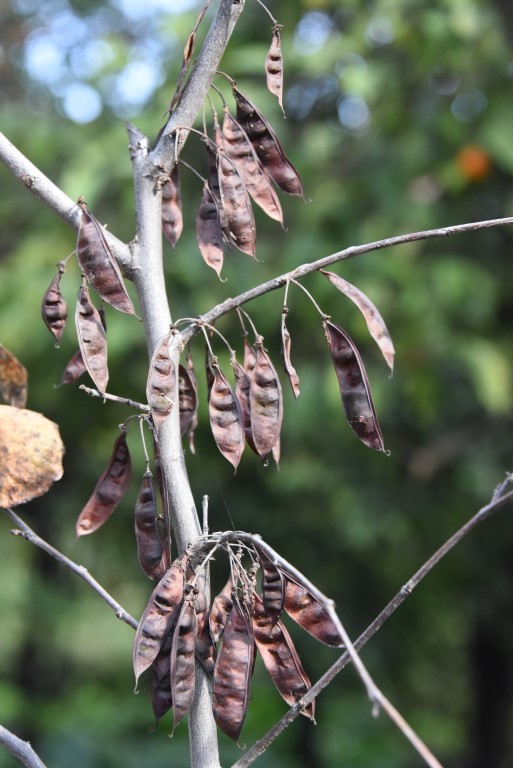
The fruits of the species are pods, initially green, that upon maturation become dark brown. They remain on the tree for quite a long time, as the seeds they contain ripen early in the autumn.
Trees of this species stand out due to their vivid flowers, which usually appear before the leaves and cover almost the entire plant.
The Judas tree is a plant that has existed since antiquity in Mediterranean states, although it was first officially recorded by Carl Linnaeus in 1753 in his work “Species Plantarum”. Fossils from the Late Eocene to the Miocene in North America and Asia indicate that the genus was widely distributed, with small leaves suggesting adaptation to semi-arid regions and Mediterranean-type environments. Today, however, the plant prefers warm and subtropical temperate climates, grows in well-drained soils, and is often found in sunny or partially shaded locations. Its scientific name, Cercis siliquastrum, comes from the Greek word “ κερκίς – kerkis”, which describes the shape of the lobed fruit and resembles a loom accessory (shuttle), which, in fact, was often made from Judas tree wood. The specific epithet “siliqua,” which means pod, also describes, in Latin this time, the lobed fruits of the species. The lobed fruit was first described by Theophrastus, who also mentioned the usefulness of Judas tree wood for creating walking sticks. In antiquity and the Middle Ages, the vivid pink-purple color of the flowers and the heart-shaped form of the leaves were associated with love and romance. The popular name “Judas Tree” is related to the legend that Judas Iscariot hanged himself from a Judas tree (“and he went and hanged himself”) after betraying Christ, and that its flowers, which used to be white, turned pink from shame. The belief that Judas hanged himself from the tree Cercis siliquastrum, causing its flowers to turn red from shame, likely stems from a translation error. Cercis trees, which are common in the Middle East, were referred to in French as «arbre de Judée», meaning “tree of Judea”. Over time, this may have been distorted into “Judas tree”.
Trees of this species are frequently planted as ornamentals in gardens, parks, and along sidewalks. Its multiple methods of propagation—primarily through seeds with appropriate treatment, as well as the possibility of propagation via grafting—allow for widespread use in nurseries and ornamental plantings. Beyond its aesthetic value in parks, gardens, and streets, the bark and leaves of the tree have been studied for their ability to accumulate heavy metals such as Cr, Ni, and Fe, making it potentially useful as a bioindicator of pollution in urban environments. This property enables the assessment of contamination from both atmospheric and soil sources.
(Note: Ethnobotanical data regarding the medicinal uses of plants must be handled with caution, and their application should be carried out exclusively under medical supervision).
- https://powo.science.kew.org
- https://www.worldfloraonline.org
- Dimopoulos P., Raus Th., Bergmeier E., Constantinidis Th., Iatrou G., Kokkini S., Strid A. & Tzanoudakis D. 2013: Vascular plants of Greece: An annotated checklist. – Berlin: Botanic Garden and Botanical Museum Berlin-Dahlem; Athens: Hellenic Botanical Society. – Englera 31. https://doi.org/10.3372/en.31
- Duhamel du Monceau, M. (1801). “Traité des arbres et arbustes qui se cultivent en France en pleine terre”. Paris: Chez Didot ainé, Michel, et Lamy.
- Geneve, R. L. (1991). Eastern redbud (Cercis canadensis L.) and Judas tree (Cercis siliquastrum L.). In Y. P. S. Bajaj (Ed.), Trees III (Vol. 16, pp. 142–151). Springer. https://doi.org/10.1007/978‑3‑662‑13231‑9_8
- Jia, H., & Manchester, S. R. (2014). Fossil leaves and fruits of Cercis L. (Leguminosae) from the Eocene of western North America. International Journal of Plant Sciences, 175(5), 601–612. https://doi.org/10.1086/675693
- Matthew, 27:5
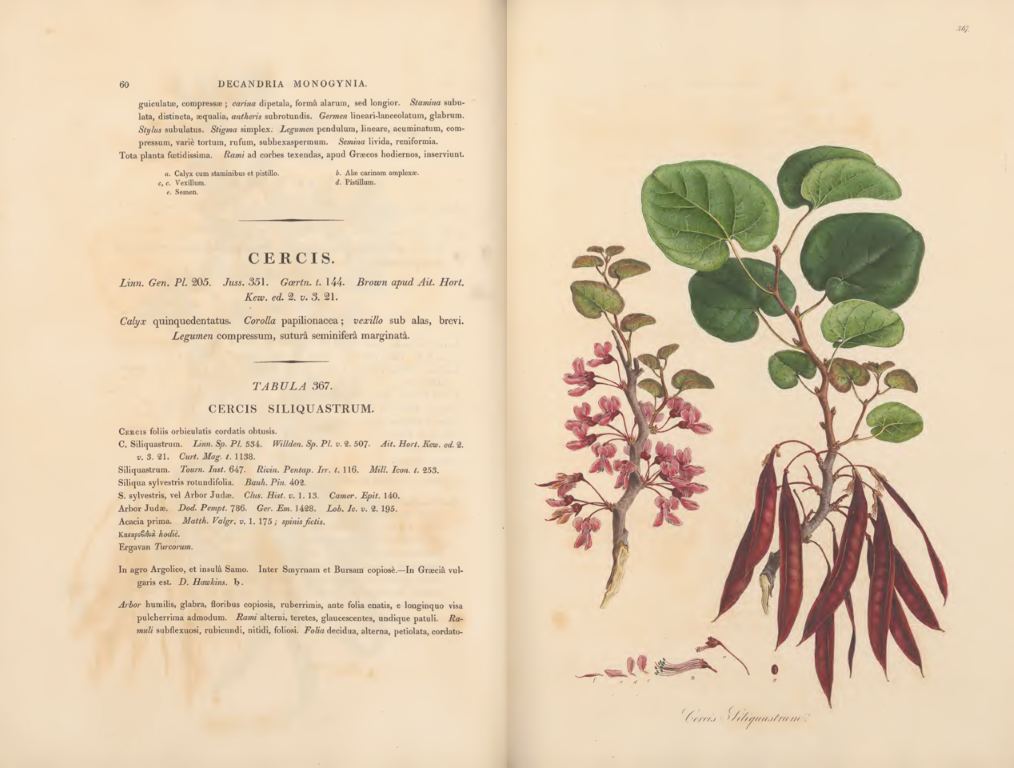
- Sibthorp, J., & Smith, J. E. (1806–1840). Flora Graeca (Vols. 1–10). London: Taylor.
- Theophrastus, “Enquiry into Plants”, 1.11.2, 5.7.6
Yaşar, Ü., Özyiğit, İ. İ., & Serin, M. (2010). Judas tree (Cercis siliquastrum L. subsp. siliquastrum) as a possible biomonitor for Cr, Fe and Ni in Istanbul (Turkey). Romanian Biotechnological Letters, 15(1), 4979–4989. https://doi.org/10.1111/jse.12640
During each season you will see:
References in Αrt
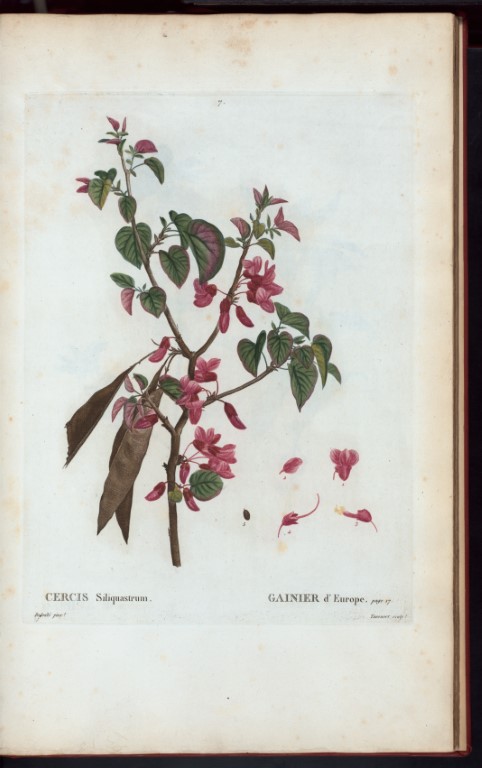
The species has been depicted by the botanist and painter Pierre-Joseph Redouté, one of the most respected botanical illustrators in history.