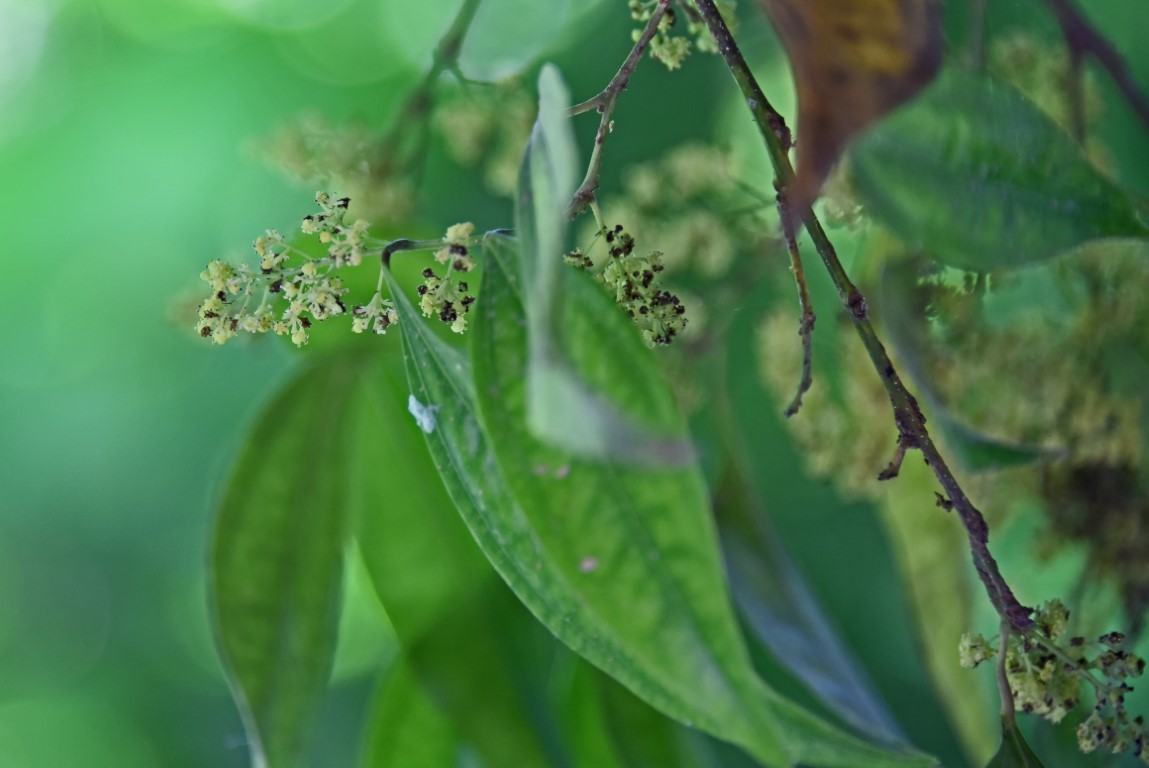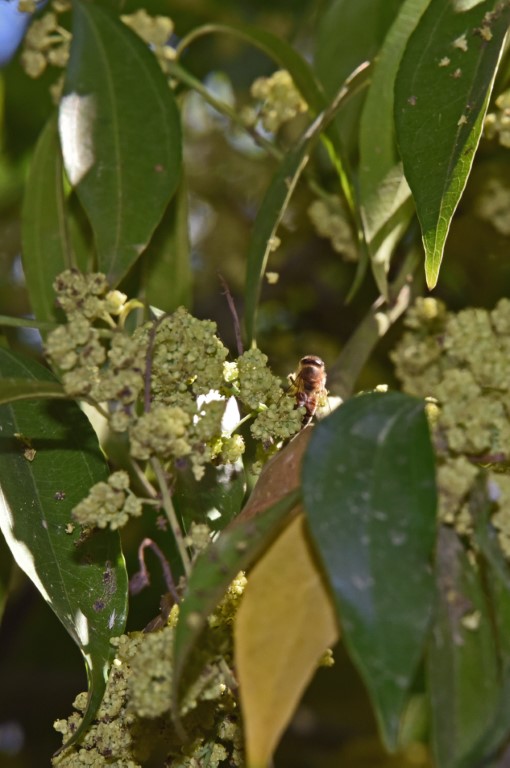


A plant that grows in full sun or partial shade and has moderate water requirements. It is resistant to both low temperatures down to –6°C and the high temperatures of xerothermic regions.
(height, leaf arrangement, leaf shape, root system)
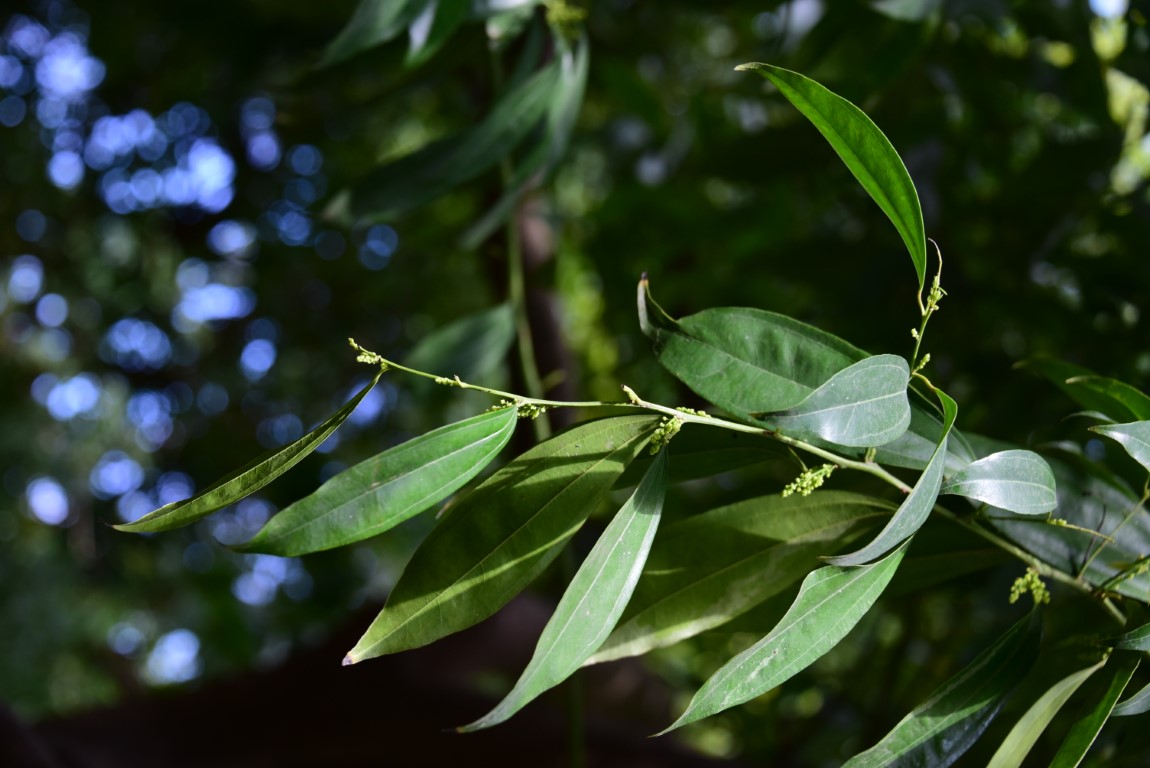
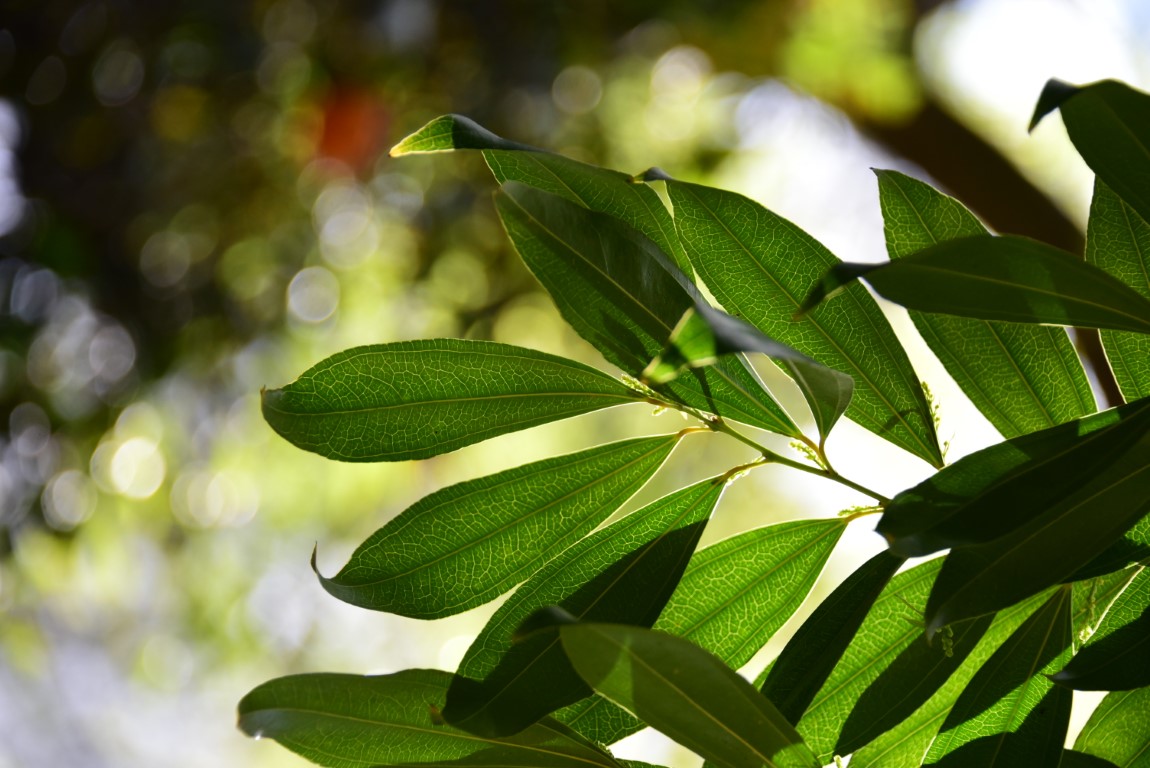
Small tree or dense, evergreen shrub, which can reach a height of 4–7.5 m, with a smooth brown trunk and arched branches that spread in different directions. It bears leathery, dark green leaves arranged alternately, 7-15 cm long and 3-5 cm wide, of ovate to lanceolate shape, with three characteristic distinct veins along the blade.
(flowering period, flowers, seeds)
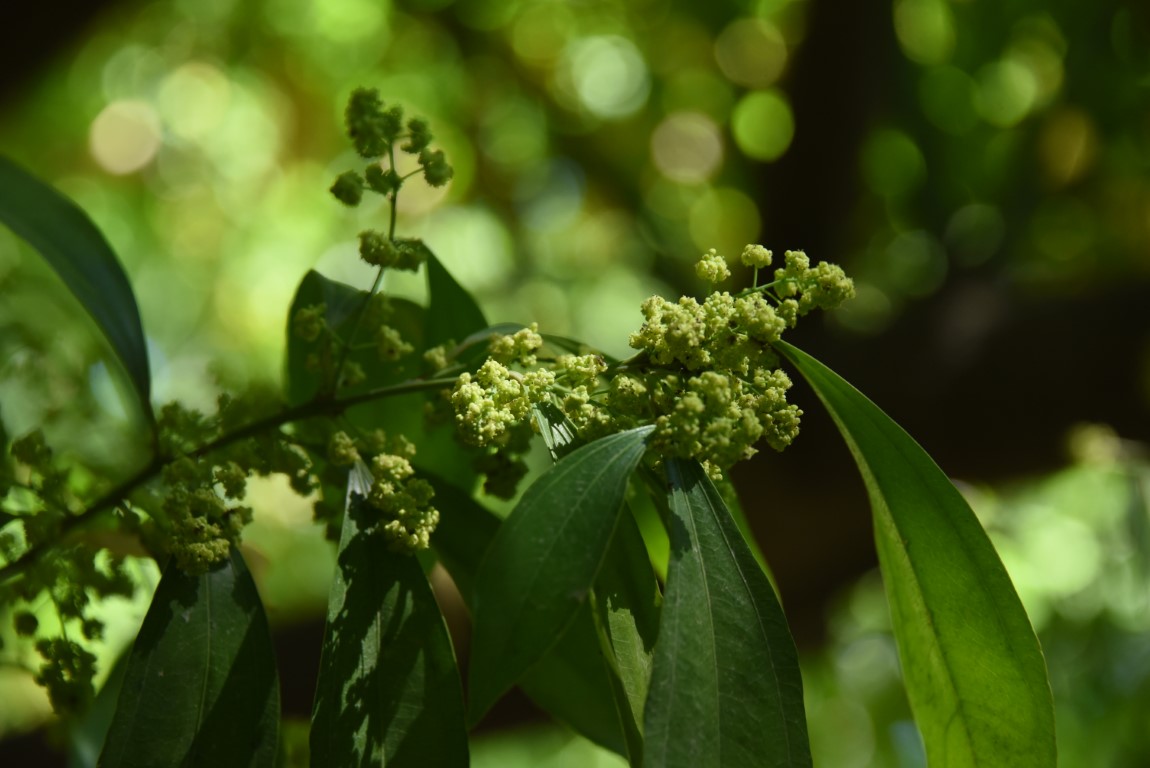
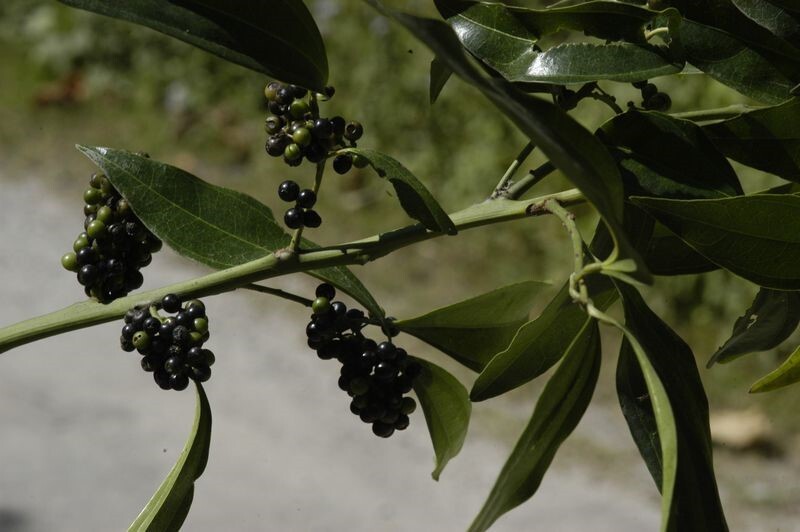
The species is dioecious, meaning there are flowers possessing female reproductive organs and other flowers possessing male reproductive organs. The flowers are small and green – yellow in color, with the males clearly outnumbering the females. The flowering period lasts from April until July. The fruits of the species belong to drupes and have a dark red color upon maturation. They each contain one seed, which is horseshoe shaped.
It is a large evergreen shrub, which maintains dense foliage even in deep shade. It has even been recorded growing satisfactorily under eucalyptus trees (Eucalyptus sp.), a fact that demonstrates its hardiness.
It was described for the first time by Augustin Pyramus de Candolle in 1817 in his work Regni Vegetabilis Systema Naturale. It was introduced to Europe in the 19th century as an ornamental species. The genus name “Cocculus” comes from the Greek word “kókkos” (grain/berry), as a reference to its fruits, while the epithet “laurifolius” is due to the morphology of its leaves, which significantly resemble those of the laurel (Laurus nobilis).
This species exhibits significant pharmacological effects that have been studied in experimental models. Leaf extracts show anxiolytic and hypnotic activity in mice, with an increase in movement in open spaces and prolonged sleep duration induced by pentobarbital. Furthermore, they present anticonvulsant and neuroprotective activity, while significantly preserving neuronal structure and reducing apoptosis. Indeed, the plant has been used historically in India and other regions of Asia for the management of neurological disorders, hypertension, and muscle relaxant applications. It is used primarily as an ornamental plant in gardens, parks, and for covering fences, as it has particularly dense foliage.
(Note: Ethnobotanical data regarding the medicinal uses of plants must be handled with caution, and their application should be carried out exclusively under medical supervision).
- https://www.worldfloraonline.org
- https://powo.science.kew.org
- De Candolle, A. P. (1818–1821). Regni vegetabilis systema naturale, sive ordines, genera et species plantarum secundum methodi naturalis normas digestarum et descriptarum. Sumptibus Sociorum Treuttel et Würtz.
- Inubushi, Y., Furukawa, H., & Juichi, M. (1970). Alkaloids of the leaves of Cocculus laurifolius DC. II. The structure of erythroculine. Chemical and Pharmaceutical Bulletin, 18(10), 1951–1959. https://doi.org/10.1248/cpb.18.1951
- Maqbool, S., & Younus, I. (2019). Anxiolytic and hypnotic effects of Cocculus laurifolius leaf extract in mice. Bangladesh Journal of Pharmacology, 14(1), 45–53. https://doi.org/10.3329/bjp.v14i1.38093
- Maqbool, S., Younus, I., Sadaf, R., & Fatima, A. (2019). Neuro-pharmacological evaluation of anticonvulsant and neuroprotective activity of Cocculus laurifolius leaves in Wistar rats. Metabolic Brain Disease, 34(4), 991–999. https://doi.org/10.1007/s11011-019-00414-3
- Muhammad, A., Zubaria, A., & Muhammad, F. S. (2017). Cocculus laurifolius: A rich antimicrobial, antioxidant and phytochemical source. Pakistan Journal of Botany, 49(1), 337–344.