

It grows in shady, moist soils of lowland areas, on foothills and slopes, along streams, in herbaceous forests, dense shrubs, ravines, and steep rocks, typically in tropical climates.
(height, leaf arrangement, leaf shape, root system)
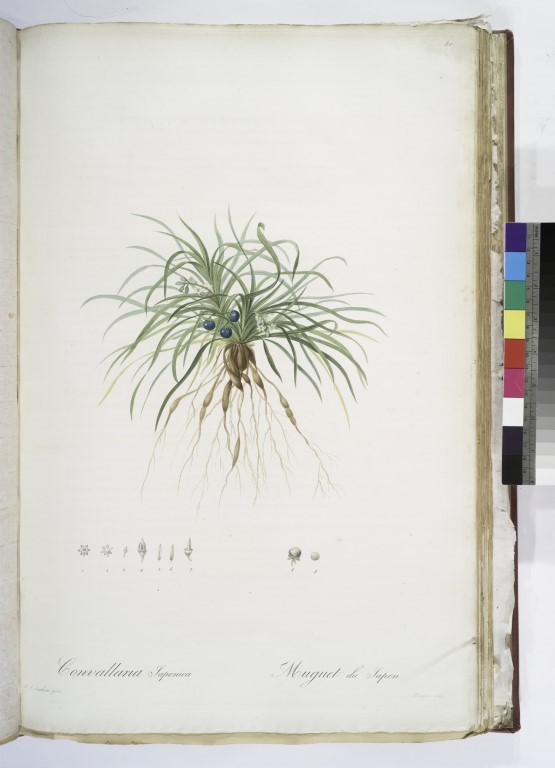
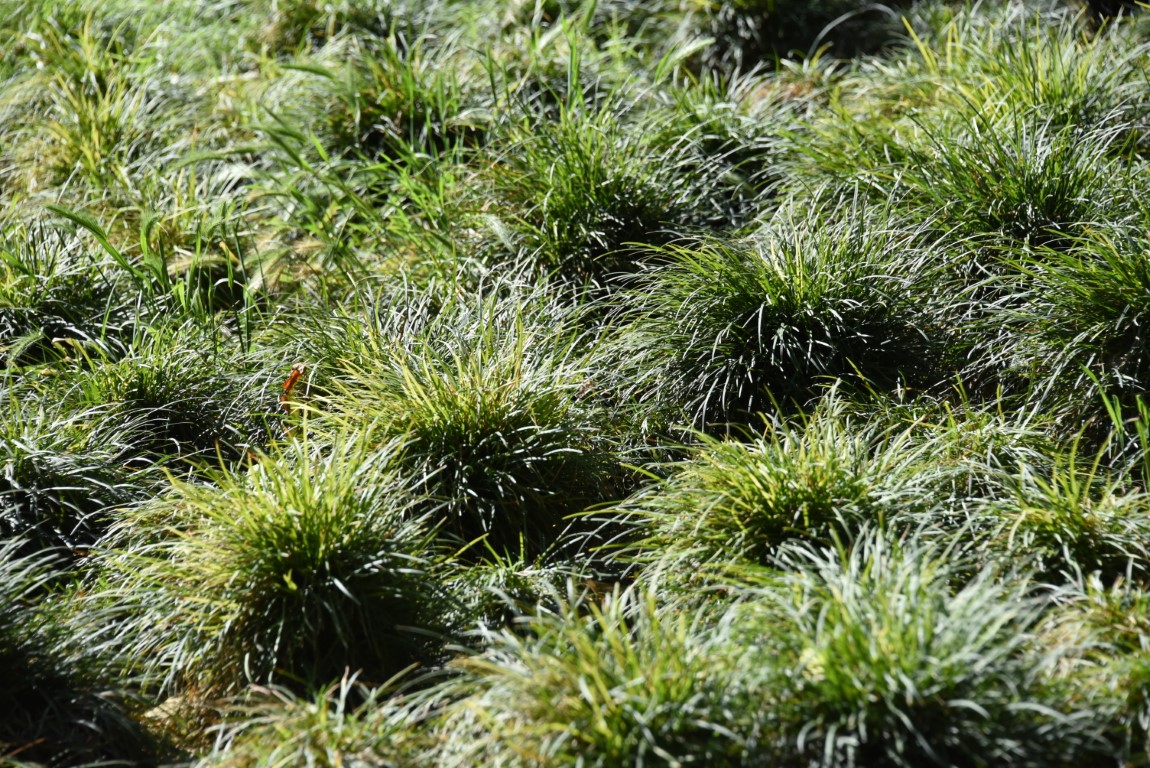
It is an evergreen, perennial plant with a maximum height of 30 cm, forming a turf-like mat. The leaves are dark green, linear, 20–40 cm long, and about 0.5 cm wide. Underground, the species has tuberous roots.
(flowering period, flowers, seeds)
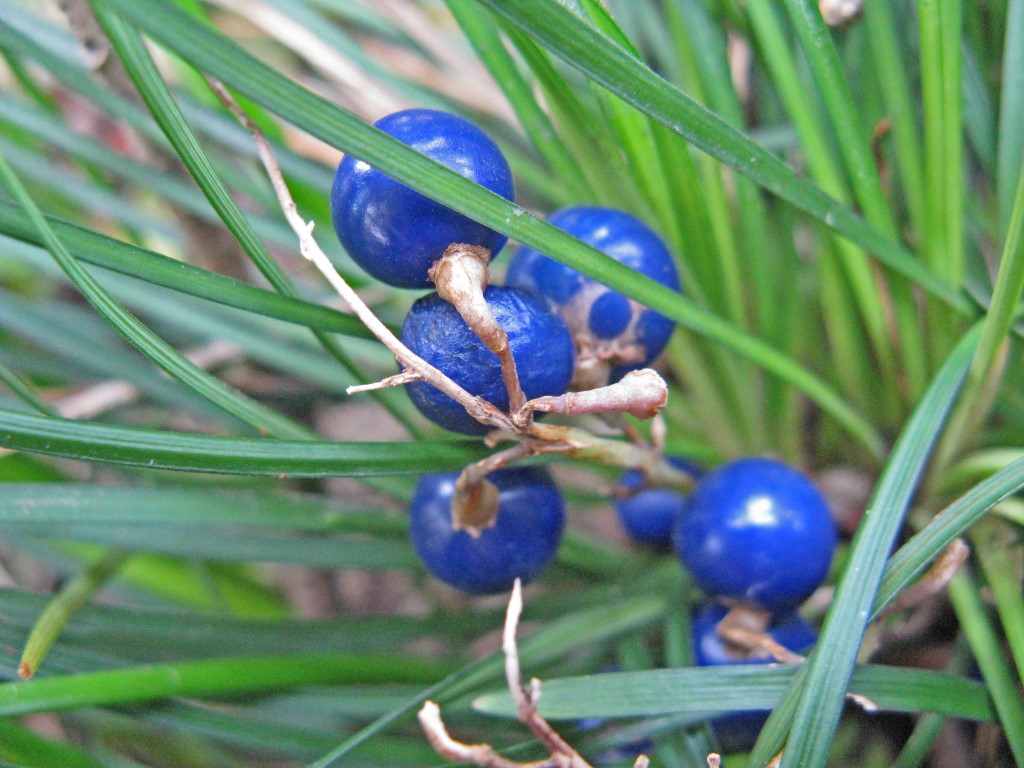
The flowers are arranged in a raceme inflorescence. Each inflorescence contains 10 to 15 bell-shaped flowers, about 1 cm in diameter. The flowers have 6 petals and range in color from pale lilac to white, partially hidden within the foliage. They are borne on a stem 10–35 cm long. The fruits resemble berries, are violet-colored, and are less than 1 cm wide. Each fruit contains up to 6 seeds, which are round to elliptical, about 4 mm long.
The genus Ophiopogon comes from the Greek words “ὄφις” (ophis) meaning snake and “πώγων” (pōgōn) meaning beard. The species epithet “japonicus” refers to its natural habitat, Japan.
The use of Ophiopogon japonicus as a medicinal plant is recorded in the ancient Chinese text Shen Nong’s Materia Medica (Shennong Bencaojing), a compilation of oral traditions written between the 1st and 2nd centuries CE during the Han Dynasty. The species is widely cultivated in East Asia, primarily in China (notably in the provinces of Sichuan and Zhejiang), Japan, and Korea. In Chinese and Japanese culture, it is regarded as a symbol of modesty and resilience, due to its durability and slow, steady growth. It is often used in Japanese gardens, bonsai, and traditional floral arrangements.
In traditional Chinese medicine, the roots of Ophiopogon japonicus are used to nourish yin, promote the production of bodily fluids, moisturize the lungs, calm the mind, and counteract the sensation of “heart heat.” Its leaves and tubers have long been consumed, as they are believed to soothe coughs, dry throats, and digestive disorders. Generally, the plant is applied for the prevention and treatment of acute and chronic inflammations, diabetes, cardiovascular diseases, and other conditions. The main bioactive compounds are steroidal saponins and polysaccharides, which support its traditional uses and justify its role as a medicinal plant. Today, Ophiopogon japonicus is included in the Chinese Pharmacopoeia (as “Maidong”), the European Pharmacopoeia, and Hong Kong’s standards of Chinese pharmacology. It is used both traditionally and in modern clinical applications, including supportive therapies for COVID-19 and studies on anticancer activity. Additionally, it is cultivated as an ornamental plant, providing excellent ground cover. The species is salt-tolerant and can even be grown as a submerged aquatic plant for short periods.
(Note: Ethnobotanical data regarding the medicinal uses of plants must be handled with caution, and their application should be carried out exclusively under medical supervision).
- https://powo.science.kew.org/taxon/urn:lsid:ipni.org:names:429781-1
- https://en.wikipedia.org/wiki/Ophiopogon_japonicus
- https://www.nparks.gov.sg/florafaunaweb/flora/8/5/8542
- Chen, M., Chen, X., Wang, M., Lin, L., & Wang, Y. (2016). Ophiopogon japonicus—A phytochemical, ethnomedicinal and pharmacological review. Journal of Ethnopharmacology, 181, 193–213. https://doi.org/10.1016/j.jep.2016.01.037
- Fan, Y., Ma, X., Ma, L., Zhang, J., Zhang, W., & Song, X. (2015). Antioxidative and immunological activities of ophiopogon polysaccharide liposome from the root of Ophiopogon japonicus. Carbohydrate Polymers, 135, 110–120. https://doi.org/10.1016/j.carbpol.2015.08.089
- Fang, J., Wang, X., Lu, M., He, X., & Yang, X. (2018). Recent advances in polysaccharides from Ophiopogon japonicus and Liriope spicata var. prolifera. International Journal of Biological Macromolecules, 114, 1257–1266. https://doi.org/10.1016/j.ijbiomac.2018.04.022
- Liu, Q., Lu, J., Hong, H., Yang, Q., Wang, Y., & Chen, X. (2023). Ophiopogon japonicus and its active compounds: A review of potential anticancer effects and underlying mechanisms. Phytomedicine, 113, Article 154718. https://doi.org/10.1016/j.phymed.2023.154718>
During each season you will see:
SPRING
Leaves
SUMMER
Leaves,
flowers
AUTUMN
Leaves,
fruit
WINTER
Leaves,
fruit
References in Αrt
It is depicted in China and Japan, mainly in paintings of plants, gardens, and traditional medical works.