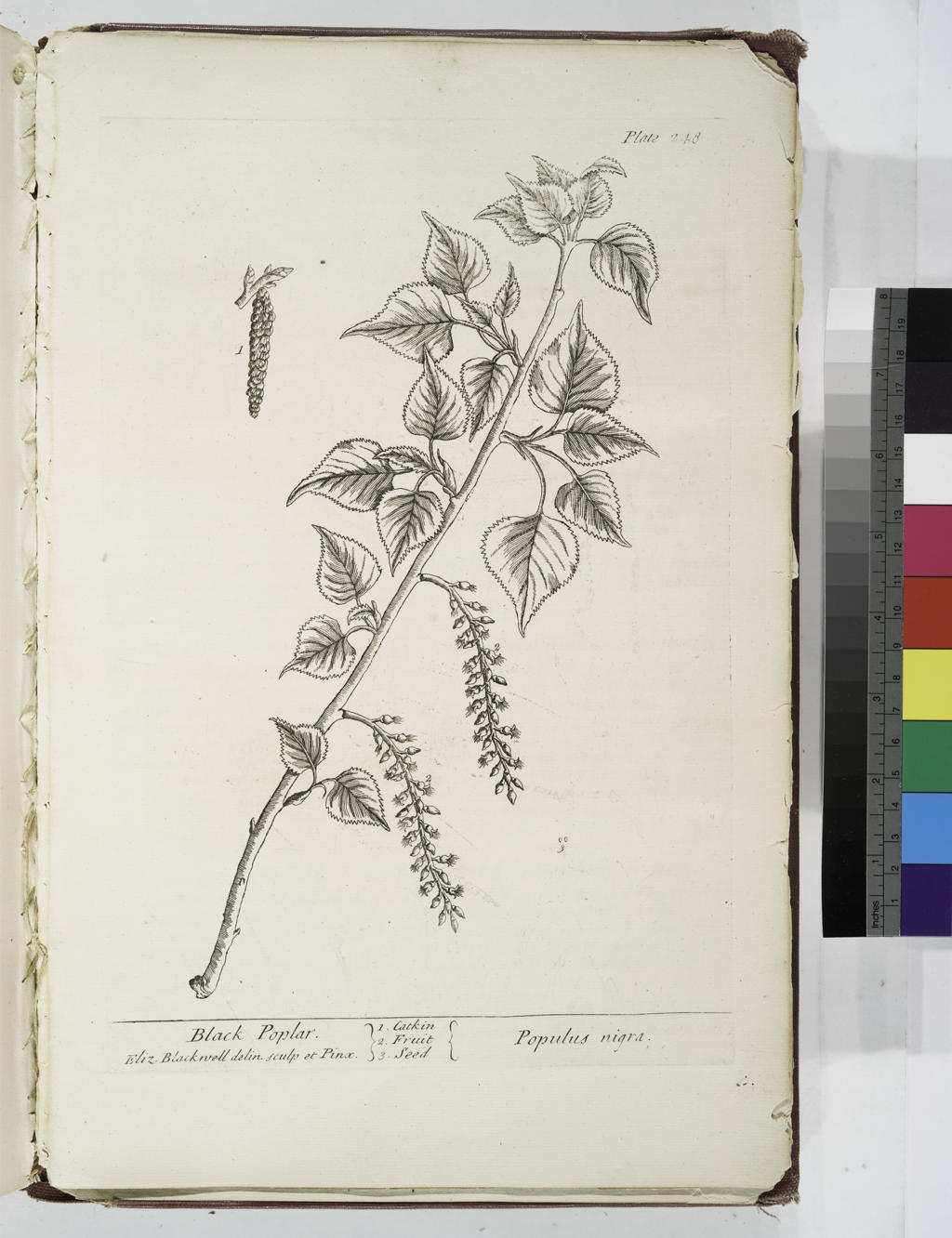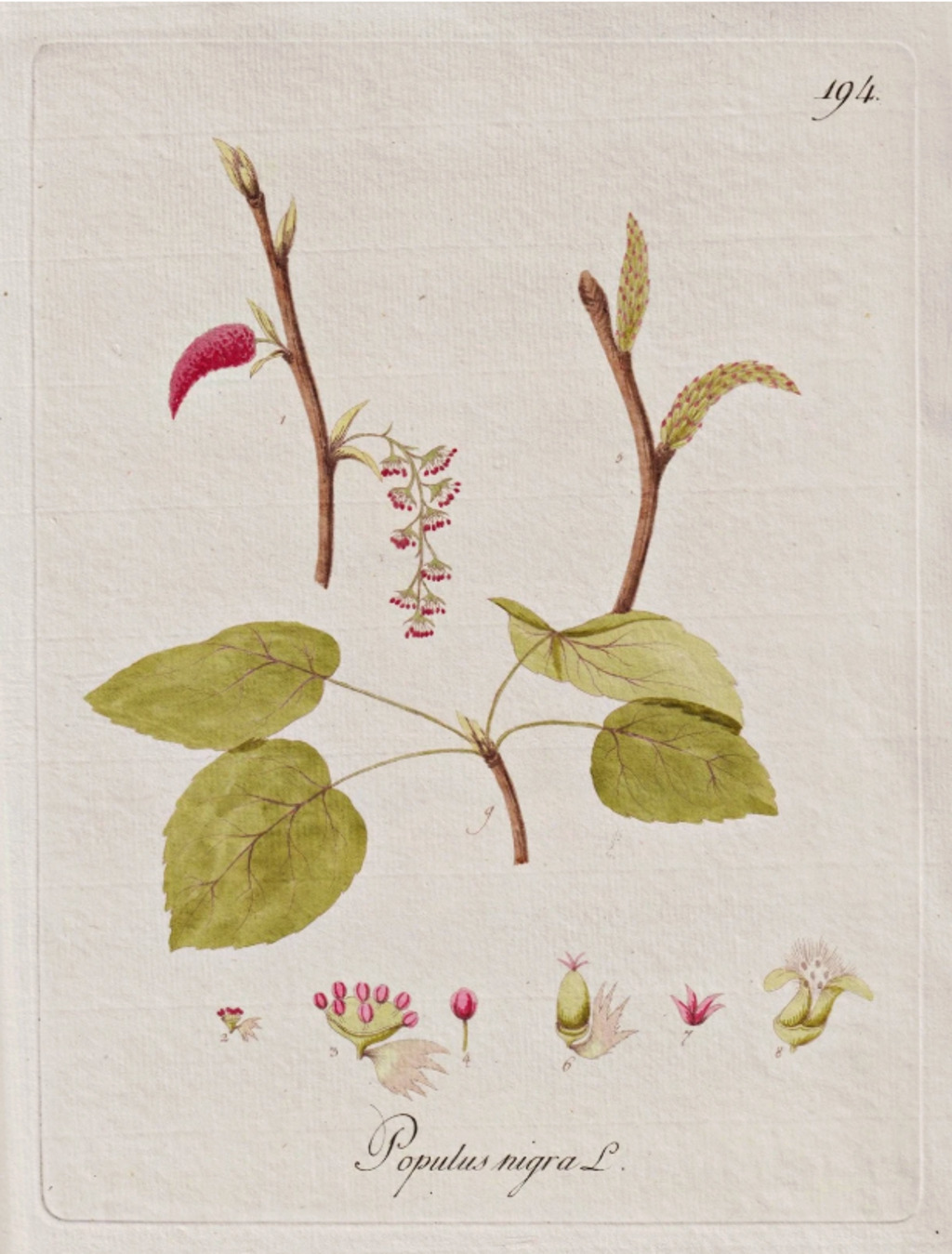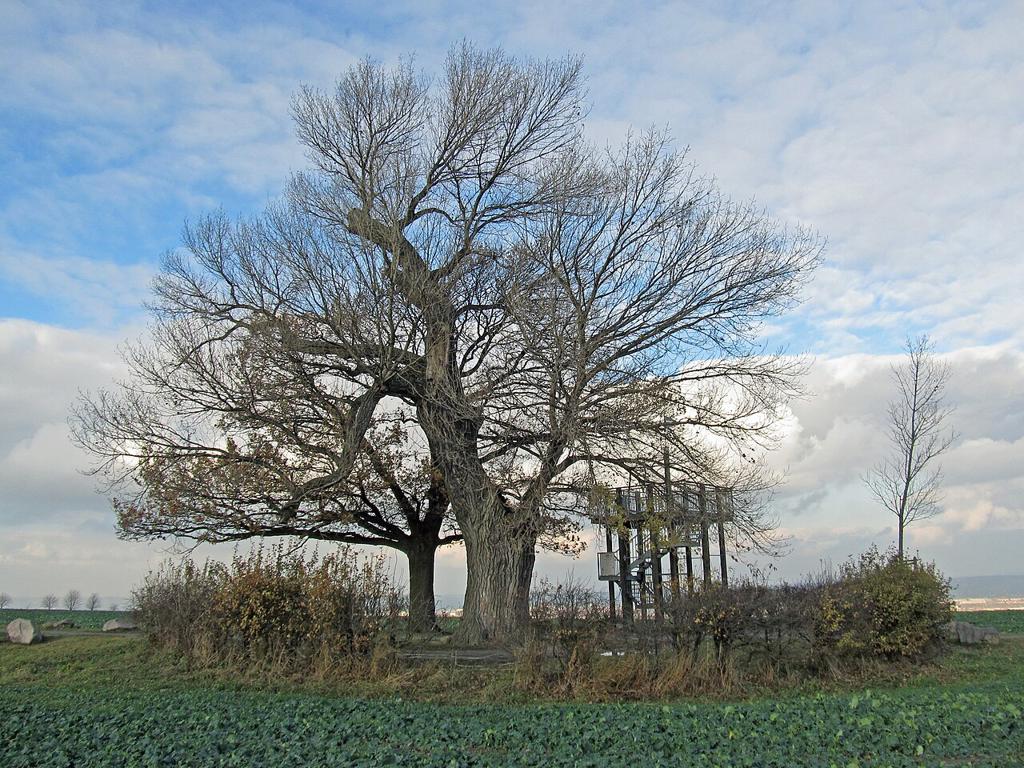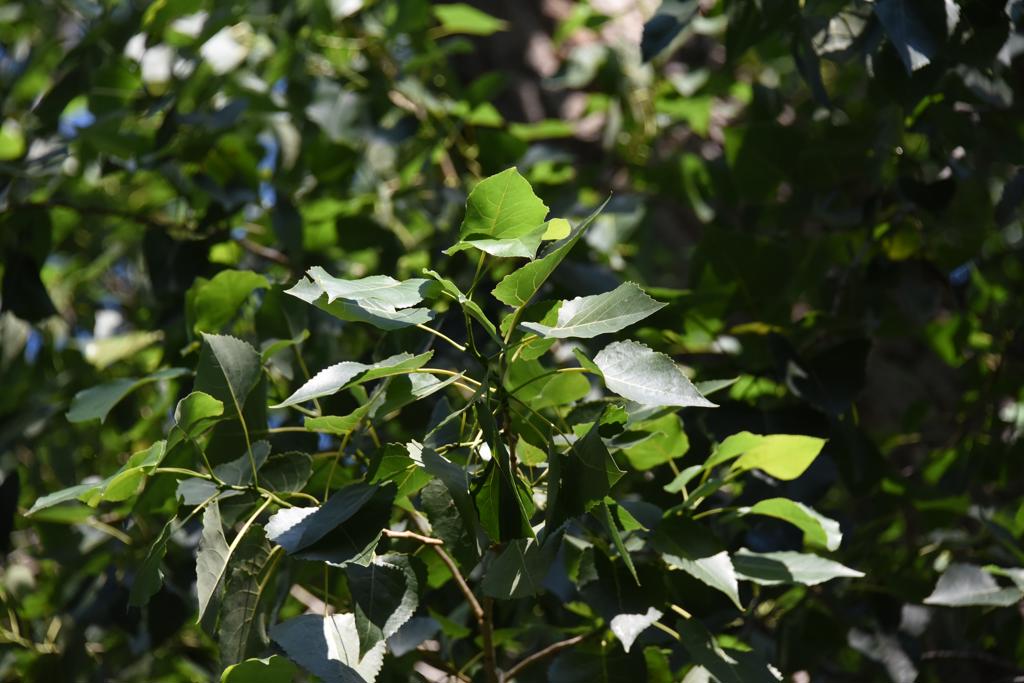


It is characterized as a phanerophyte (P), and its habitat is “Woodlands and scrub (W).” It is a typical riparian and pioneer species that develops on wet, fertile soil along rivers, floodplains, and streams, often forming clusters or mixed forests with white poplar (Populus alba L.), willows (Salix spp.), alder (Alnus spp.), maples (Acer spp.), elms (Ulmus spp.), and oaks (Quercus spp.). It occurs mainly in river valleys, wet lowlands, and forest edges, taking advantage of environmental disturbances to colonize new sites. The species shows high tolerance to stagnant water and summer temperatures but low tolerance to drought and shade.
(height, leaf arrangement, leaf shape, root system)
It is a large, deciduous, dioecious tree of fast growth, capable of living up to 300–400 years, though it usually reaches maturity around 100 years. It reaches a height of 20–30 m, rarely up to 40 m, with a pyramidal or broad–rounded crown up to 20 m in diameter. The trunk reaches about 1.5 m in diameter, while exceptionally old individuals can exceed 3 m, and is characterized by dark gray to black bark that is deeply fissured and wrinkled, often with bulges. The root system is extensive and superficial, providing tolerance to coastal conditions but potentially causing problems near buildings. Leaves are alternate, simple, deltoid to triangular or rhomboid, with serrated margins, 2–8 cm long; the upper surface is dark green, the lower lighter, and they turn yellow in autumn. Buds are dark and sticky.
(flowering period, flowers, seeds)
It is a dioecious species, with male and female flowers appearing on separate trees. Flowering occurs early in spring, during March and April, before the leaves emerge. The flowers form large catkins: male catkins are pendulous with red anthers, while female catkins are more upright and bear two green styles. Pollination is wind mediated. The fruits are capsules that mature early in April and May, containing numerous small seeds covered with white cottony hairs (seed wool) that facilitate dispersal, primarily by wind but also by water. Reproduction occurs both sexually, through seed germination, and vegetatively, as the species can easily propagate from cuttings.
The image of the plant is striking when the wind blows and the leaves reveal one surface or the other, making it appear as if the colors on the tree are constantly alternating.
Homer, in the Iliad, describes the poplar as a tree with a smooth trunk and branches that start high, often comparing it to the fall of heroes in battle, thus emphasizing its height and majesty. In the Odyssey, the poplar appears repeatedly in idyllic and sacred landscapes: near springs, caves, and meadows, often together with alder, willows, and firs, providing shade and coolness. Theophrastus provides detailed botanical information about the plant he calls “ἀχερωίς” or “αἴγειρος”: the black poplar loves wet soils, grows rapidly, especially when planted from cuttings (pieces taken from the tree), has many more branches than the white poplar, and has a fleshy bark. Pliny, also distinguishing the white from the black poplar, emphasizes that the white poplar stands out for its two-colored leaves, green on one side and silvery white on the other. According to the myth recounted by Diodorus, Heraclitus, Ovid, and Pliny, when Phaethon was struck by lightning, his sisters, the Heliades, in their grief were transformed into poplars and every year shed tears of amber on the banks of the Eridanus River (Diodorus notes that it is identified with the Po River). The amber (ήλεκτρο) is so called because the Sun is called Ἠλέκτωρ (the shining one). The white poplar was dedicated to Heracles, according to Athenaeus, while in the area of Olympia, Pausanias observes that the poplar had exclusive ritual use: only wood from the white poplar was allowed for sacrifices to Zeus, a tradition directly attributed to Heracles. At the same time, he notes its chthonic character: the presence of black poplars and willows in Persephone’s groves, which Homer had also mentioned, reinforces the tree’s association with the Underworld. In the Greek Anthology, the poplar becomes a tree of rest and hospitality: under its shade, the traveler quenches thirst, the shepherd carves messages into its trunk, the weary rest. Here too, the connection of the poplar with the Underworld is mentioned: poets, dancers, and mythical figures rest “under poplars,” with the tree functioning as a guardian of memory and silent witness to human mortality. From antiquity to later travelers, the poplar remains a constant feature of the Greek and Balkan landscape. It is mentioned in gardens, plains, cities, and rural areas, with particular presence near water and cultivated lands (19th-century travelers). Finally, the Lombardy poplar becomes a characteristic feature of settlements and roads, continuing a millennia-old tradition. The genus Populus derives from the Latin word populus, meaning “people,” because poplars were trees planted in public spaces, squares, and streets in Rome. The black poplar specifically was associated with mourning and sorrow. The natural monument “Babisnau Poplar” in Germany is a famous example of a black poplar planted in 1808, and its flowering, which does not occur every year, is locally considered a sign that a war is coming to an end.
Dioscorides describes that the leaves of the black poplar (aigeiros), when crushed with vinegar, are beneficial for inflammatory conditions of the joints (gout), while its fruit, when consumed with the roots, benefits epileptics. He also notes that the resin that flows from the tree into the Eridanus River coagulates and becomes the aromatic amber, which, when drunk, soothes the stomach and aids intestinal movement. Its wood, according to Pliny, was considered light but useful in construction and shipbuilding, and vineyards were often “married” to poplars, climbing their trunks. Finally, in both ancient Greece and Roman times, the poplar often functioned as a boundary tree: it was planted at field borders, near roads and rivers, marking crossings and transitions in both natural and symbolic space. Traditionally, its wood was valued for its flexibility and resistance to shocks and fire, and was widely used in furniture, carts, clogs, and wooden floors near fireplaces. Today, it is more often used for pulp, paper production, matches, small objects, and as a bioenergy crop due to its rapid growth. Its great plasticity and ability to propagate vegetatively make it ideal for reforestation of wet areas, restoration of floodplain forests, and planting in parks, squares, or avenues. Ecologically, it plays a crucial role in riparian ecosystems, stabilizing soils and riverbanks, protecting watersheds, reducing erosion, and serving as a windbreak. Additionally, it has high value as a parent species in breeding programs, giving rise to hybrids such as Populus × euramericana (P. deltoides × P. nigra), which are widely cultivated for timber. Moreover, extracts from its bark and leaves have shown antioxidant and anti-inflammatory properties, while the species also contributes to ecosystem functions such as pollution mitigation, microclimate regulation, and enhancement of biodiversity in agricultural landscapes.
(Note: Ethnobotanical data regarding the medicinal uses of plants must be handled with caution, and their application should be carried out exclusively under medical supervision).
- https://powo.science.kew.org/taxon/urn:lsid:ipni.org:names:776790-1
- https://www.euforgen.org/species/populus-nigra
- https://www.monumentaltrees.com/en/elevation/populusnigra/
- “Anthologia Palatina”, 7.223, 7.714, 9.315,· 9.341
- Athenaeus, “Deipnosophistae”, 3.23
- Blackwell, E. (1737–1739). A curious herbal: Containing five hundred cuts, of the most useful plants, which are now used in the practice of physick (Vols. 1–2). Samuel Harding.
- de Rigo, D., Enescu, C. M., Houston Durrant, T., Caudullo, G., 2016. Populus nigra in Europe: distribution, habitat, usage and threats. In: San Miguel-Ayanz, J., de Rigo, D., Caudullo, G., Houston Durrant, T., Mauri, A. (Eds.), European Atlas of Forest Tree Species. Publ. Off. EU, Luxembourg, pp. e0182a4+ https://forest.jrc.ec.europa.eu/media/atlas/Populus_nigra.pdf
- Dimopoulos P., Raus Th., Bergmeier E., Constantinidis Th., Iatrou G., Kokkini S., Strid A. & Tzanoudakis D. 2013: Vascular plants of Greece: An annotated checklist. – Berlin: Botanic Garden and Botanical Museum Berlin-Dahlem; Athens: Hellenic Botanical Society. – Englera 31. https://doi.org/10.3372/en.31
- Diodorus Siculus, Bibliotheca Historica, 5.23.3
- Dioscorides, “De Materia Medica”, CIX, CXIII
- Heraclitus, “On the Unbelievable”, 36
- Homer, “Iliad”, 4.480; 13.385; 16.480
- Homer, “Odyssey”, 5.235; 6.290; 9.140; 17.205
- Horatius, “Epistularum liber secundus”, 2.2.155
- Kerner von Marilaun, Α. (1896). The natural history of plants: Their forms, growth, reproduction, and distribution (F. W. Oliver, M. F. Macdonald, & M. B. Busk, Trans.). Blackie & Son. (Original work published 1891)
- Leake CW, Τravels in northern Greece, in four volumes. London: j. Rodwell, new bond street. [1835], 1.344
- Ovidius, “Metamorphōsēs”, 1.567, 5.587, 10.86
- Pausanias, “Description of Greece”, 5.13.3; 5.14.2; 10.30.6
- Plinius secundus, “Naturalis Historia”,16.35, 37.31, 14.2.3
- Silius, “Punica”, 4.719
- Theophrastus, “Historia Plantarum”, 3.6.1; 4.13.2
- Thomé, O. W. (1885). Flora von Deutschland, Österreich und der Schweiz. Gera, Germany
During each season you will see:
SPRING
Flowers in catkins (March – April),
unfolding of new leaves,
Fruits (April – May)
SUMMER
Dark green leaves
AUTUMN
Yellowing and fall of leaves
WINTER
Bare branches
References in Αrt
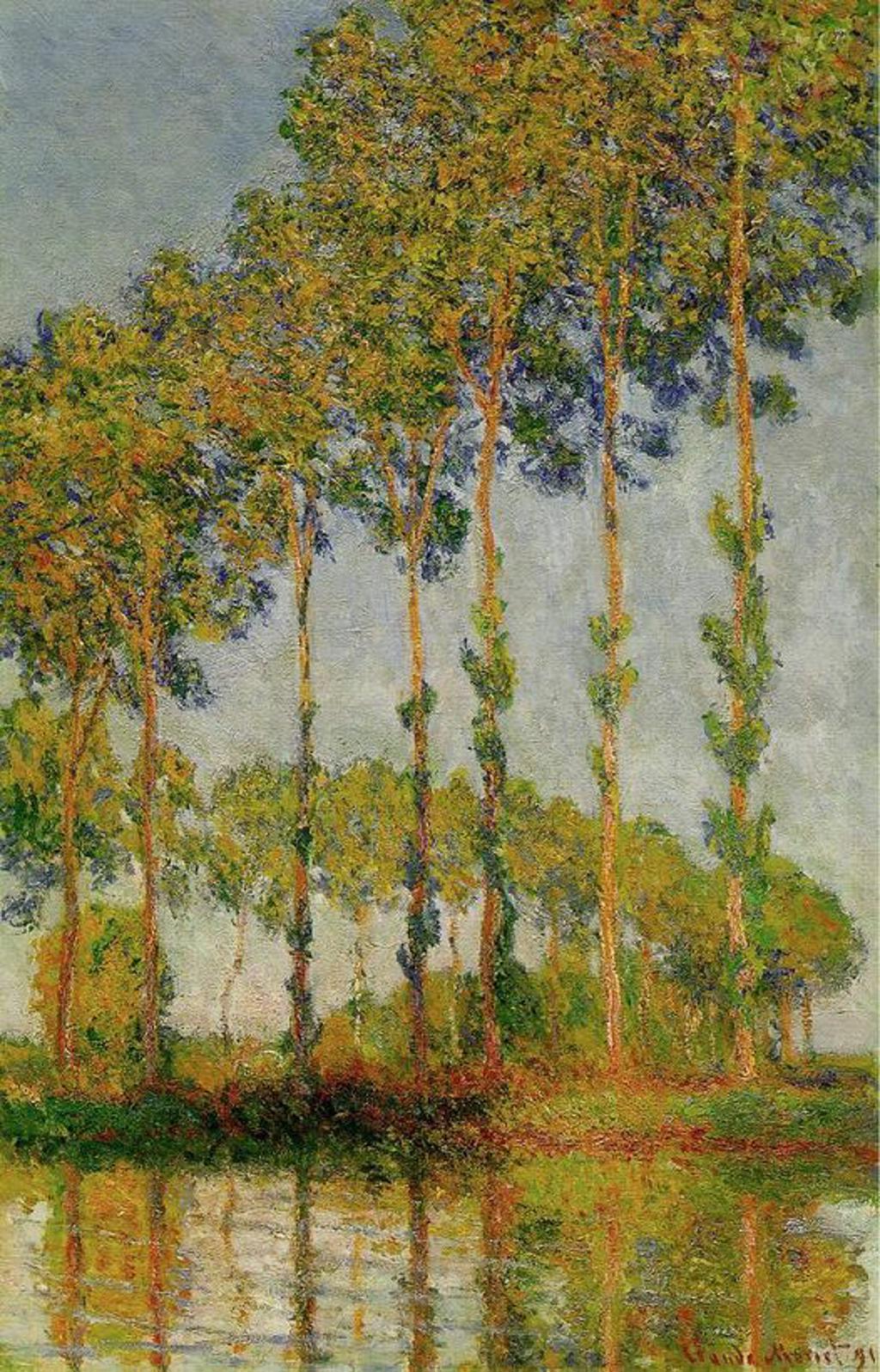
Very few references are recorded for the species, mainly from landscapes, in which it is not confirmed whether it concerns black or white poplar.