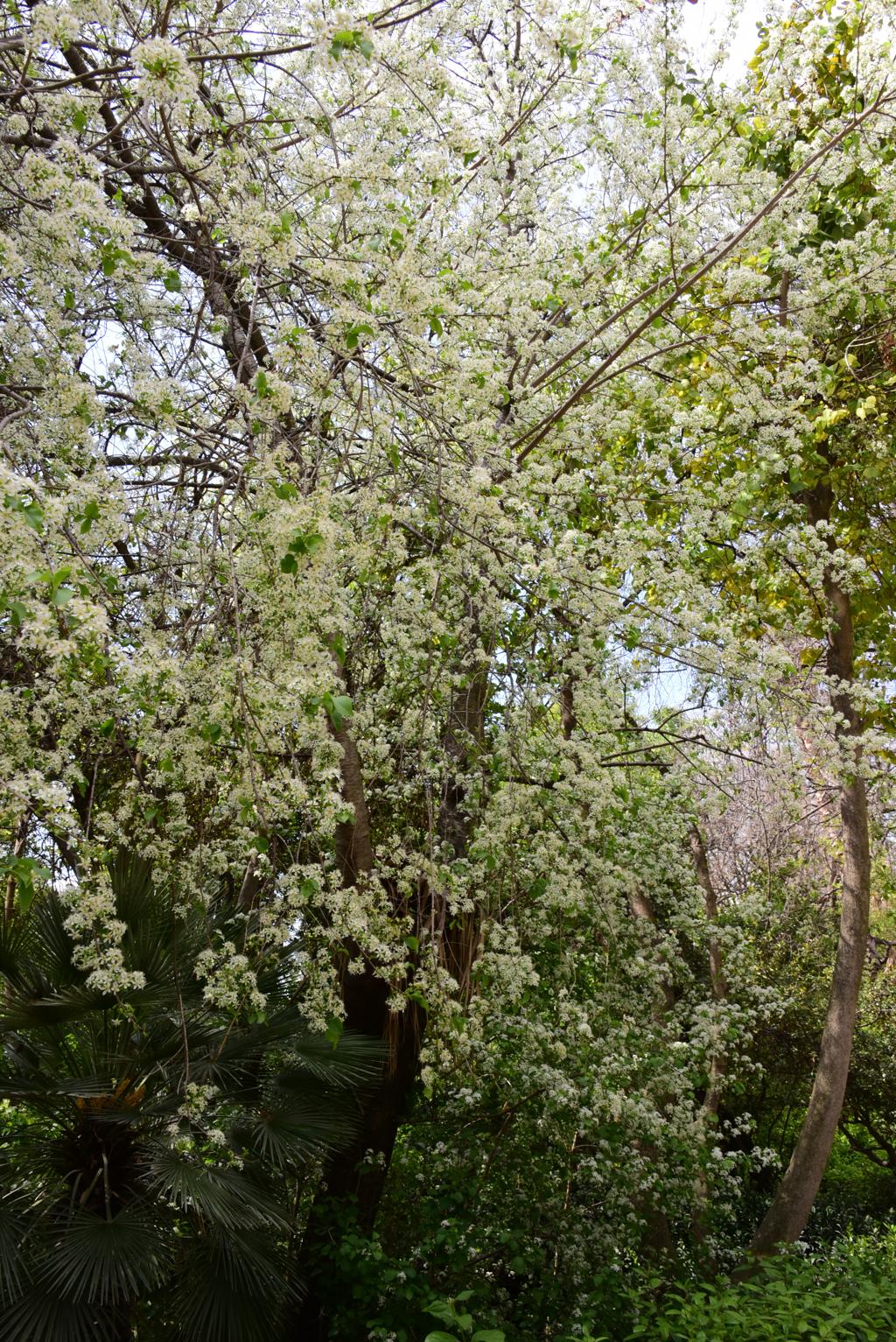


It is thermophilic and one of the first species to colonize an area. It is classified as a “Phanerophyte (P)”, and its habitat includes “ Woodlands and scrub (W).” It grows on dry, sunny slopes, forest clearings, edges of oak forests, gorges, and riverbanks, mainly on calcareous and rocky soils. It is found in shrublands and open forests, often forming a vegetation mosaic with other thermophilic species, from hilly areas to mid-mountain zones.
(height, leaf arrangement, leaf shape, root system)
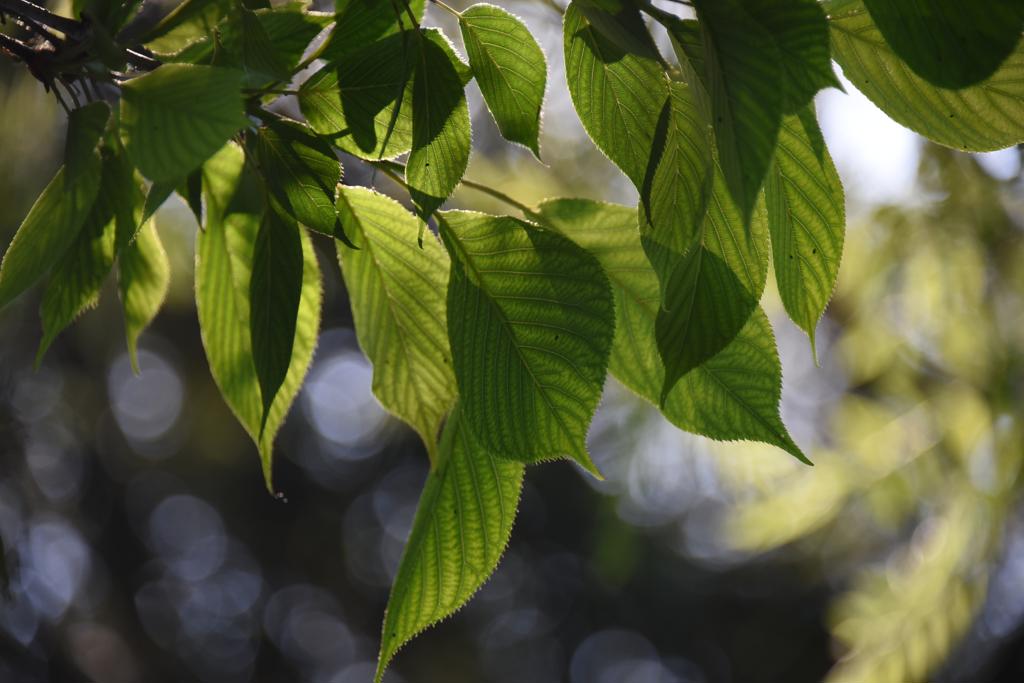
It is a deciduous shrub or small tree, 2 to 10 m in height (rarely up to 12 m), with a trunk that can reach a diameter of 40 cm. The bark is grayish-brown, with lenticel-like spots on young branches, while older parts show shallow fissures. The leaves are glossy green, glandular, alternate, and measure 1.5 to 7 cm in length and 1 to 4 cm in width. The blade is broadly ovate to nearly heart-shaped, with a sharp apex, a rounded to slightly cordate base, and a serrated margin. The petiole is 0.5 to 2 cm long and usually bears 1 or 2 nectaries, while the small stipules fall off early.
(flowering period, flowers, seeds)
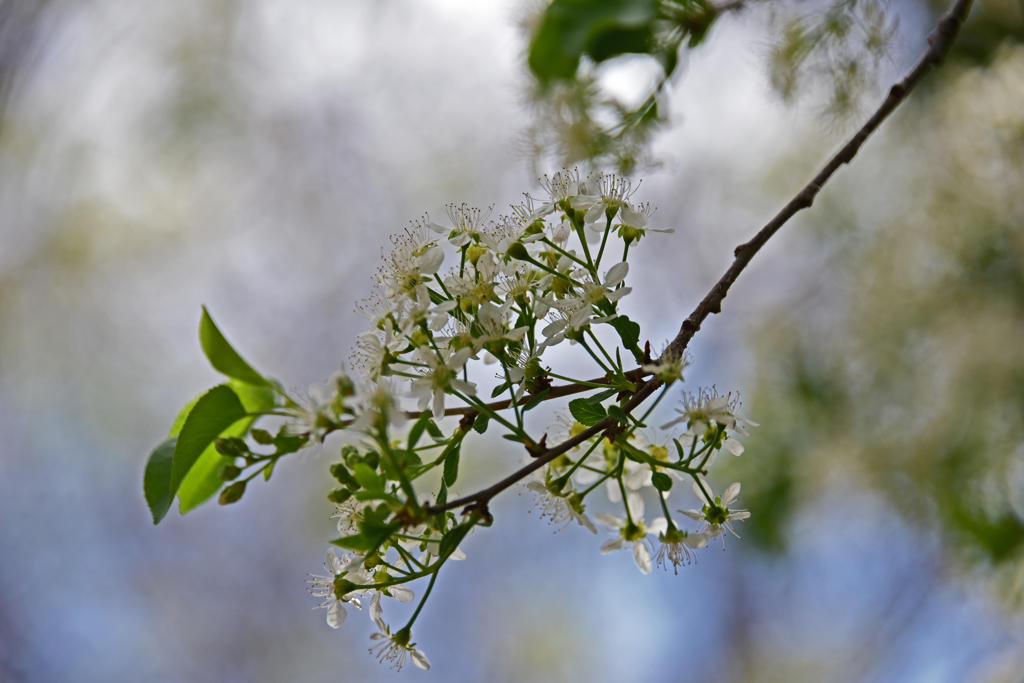
It is a gynodioecious species, with individuals bearing functionally hermaphroditic flowers and others bearing only functionally female flowers. The flowers appear in spring (March–June), are small (1–1.5 cm), white, fragrant, and form corymb-like inflorescences of 3 to 12 flowers at the tips of shoots. Pollination is mainly carried out by bees and flies. The fruits are small drupes, round or oval, about 0.8–1 cm in diameter, initially green, ripening to dark red and finally black between June and September, with a bitter but often pleasant taste. The seed is enclosed in a smooth, woody endocarp. Seed dispersal occurs mainly via birds (e.g., blackbirds and starlings), which feed almost exclusively on the fruits during the ripening period and transport the seeds to suitable habitats.
It can be distinguished from other species of the same genus (cherry, plum, etc.) by its fruits, which are much smaller and bitter, as well as by the comparatively shorter height of the mature plant.
The species is mentioned in early Sumerian texts as “halub”, noted for its durable hard wood and fruits and leaves known for their medicinal properties, and is associated with the goddess Inana. In Islamic writings, it is referenced in the 12th-century agricultural book by Ibn Al-Awwam, which describes its cultivation methods. The wood of “khalupp”, reasonably identified with P. mahaleb, was imported into Mesopotamia from regions such as Gubbin, Makan, and Meluhha, demonstrating the integration of Prunus mahaleb into the extensive trade networks of the 3rd and 2nd millennia BC, despite the species being widespread across Eurasia. The need for imports likely relates to its uncertain local availability: the geographic distribution of a plant does not reflect its abundance, while the flora of Western Asia had changed drastically due to agricultural practices and extensive deforestation, which by the end of the 3rd millennium BC had already degraded the native forests. Thus, P. mahaleb may have been locally rare even if it occurred over a wider area, and references to its cultivation in gardens likely reflect this scarcity.
It has been widely used as a rootstock for grafting related species, such as cherries (Prunus cerasus and Prunus avium), due to its frost resistance, and it is also a genetic relative of almond, peach, nectarine, and plum. Despite the general presence of prussic acid in many Prunus species, from which hydrocyanic acid is produced, P. mahaleb shows lower concentrations, but it contains compounds with pharmacological activity, such as coumarin, which explains its use in food, medicine, and perfumery. Its seeds have a strong aroma and a taste similar to bitter almonds and have been used for centuries as a spice, mahlepi, in the Mediterranean and the Middle East, mainly in pastries (e.g., tsoureki, çörek). The therapeutic tradition of related species is ancient: Dioscorides already noted wild cherry properties for digestive disorders, while Galen highlighted their astringency. The plant is also cultivated as an ornamental for its fragrant flowers, while its bark, wood, and seeds contain coumarin, a substance with anti-inflammatory, calming, and vasodilatory properties. Its hard wood is used in woodcarving and the production of small objects, and dyes can be obtained from its fruits. Due to its extensive root system, it contributes to erosion control and is used in reforestation and the creation of windbreaks.
(Note: Ethnobotanical data regarding the medicinal uses of plants must be handled with caution, and their application should be carried out exclusively under medical supervision).
- https://en.wikipedia.org/wiki/Prunus_mahaleb
- https://powo.science.kew.org/taxon/urn:lsid:ipni.org:names:729931-1
- Blando, F., Albano, C., Liu, Y., Nicoletti, I., Corradini, D., Tommasi, N., Gerardi, C., Mita, G., & Kitts, D. D. (2016). Polyphenolic composition and antioxidant activity of the under-utilised Prunus mahaleb L. fruit. Journal of the Science of Food and Agriculture, 96(8), 2641–2649. https://doi.org/10.1002/jsfa.7381
- Dimopoulos, P., Raus, Th., Bergmeier, E., Constantinidis, Th., Iatrou, G., Kokkini, S., Strid, A., & Tzanoudakis, D. (2013). Vascular plants of Greece: An annotated checklist. Botanic Garden and Botanical Museum Berlin-Dahlem; Hellenic Botanical Society. (Englera 31). https://doi.org/10.3372/en.31
- Duke, J. A. (2004). Dr. Duke’s phytochemical and ethnobotanical databases. Agricultural Research Service, Germplasm Resources Information Network.
- Galen. De alimentorum facultatibus (Book 2).
- Grant, M. (2000). Galen on food and diet. Routledge.
- Lane, E. W. (1863). An Arabic-English lexicon (Book 1, Part 1). Williams and Nargate.
- Miller, N. F. (1997). The macrobotanical evidence for vegetation in the Near East, c. 18,000/16,000 BC to 4,000 BC. Paléorient, 23(2), 197–207. https://doi.org/10.3406/paleo.1997.4651
- Miller, N. F., & Gadotti, A. (2009). The KHALUB-tree in Mesopotamia: Myth or reality? In A. S. Fairbairn & E. Weiss (Eds.), From foragers to farmers: Gordon C. Hillman festschrift (pp. 239–243). Oxbow Books.
- Patton, C. A., Ranney, T. G., Burton, J. D., & Walgenbach, J. F. (1997). Natural pest resistance of Prunus taxa to feeding by adult Japanese beetles: Role of endogenous allelochemicals in host plant resistance. Journal of the American Society for Horticultural Science, 122(5), 668–672. https://doi.org/10.21273/JASHS.122.5.668
- Pedanius Dioscorides. De materia medica (Section CLVII).
- Popescu, I., & Caudullo, G. (2016). Prunus mahaleb in Europe: Distribution, habitat, usage and threats. In J. San-Miguel-Ayanz, D. de Rigo, G. Caudullo, T. Houston Durrant, & A. Mauri (Eds.), European atlas of forest tree species. Publication Office of the European Union. https://ies-ows.jrc.ec.europa.eu/efdac/download/Atlas/pdf/Prunus_mahaleb.pdf
During each season you will see:
SPRING
Young shoots and leaves,
flowers
SUMMER
Mature leaves,
fruit
AUTUMN
Yellowing of leaves
and leaf drop
WINTER
Branches