

Classified as a “Phanerophyte (P)”. Its habitat is “Agricultural and ruderal habitats (R)”. The presence of Acer negundo is intense in nutrient-rich soils, such as floodplains, but also on the banks of rivers, lakes, lagoons, and swamps. It is characterized by high resistance to pollutants, a property that makes its growth easy even in urban environments.
(height, leaf arrangement, leaf shape, root system)
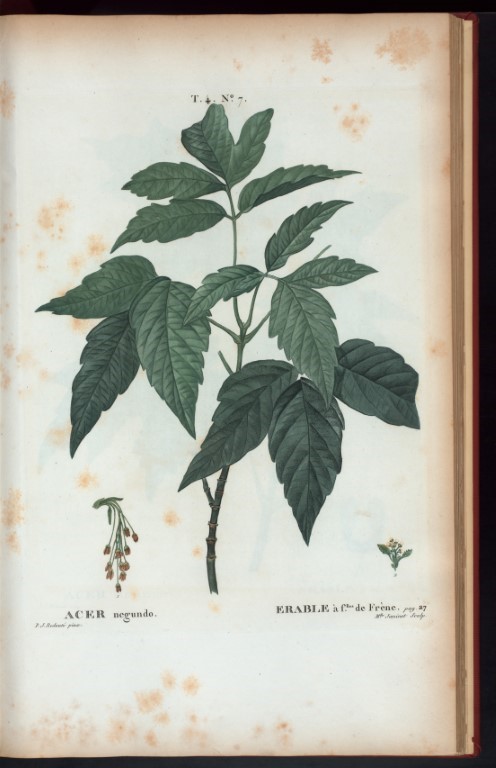
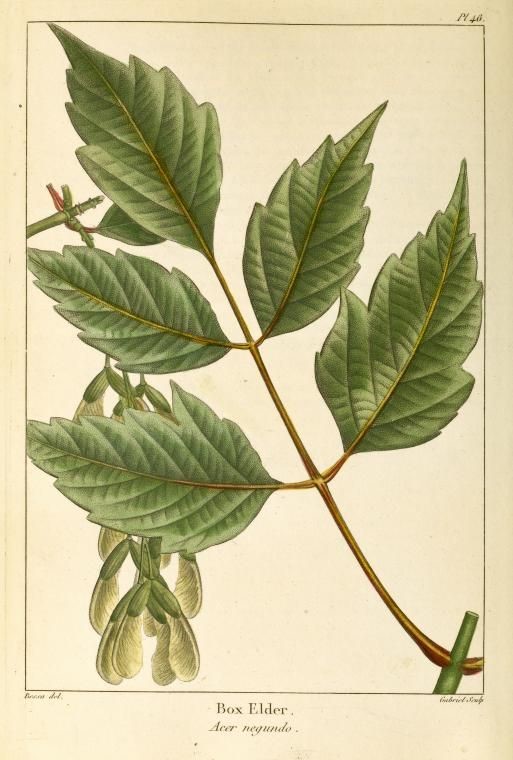
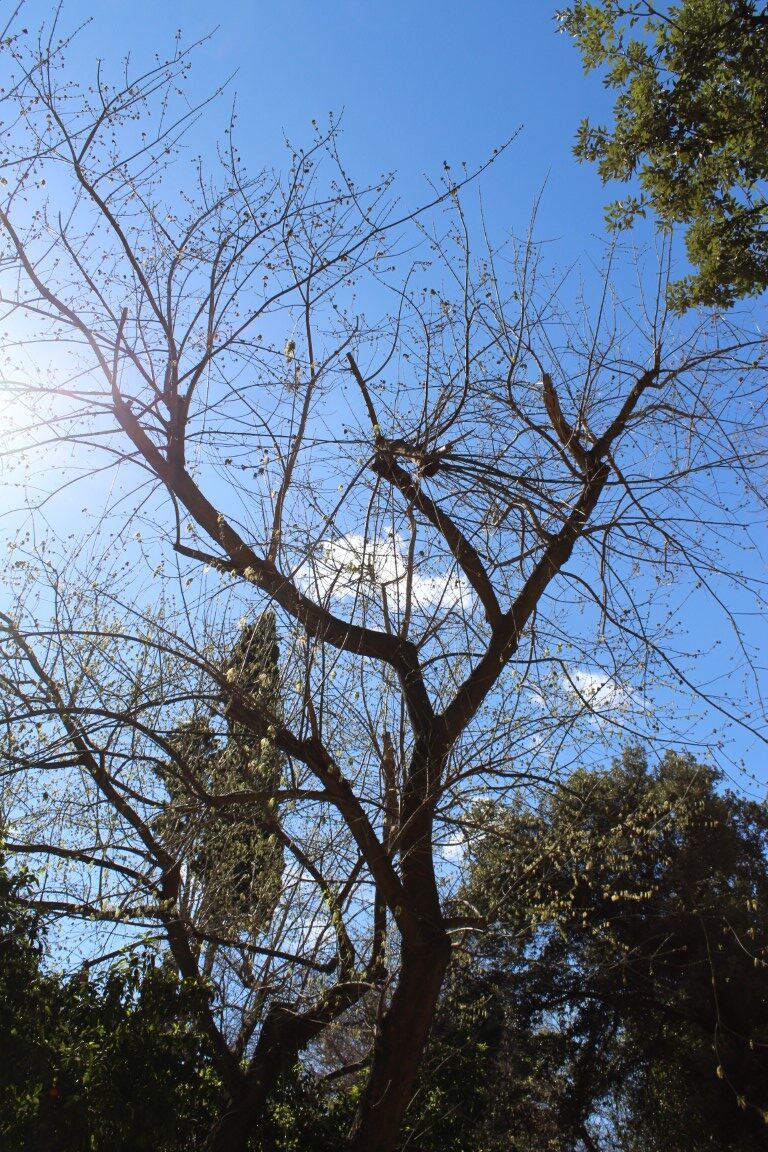
Deciduous trees up to 20 m in height, with a yellow-brown or grey-brown trunk reaching 60-90 cm in diameter. Box Elders have compound leaves arranged oppositely, 10-25 cm long, with 3-9 serrated ovate leaflets each. Their root system consists of many roots that extend to a shallow depth along the horizontal soil axis in order to absorb surface soil moisture.
(flowering period, flowers, seeds)
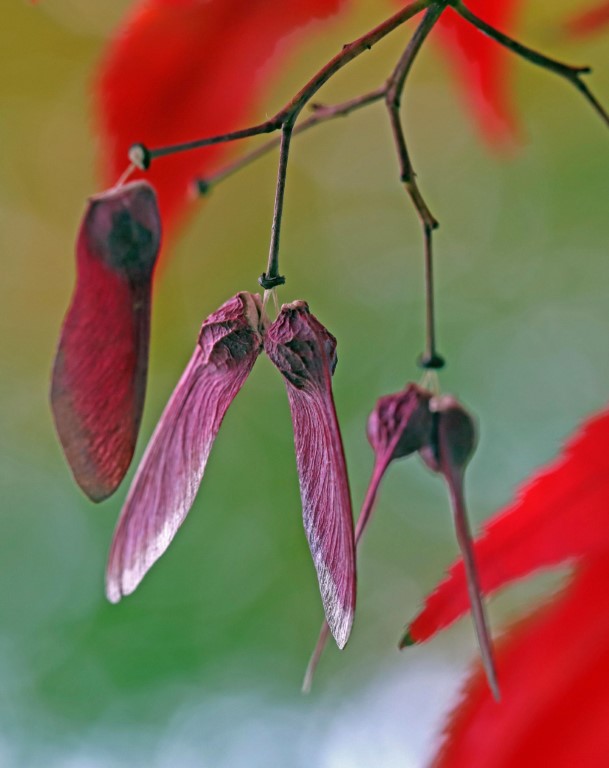
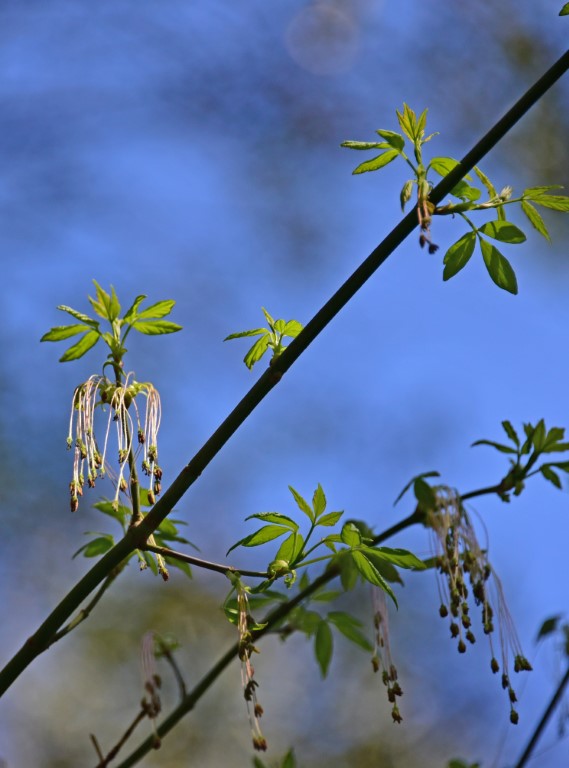
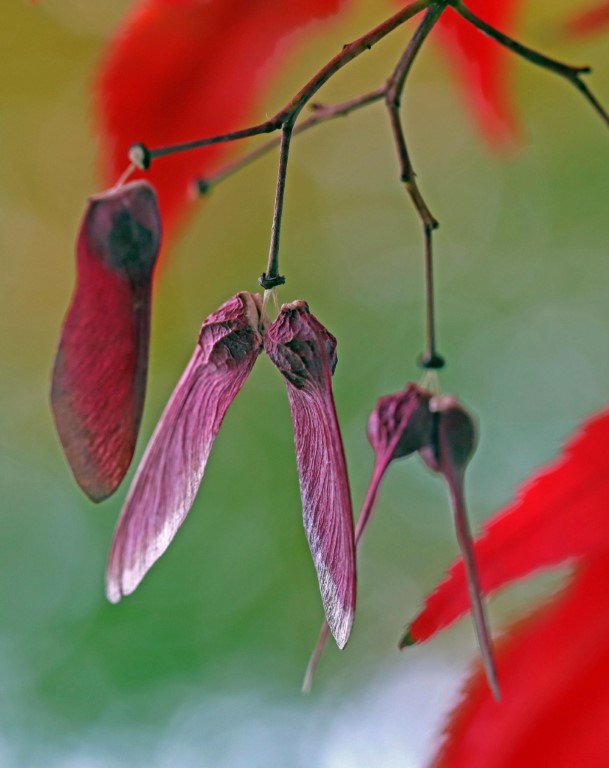
Dioecious plant with unisexual yellow-green flowers; the male ones are organized in upright corymbs and the female ones in hanging racemes. The flowering period lasts from March to April. The fruit is a double samara with wings at an acute angle. It usually remains on the tree even after the leaves fall. Two seeds are contained per fruit. The species can reproduce vegetatively as well, a phenomenon observed mainly after the injury of an individual.
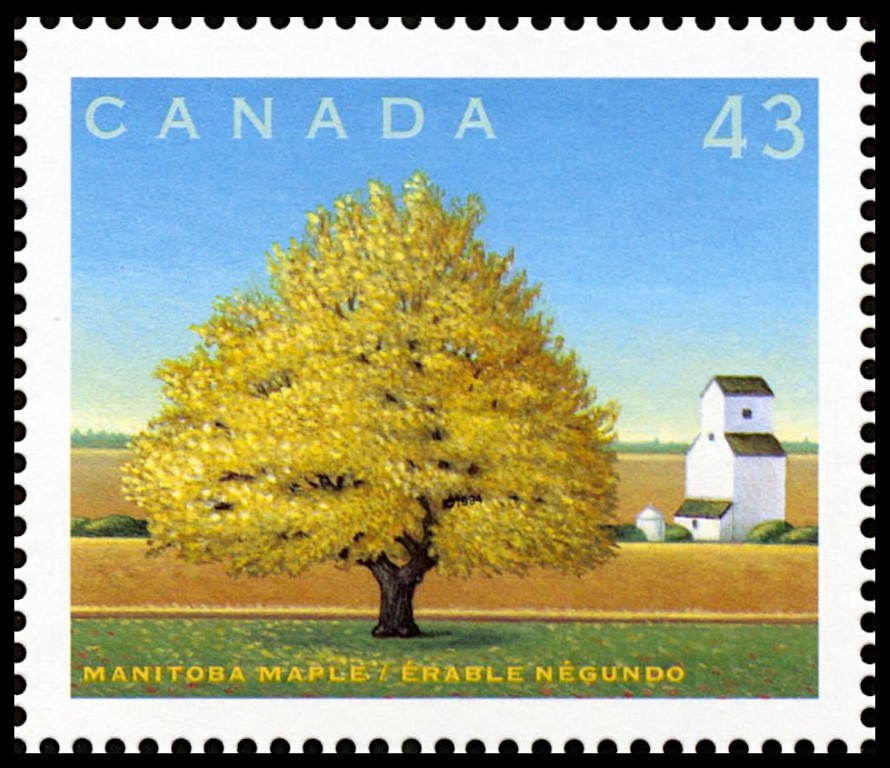
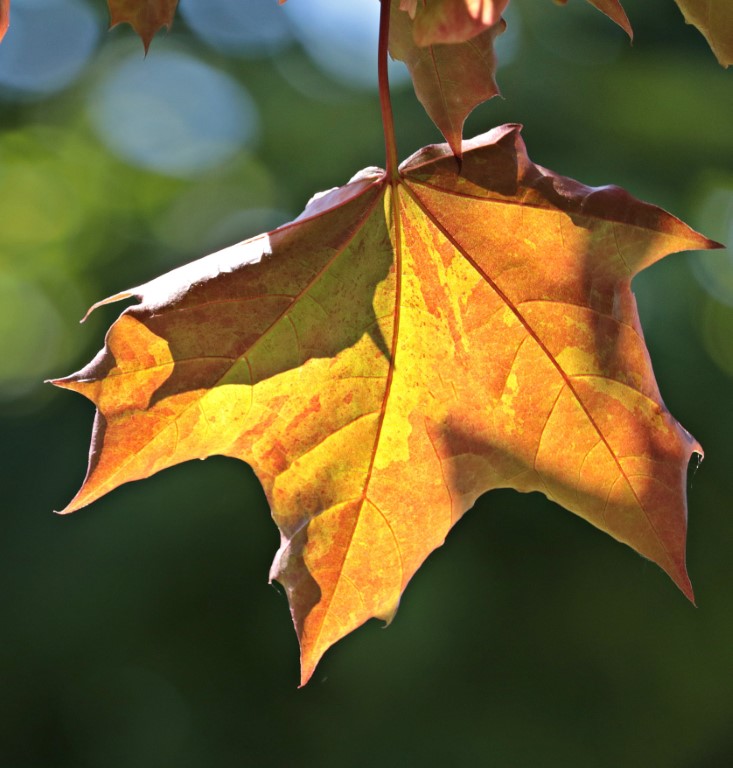
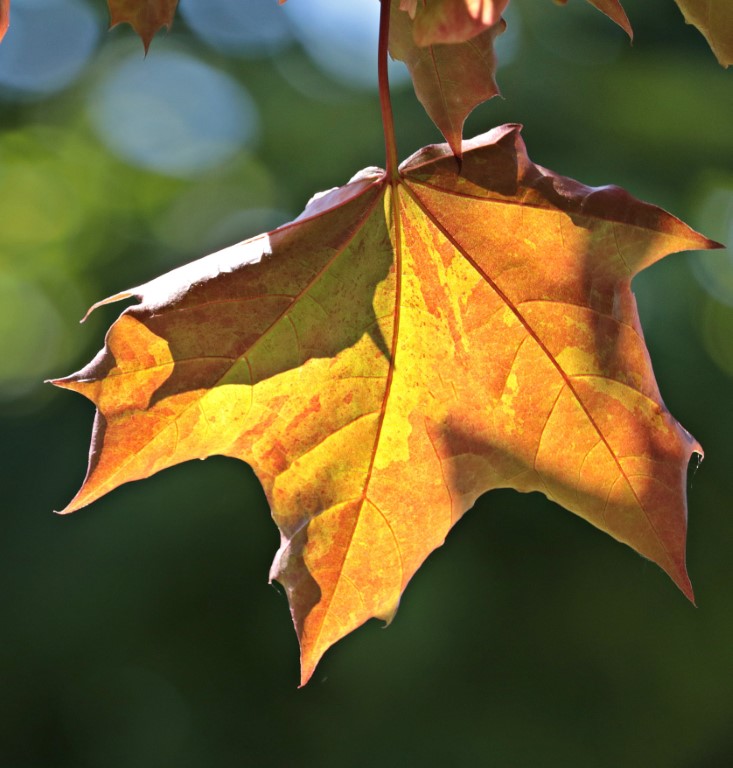
The trees exhibit particularly rapid growth during the first 15–20 years; however, they have a limited lifespan, averaging around 75 years, with a maximum expectancy of up to 100 years under ideal conditions. One of the tallest trees recorded in the 1970s was in Washtenaw County, Michigan, reaching 29 meters in height and 1.6 meters in diameter. Their bright yellow autumn foliage is one of their most striking characteristics!
Acer negundo is a fast-growing tree with an extensive natural range in North America and a long history of cultivation worldwide, including in parts of Europe and Asia. Historically, its cultivation in Europe began before 1688 by the Bishop of London, Henry Compton, and it has since been used mainly as an ornamental tree, for windbreaks, and to protect industrial sites from airborne pollutants.
Although native to North America, it is considered a weedy species in certain areas, such as parts of the northeastern United States, where its spread has increased sharply. In 1928, Joseph Illick, State Forester of Pennsylvania, noted in his work “Pennsylvania Trees” that the species was “rare and confined to certain locations” in the state. After World War II, its rapid growth made it popular for landscaping in suburban residential developments, despite its susceptibility to storm damage and tendency to attract large numbers of insects (box elder bugs). Intentional cultivation has therefore made it far more abundant than it once was.
It can quickly colonize both cultivated and uncultivated areas, and its range is expanding in North America and beyond. In Europe, where it was introduced in 1688 as a park tree, it can spread rapidly and is considered invasive in parts of Central Europe, including Germany, the Czech Republic, Hungary, Slovenia, Poland, and Russia, as well as in southwestern France, where it competes with native trees and forms monospecific stands. In general, it can form dense vegetation in plains, disturbed areas, and riparian ecosystems on calcareous soils. It has also acclimated to eastern China, is reported as a harmful invasive species in some of the cooler regions of Australia, and is considered invasive in the Río de la Plata region.
The first official record of Acer negundo was made by Carl Linnaeus in 1753 in his work “Species Plantarum”.
Regarding the maple in general…
Strabo notes the use of maple in the region of Sinope for making tables, while Pliny describes its wood as Maple has been mentioned since the time of Aristophanes, who described people as “hard as oaks or maples,” implying that its wood was considered durable. Theophrastus lists maple among trees that grow in plains, along with poplar, willow, cherry, linden, and others, noting that the Macedonians considered maple a tree that does not produce flowers. He observes that it has shallow and few roots, in contrast to plants such as elm, which have deep and dense root systems. He also mentions its varieties and recommends cutting its wood in autumn, along with other solid woods, for construction purposes, noting that its timber is not very solid and somewhat brittle. Strabo reports on the use of maple in the Sinop region for making tables, while Pliny describes its wood as elegant and suitable for furniture and veneers. He highlights the distinctive grains and knots, used for small furniture and writing surfaces. Heraclides lists maple among the main trees growing in Greek regions, while Varro mentions its use as support for vineyards. Virgil refers to maple in mythological narratives, where thrones and other objects were made from it, and Ovid mentions its wood for doors that change color from fear, trees in sacred sites and altars, and wooden beds. Later authors, such as Martial and Avienus, describe maple for the construction of furniture, tables, and ship hulls. Finally, 19th-century travelers confirm what Theophrastus wrote, noting that in Greek forests maple coexists with linden, cherry, chestnut, beech, and other trees.
From an ethnobotanical perspective, the indigenous peoples of North America utilized the sap of Acer negundo as a source of sugar, syrup, and candies, and possibly for medicinal purposes, while its seeds served as an important food source for rodents and birds during the winter. The species is closely associated with riparian forests and wet areas, where it grows rapidly and often regenerates through lateral shoots, allowing it to expand even onto terraces or old fields. Today, the species has also become invasive in parts of Europe, as previously mentioned. Its success is attributed to its high growth rate, the plasticity of its morphological and physiological traits, and its ability to efficiently exploit available resources such as light, nutrients, and water. It often thrives in floodplains and other disturbed areas with sufficient water supply, such as riparian habitats. The wood of Acer negundo is used for making crates, boxes, and relatively low-quality furniture (due to the softness of the wood), for paper production, as fuel, and as an ornamental species.
(Note: Ethnobotanical data regarding the medicinal uses of plants must be handled with caution, and their application should be carried out exclusively under medical supervision).
- https://www.greekflora.gr
- https://www.indiananature.net
- https://www.worldfloraonline.org
- Aristophanes, “Acharnians”, line 174
- Avienus, “Ora Maritima”, 100
- Britton, N. L. (1908). North American trees. Henry Holt and Co.
- Dimopoulos, P., Raus, T., Bergmeier, E., Constantinidis, T., Iatrou, G., Kokkini, S., Strid, A., & Tzanoudakis, D. (2013). Vascular plants of Greece: An annotated checklist. Botanic Garden and Botanical Museum Berlin-Dahlem; Hellenic Botanical Society. https://doi.org/10.3372/en.31
- Duhamel du Monceau, M. (1801). Traité des arbres et arbustes qui se cultivent en France en pleine terre. Chez Didot ainé, Michel, et Lamy.
- Heracleides Criticus, “On the Cities in Greece”, 2.2
- Illick, J. S. (1915). Pennsylvania trees. W. S. Ray, State Printer.
- Kasjanov, F. M. (1965). Green “parasols” in sheep raising. Priroda, 54, 63–65. (Abstract retrieved from Forest Abstracts, 27, 645).
- Leake, W. M. (1835). Travels in northern Greece (Vols. 1-4). J. Rodwell.
- Li, H. L. (1960). The cultivated maples. Bulletin of the Morris Arboretum, 11, 41–47.
- Maeglin, R. R., & Ohmann, L. F. (1973). Boxelder (Acer negundo): A review and commentary. Bulletin of the Torrey Botanical Club, 100(6), 357–363. https://doi.org/10.2307/2484104
- Martialis M.V. “Epigrammi”, 14.90
- Michaux, F. A., Nuttall, T., Hillhouse, A. L., & Redouté, P. J. (1841). The North American sylva: Or, A description of the forest trees of the United States, Canada, and Nova Scotia. J. Dobson.
- Ovidius, “Fasti”, 1.415
- Ovidius, Metamorphōsēs, 4.481, 10.86, 13.685
- Pardo, R. (1973). AFA’s social register of big trees. American Forests, 79(4), 21–47.
- Plinius secundus, “Naturalis Historia”, 16.26.1-27.1, 16.84.2
- Podzorov, N. V. (1961). Causes of the drying of Scots pine and Norway spruce in the Okhta training-cum-experimental forest [in Russian]. Botanicheskii Zhurnal, 46, 685–690. (Abstract retrieved from Forest Abstracts, 23, 709).
- Porté, A. J., Lamarque, L. J., Lortie, C. J., et al. (2011). Invasive Acer negundo outperforms native species in non-limiting resource environments due to its higher phenotypic plasticity. BMC Ecology, 11, Article 28. https://doi.org/10.1186/1472-6785-11-28
- Saccone, P., Pages, J. P., Girel, J., Brun, J. J., & Michalet, R. (2010). Acer negundo invasion along a successional gradient: Early direct facilitation by native pioneers and late indirect facilitation by conspecifics. New Phytologist, 187(3), 831–842.
- Strabo, “Geographica”, 12.3.12
- Theophrastus, “Enquiry into Plants”, 3.3.1, 3.3.7, 3.6.4, 5.1.4, 5.3.5
- Varro, “De re rustica”, 1.8.1,
- Virgilius Maro“Aeneis”, 2.57, 8.152, 9.77,
Walter, J., Essl, F., Englisch, T., & Kiehn, M. (2005). Neophytes in Austria: Habitat preferences and ecological effects. In W. Nentwig (Ed.), Biological invasions: From ecology to control (pp. 13–25). Institut für Ökologie der TU.
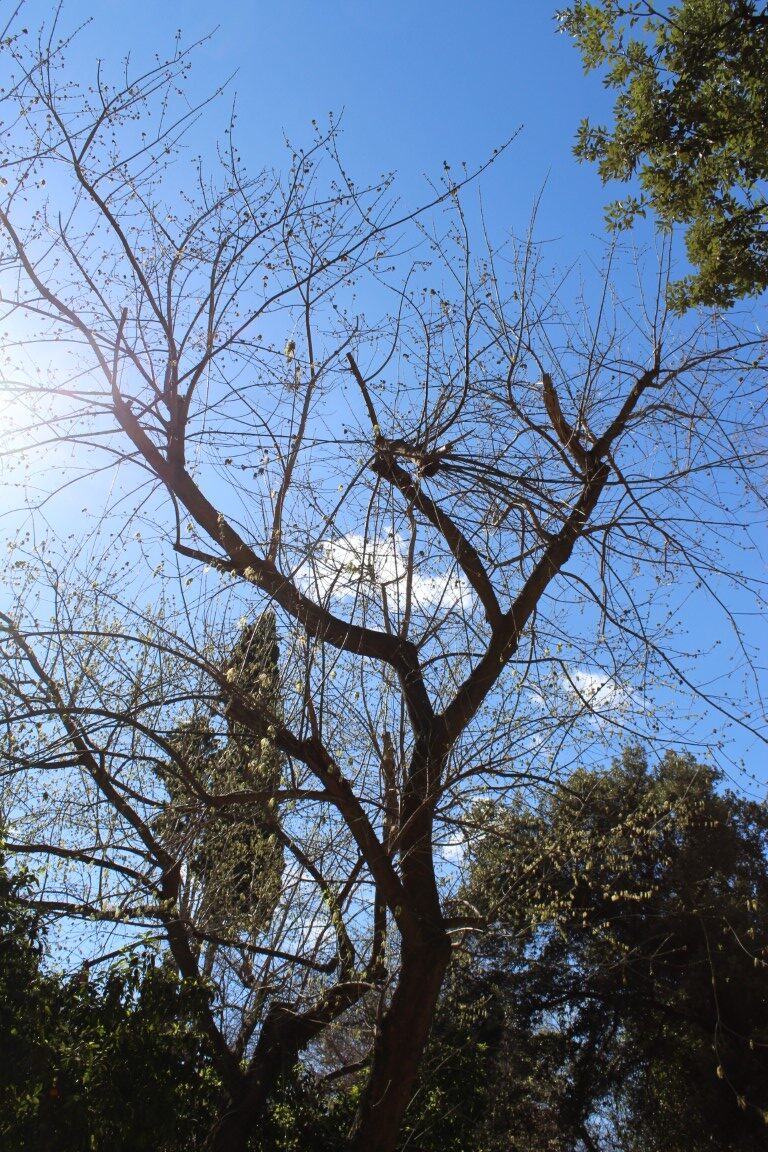
During each season you will see:
References in Αrt
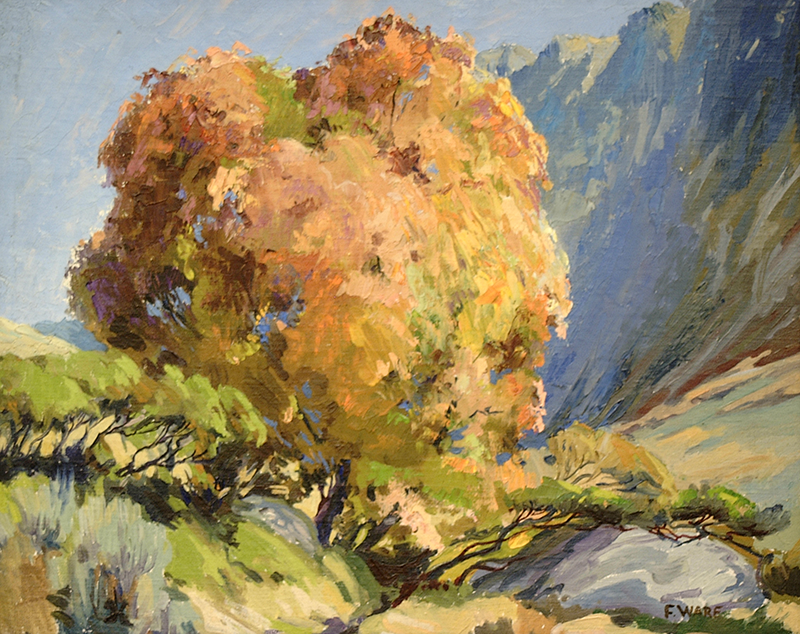
The artist Florence Ware, in her work titled Boxelder Tree in Autumn, captures the tree’s vivid yellow foliage during the fall. In her poem A Word for Box Elder, Betty Bridgman rehabilitates this “misunderstood” tree, describing it as the “poor cousin of the maple” which, although considered less noble, fills the air with seeds that fall “like propellers,” creating a striking contrast between its material “poverty” and the emotional “wealth” of childhood memories it provides. It is indeed fascinating how the name of this “humble” tree permeates the history and daily life of Utah, from naming an entire county (Box Elder County) to its local newspaper, the Box Elder News Journal.