

Classified as a “Geophyte (G)”. Its habitat is “Freshwater habitats (A)”. It develops in damp and shady locations. It prefers calcareous rocks. It is frequently found on cave walls, gorges, cliffs near waterfalls, old wells, and damp stone walls.
(height, leaf arrangement, leaf shape, root system)
Herbaceous fern, evergreen, terrestrial or lithophytic, reaching a height of 10-40 cm. The leaves are bi- or tri-pinnate, with a deep green color on the upper surface (adaxial) and a light green color on the lower surface (abaxial). The leaf blade has an ovate to triangular outline. The leaves are connected by a dark brown and thin petiole, the base of which is covered by scales. The roots are short, creep on the ground, and are covered by brown lanceolate scales, similar to those of the stalk.
(flowering period, flowers, seeds)
Plants of this species are cryptogams, meaning their reproductive organs, the spores, are invisible to the naked eye. On the underside of the leaflets, sporangia are produced which are small and light brown in color. With the opening of the sporangia, the spores are released, which germinate in the soil. Although spore production happens year-round, it peaks at the end of spring and throughout summer especially from June to September.
The name Adiantum originates from the Greek word “ἀ” meaning “not” and “διαίνω” meaning “to wet” or “moisten”. That is due to the leaves’ capability of repelling water and staying dry, even when submerged.
Theophrastus classifies it among evergreen plants, noting that its leaves neither get wet nor retain moisture, which explains its name (ἀ” =“not” and “διαίνω” =“to wet”). He points out that there are two varieties, white and black, which are used for preventing hair loss and for ailments of the urinary system. The plant grows in shady and moist locations, with small paired leaves and no visible root. Dioscorides mentions this inconspicuous root, suggesting that it is probably useless (!), while observing that the plant is very hairy, and lacks a stem, flower, or fruit. Pliny the Elder describes it as a remarkable plant that remains green throughout the year and exhibits an “aversion” to water. This property drew admiration in antiquity and likely made it suitable for ritual uses or for preparations requiring resilient foliage. Moreover, the species’ descriptive epithet, “capillus-veneris”, refers to the hair of the goddess Aphrodite, which, according to myth, was as dry when she emerged from the sea as the plant’s leaves are after coming into contact with water. Dioscorides notes that it grows on old walls, in enclosures, in poorly maintained buildings, and especially around fountains—a phenomenon that continues to this day. Aelian reports that the hoopoe uses the plant to hide behind its dense leaves.
Finally, the Stoic philosopher Cornutus remarks that Pluto, the god of the Underworld, is crowned with adianto, as a reminder that the dead dry up, no longer retain moisture, and lack the water needed to breathe and flourish, symbolically conveying that just as the plant “does not retain moisture,” so too the dead wither and no longer possess the vital moisture necessary for life and growth. In the Victorian “Language of Flowers,” it symbolized discretion and secret bonds, while in Indian tradition there was a belief that wherever the plant grew, the goddess Parvati (the goddess of feminine energy) had walked.
The most important use, as noted by Theophrastus, Pliny, and Dioscorides, is that when mixed with frankincense (or olive oil), it was used as a remedy against hair loss. Its infusion made from young shoots could help singers, as well as those with dyspnea, jaundice, spleen problems, or dysuria. Pliny also mentions its use for expelling stones from the bladder, which relates to the name saxifragum (“stone-breaker”), and when consumed with wine, it aids in healing animal bites. Furthermore, it is described as a diuretic, an antidote for snake and spider venom, and a treatment for asthma, liver and spleen disorders, hemorrhages, skin diseases, and as an expectorant. Up until the 19th century, it was used to prepare the syrup “Capillaire” for coughs, and its dried leaves can be used to make tea. It is also a popular ornamental plant due to its striking appearance.
(Note: Ethnobotanical data regarding the medicinal uses of plants must be handled with caution, and their application should be carried out exclusively under medical supervision).
- https://www.worldfloraonline.org
- https://www.missouribotanicalgarden.org
- https://tropical.theferns.info
- https://floranorthamerica.org
- https://powo.science.kew.org
- https://www.rhs.org.uk
- Dimopoulos, P., Raus, T., Bergmeier, E., Constantinidis, T., Iatrou, G., Kokkini, S., Strid, A., & Tzanoudakis, D. (2013). Vascular plants of Greece: An annotated checklist (Englera 31). Botanic Garden and Botanical Museum Berlin-Dahlem; Hellenic Botanical Society. https://doi.org/10.3372/en.31
- Moore, T. (1857). The ferns of Great Britain and Ireland (J. Lindley, Ed.). Bradbury & Evans.
- S., J. H. (1877). Floral poetry and the language of flowers. Marcus Ward & Co. https://doi.org/10.5962/bhl.title.160012
- Aelianus, “De Natura Animalium”, 1.35
- Cornutus, “Theologiae Graecae compendium”, 75
- Dioscorides, “De Materia Medica”, XVII
- Orpheus, “Argonautica”, 911.
- Plinius secundus, “Naturalis Historia”, 21.60.1, 28.46.1
- Pyrrhus of Thessaly (1838). “Botanical Practice: Adapted to Medicine and Economy” (Βοτανικὴ Πρακτική: Προσηρμοσμένη εἰς τὴν Ἰατρικὴν καὶ Οἰκονομίαν). Athens: Angelos Angelidou Press.
- Theophrastus, “Enquiry into Plants”, 7.10.2, 714.1.
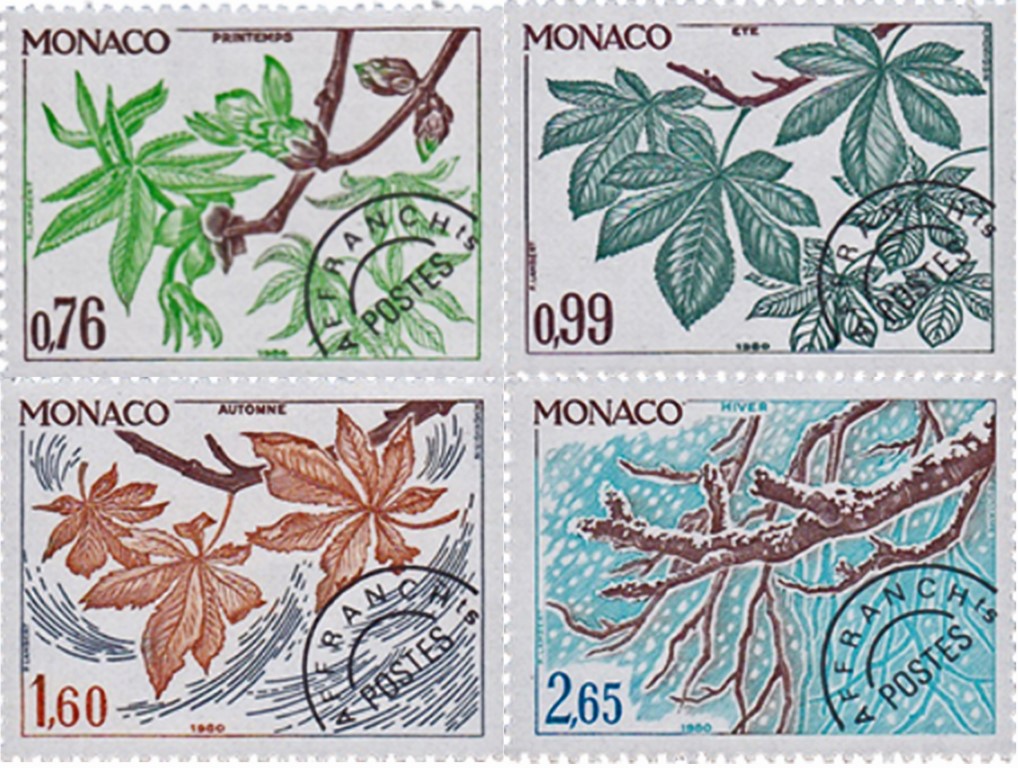
During each season you will see:
SPRING
Sprouting of young stems
SUMMER
Mature leaves
(sporangia can be observed on their underside)
AUTUMN
Green foliage
Release of spores
WINTER
Green foliage
References in Αrt
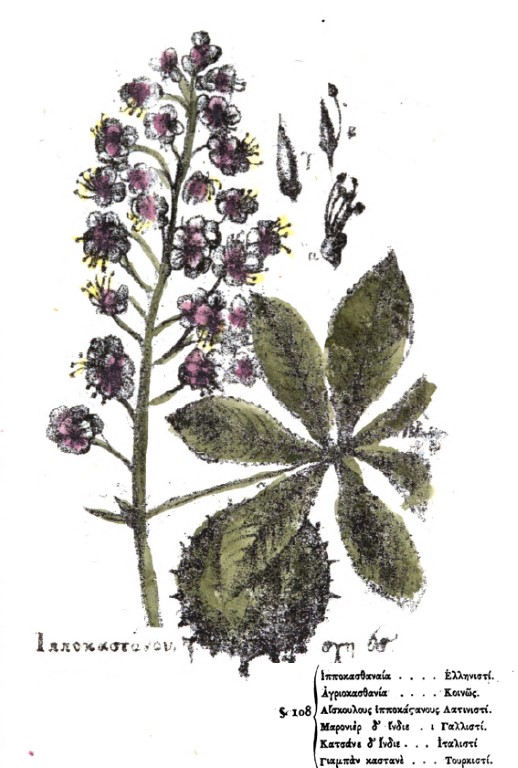
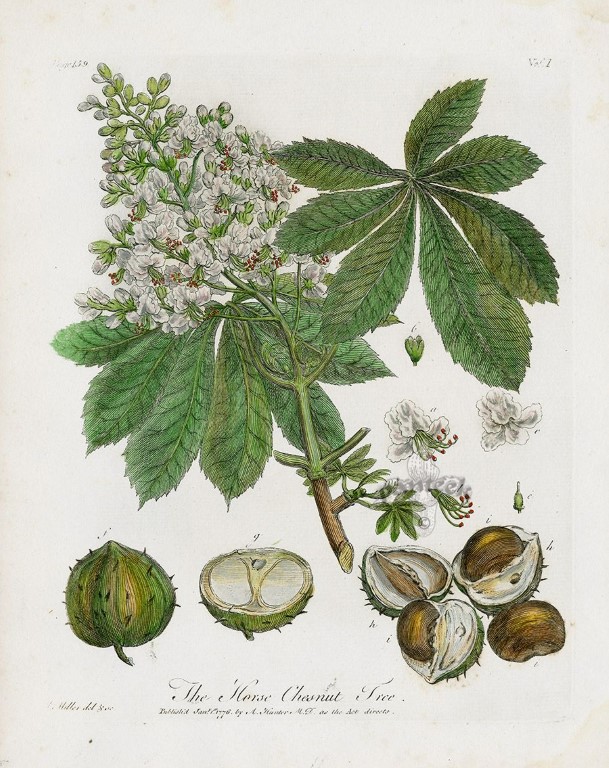
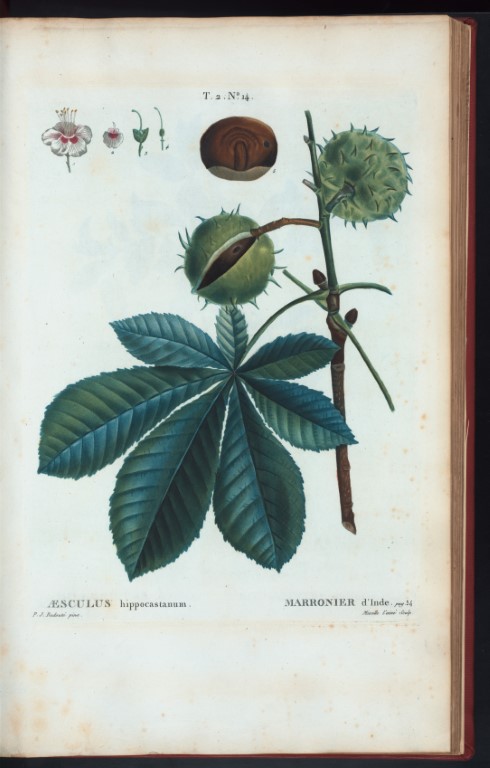
The plant is primarily encountered in illustrative depictions, such as those by Dioscorides and Pyrrhus of Thessaly, as well as in foreign-language botanical manuals.