

A hardy species that thrives on riverbanks, roadsides, and disturbed soils. It prefers the sun and withstands drought, salinity, winds, atmospheric pollution, and dry, barren, and rocky soils. It binds atmospheric nitrogen in the soil by forming symbiotic relationships with nitrogen-fixing bacteria.
(height, leaf arrangement, leaf shape, root system)
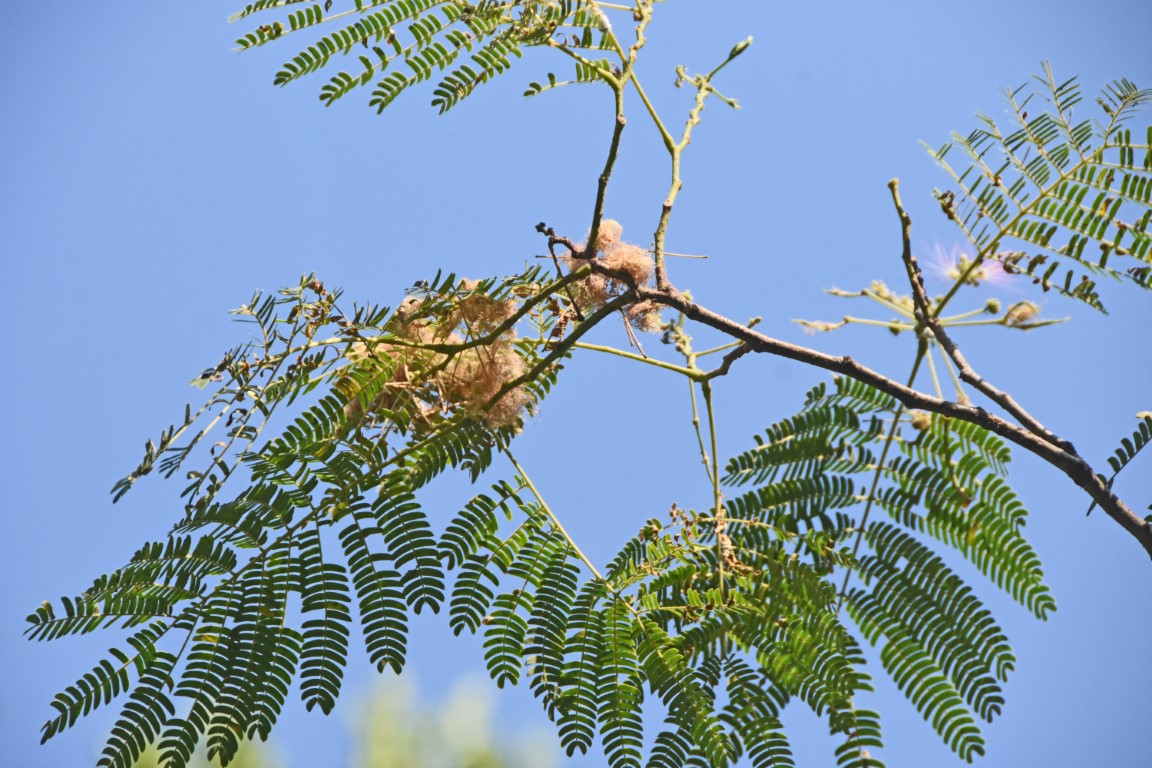
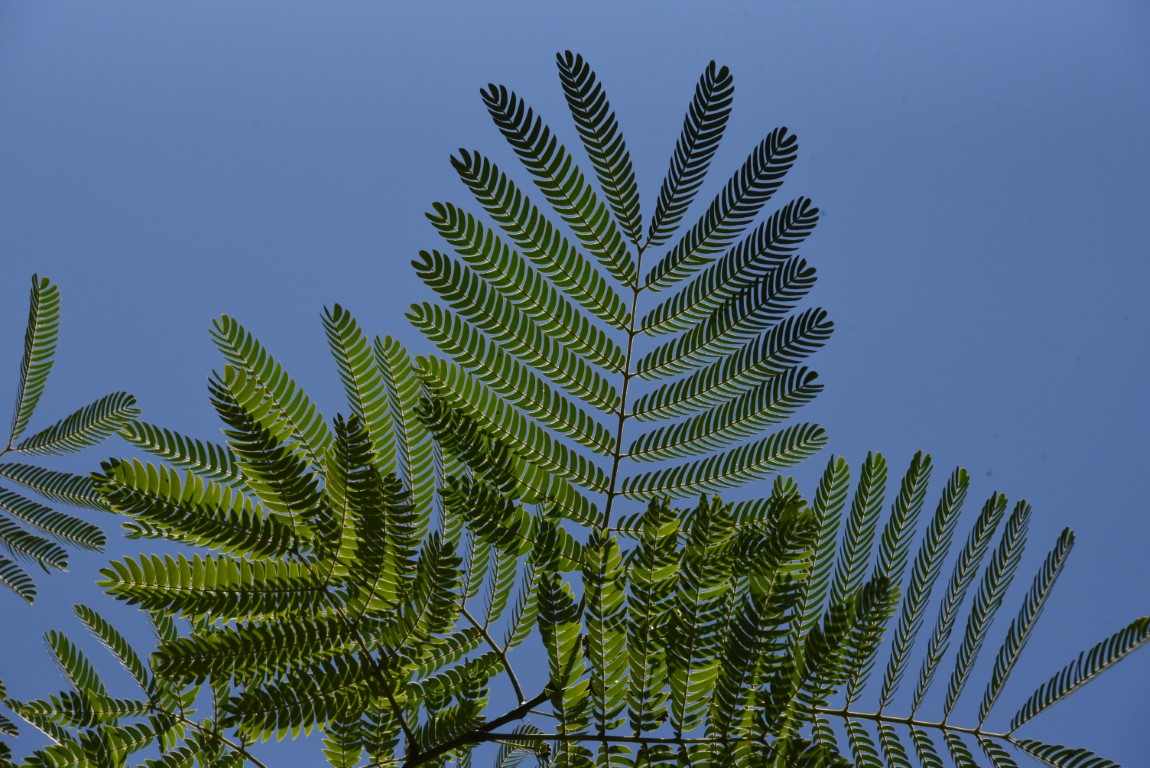
Deciduous tree of medium size with a dark grey trunk and open crown. It can reach a height of 16 m. Two-tone coloring is observed in the foliage, as the leaves have a darker green color on the upper surface, where there are no hairs, compared to the lower surface, where a light covering of hairs is observed. They grow alternately and are bipinnate, with 10-25 first-order leaflets, each of which is divided into 35-50 second-order leaflets. The length of a leaf amounts to 20-30 cm. A shallow but extensive root system develops, with nitrogen-fixing bacteria living in symbiosis with the plant in its roots, where they form nodules.
(flowering period, flowers, seeds)
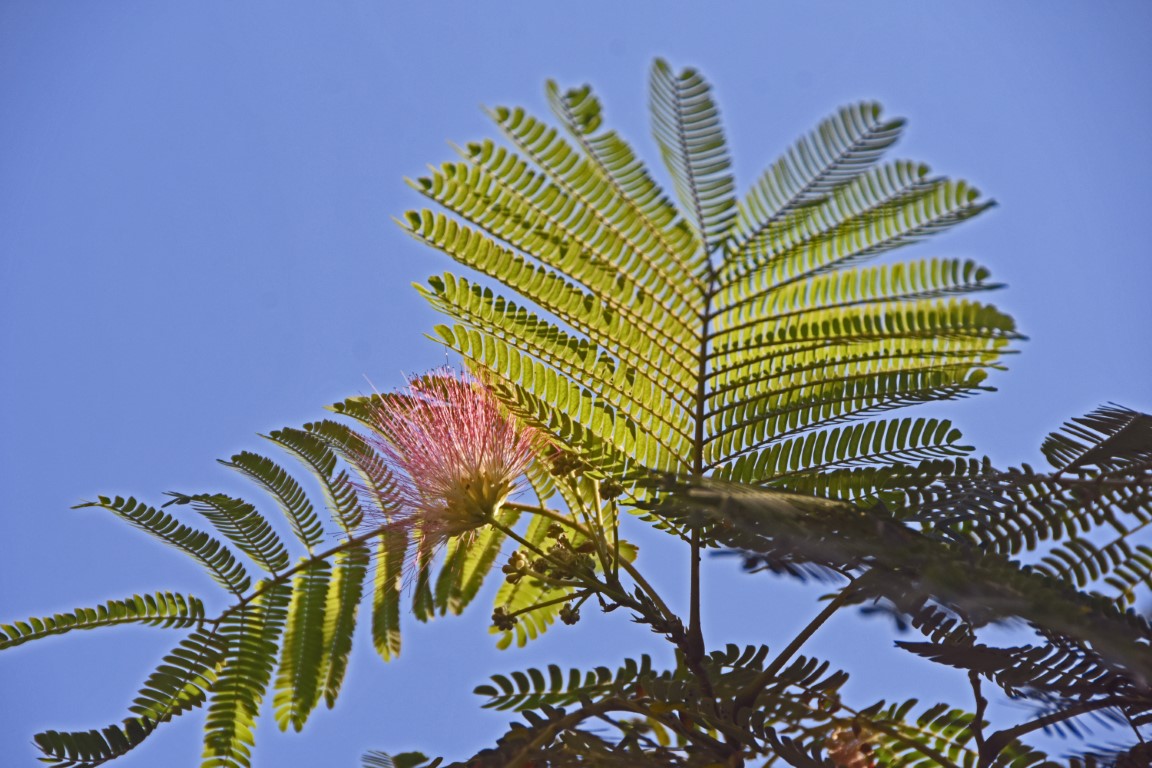
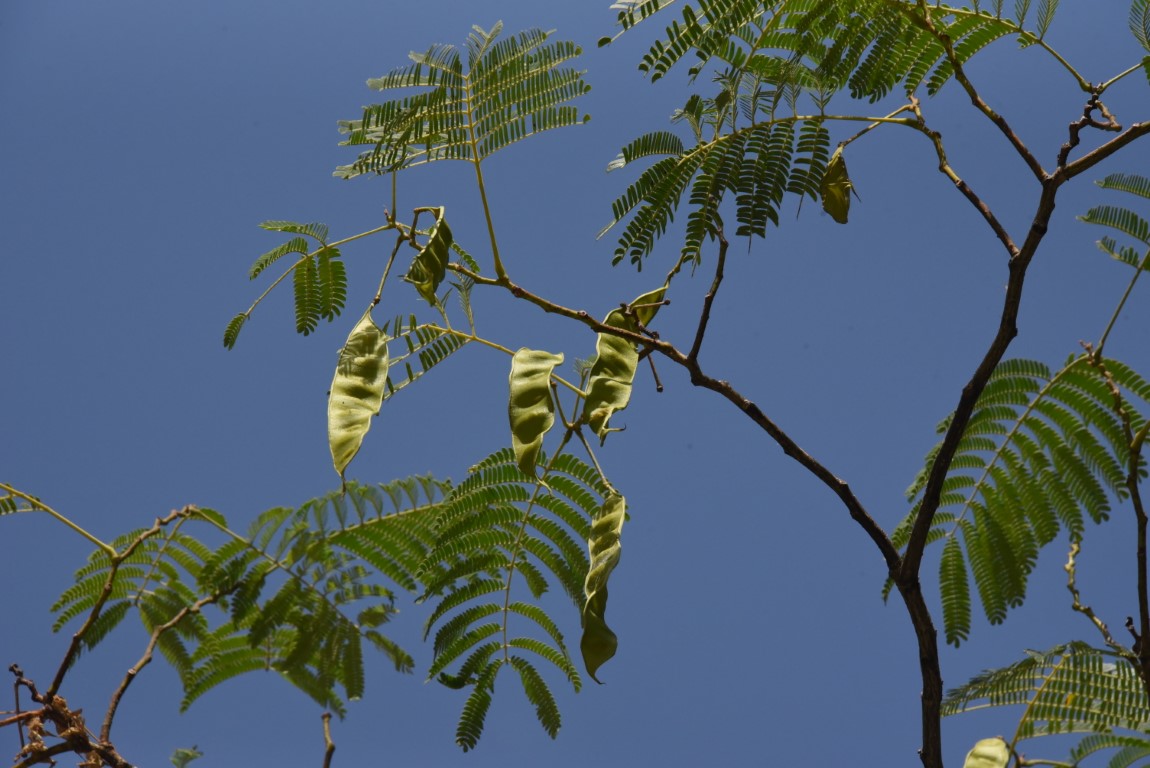
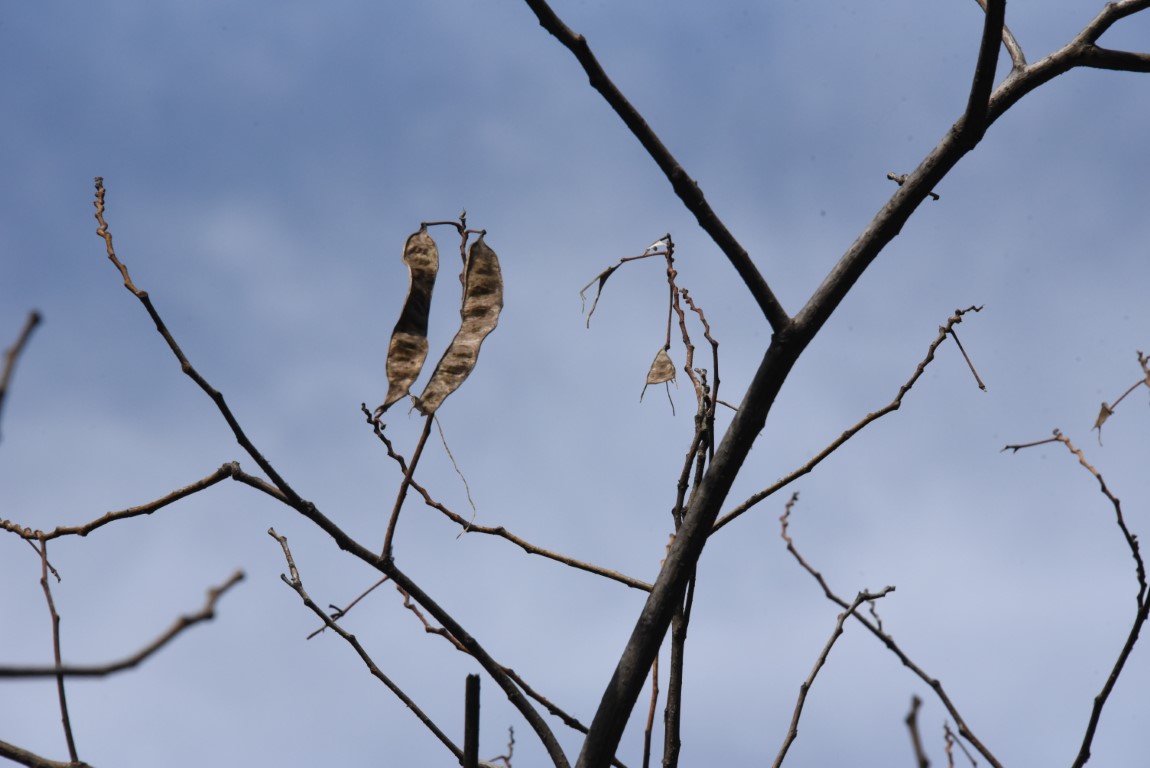
The species produces hermaphroditic flowers, which are organized in raceme inflorescences. Petals are completely absent, while their characteristic feature is the densely arranged stamens of white-pink color, with the base being whiter and the tip pink. Flowering lasts all Summer, from June to August. Subsequently, brown fruits classified as legumes arise, whith a length of 10-25 cm, containing 8-12 brown seeds each.
The leaves fold during the night, giving the impression that they are sleeping!
The genus name is a tribute to the Italian nobleman Filippo degli Albizzi, who brought the species to Europe in the 18th century. The specific epithet “julibrissin” comes from the Persian language, with “gul-i abrisham” meaning silky flower.
The flowers of this species are mentioned in traditional Chinese medicine as a remedy for anxiety, insomnia, and depression. For this reason, it is also called the “tree of joy.” The dried leaves can be used as a tea substitute. Its bark is employed in traditional Chinese and Japanese medicine as a tonic, sedative, and anti-inflammatory agent, suitable for treating lung pain and swelling, skin wounds, ulcers, and injuries. Its pharmacological activity has been linked to the presence of complex saponins, which exhibit cytotoxic effects on human cancer cell lines, making it a potentially promising anticancer plant.
The species is also planted to enrich soil with nitrogen. Additionally, due to its beautiful flowering and shady canopy, it is extensively cultivated as an ornamental tree in gardens, parks, and streets, while its wood is used in carpentry.
(Note: Ethnobotanical data regarding the medicinal uses of plants must be handled with caution, and their application should be carried out exclusively under medical supervision).
- https://www.worldfloraonline.org
- https://powo.science.kew.org
- https://www.rhs.org.uk
- https://www.missouribotanicalgarden.org
- https://tropical.theferns.info
- Ikeda, T., Fujiwara, S., Araki, K., Kinjo, J., Nohara, T., & Miyoshi, T. (1997). Cytotoxic glycosides from Albizia julibrissin. Journal of Natural Products, 60(2), 135–138. https://doi.org/10.1021/np970006x
- Karimi, E., Baher, Z. N., & Ebrahimi, M. (2010). Evaluation of antioxidant values and mineral content of some edible wild plants. Industrial Crops and Products, 33(1), 21–28. https://doi.org/10.1016/j.indcrop.2010.08.004
- Lee, J.-H., Kim, S.-H., & Park, K.-S. (2011). Nutritional components and antioxidative activities of Adiantum capillus-veneris L. Korean Journal of Food Preservation, 18(1), 79–85. https://doi.org/10.11002/kjfp.2011.18.1.079
- Roy, M., Yadav, D. K., Kumar, B., Kaur, J., Patel, A. K., & Kumar, N. (2016). A review on phytochemical and pharmacological studies of Albizia julibrissin: An ornamental plant. World Journal of Pharmaceutical Research, 5(4), 598–604.
- Zou, C., & Yan, X. (2006). Triterpene saponins from the bark of Albizia julibrissin. Bioorganic & Medicinal Chemistry Letters, 16(8), 1907–1910. https://doi.org/10.1016/j.bmcl.2006.02.009
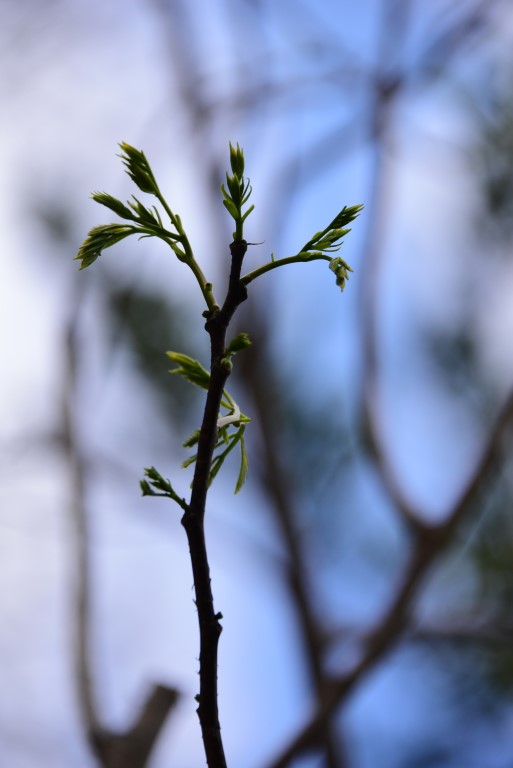
During each season you will see:
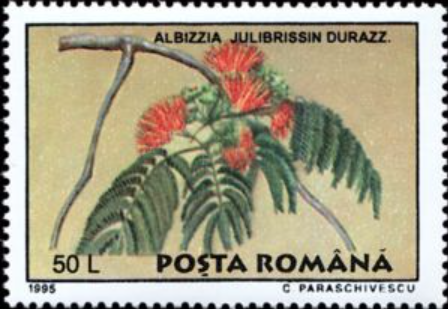
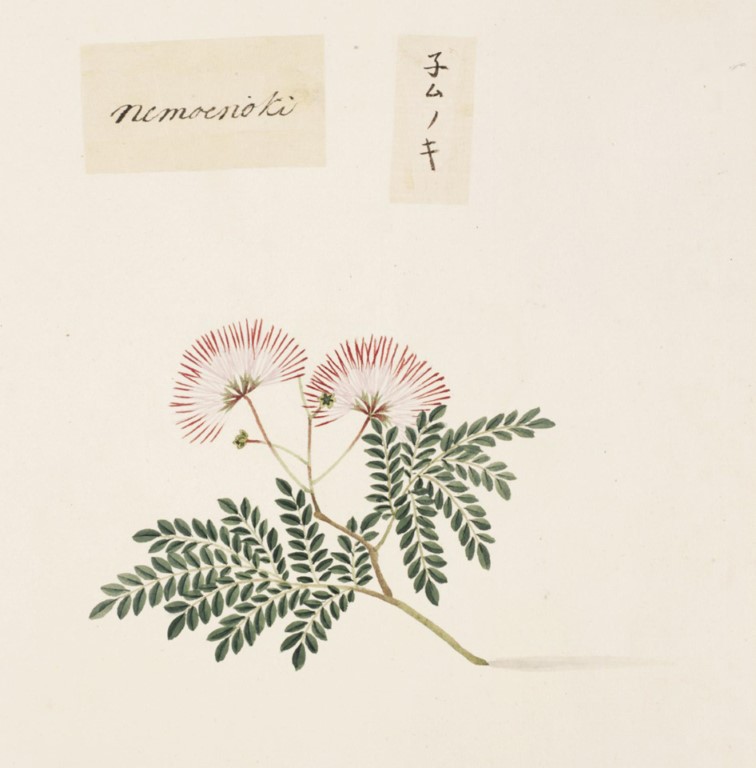
References in Αrt
The Silk Tree appears frequently in the realm of Chinese classical and modern poetry under the name 合欢 (He-huan), as a symbol of unity, love, or happiness.