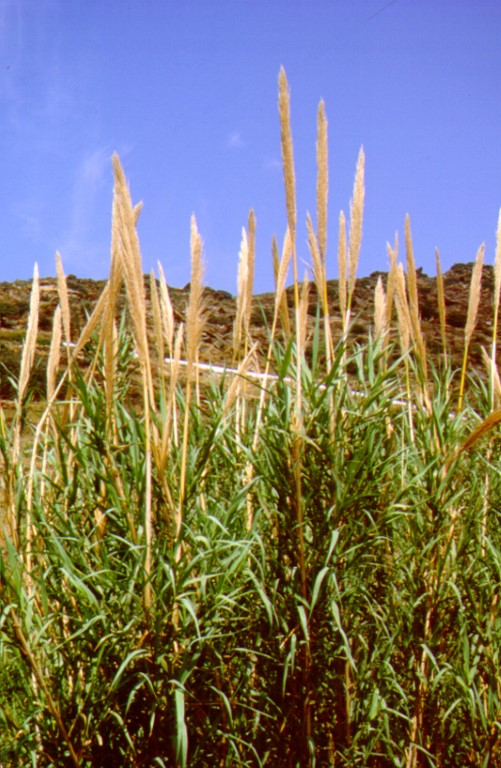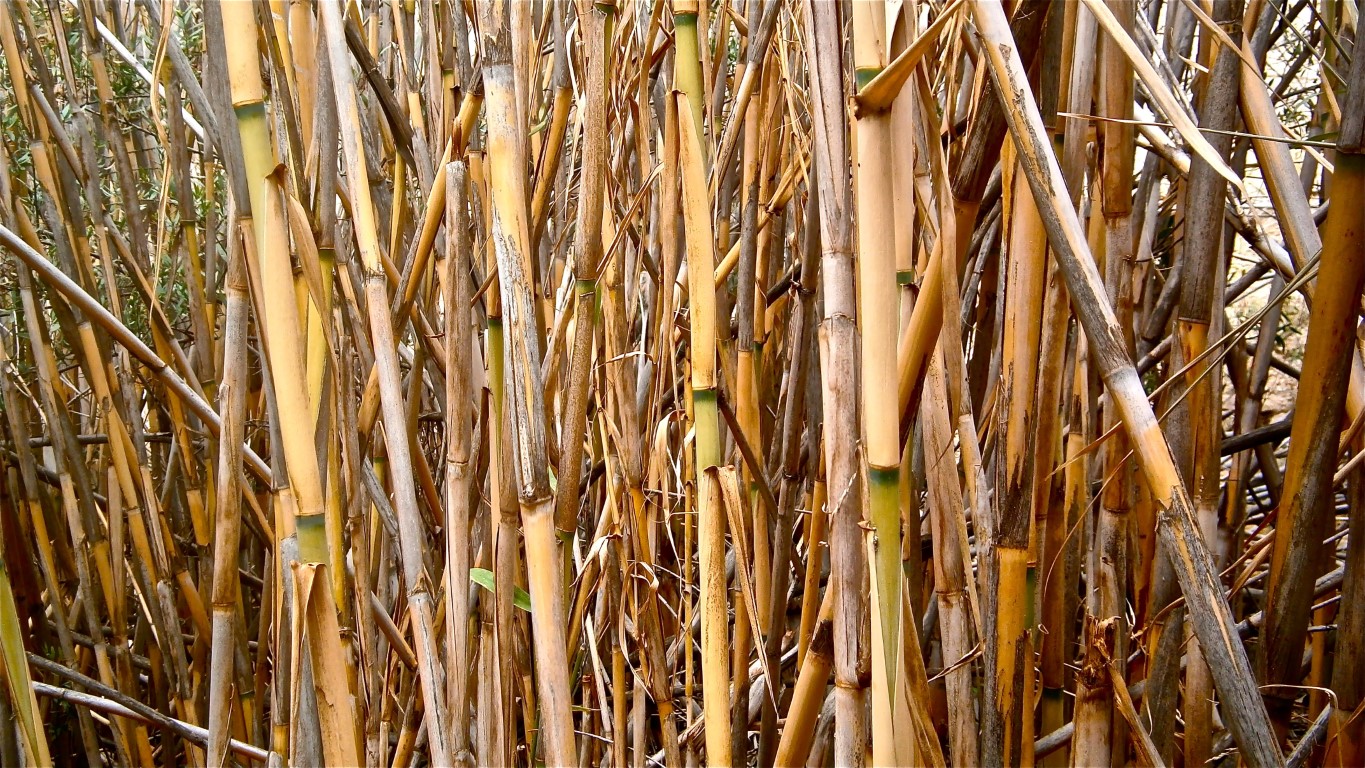


Classified as a “Geophyte (G) and Phanerophyte (P)”. Its habitats are “Freshwater habitats (A)” and “Agricultural and Ruderal habitats (R)”. Arundo donax thrives in subtropical and warm regions in wetlands, such as riverbanks, lakes, swamps, mires, and marshes. It prefers full sunshine but can adapt to shadier conditions, while it is resistant to temperatures down to -20°C.
(height, leaf arrangement, leaf shape, root system)
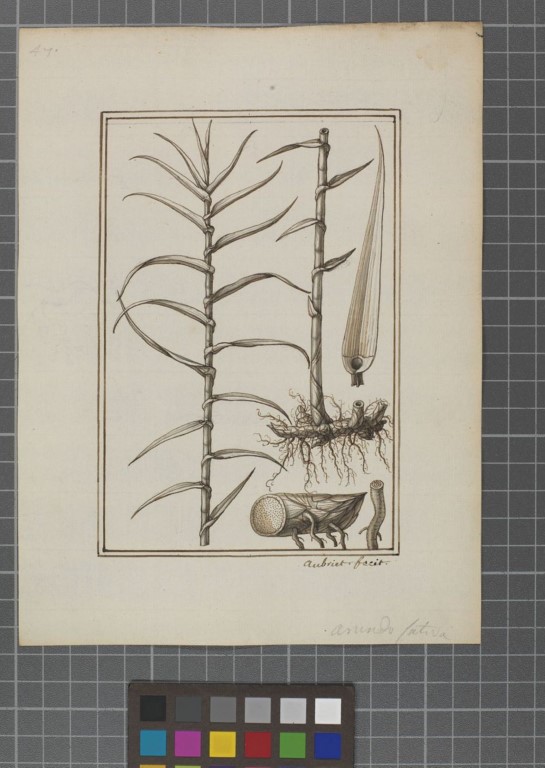
Perennial, native, grass-like plant 6-10 m in height that usually forms clumps. Its characteristic woody stems, known as canes, bear long lanceolate and grey-green leaves 30-80 cm long and 2-6 cm wide, which grow alternately. Hairs are often observed at their base. The root system is strong, horizontal, hard, and forms compact masses.
(flowering period, flowers, seeds)
Flowering occurs from August to November, when dense compound panicle-like inflorescences appear at the ends of the stems. The flowers have a cream-white to light brown-purple color. The fruit produced is a caryopsis and contains one seed. Fruiting takes place during October and harvest in early Autumn. It is worth noting that most seeds are not viable, and, as such, reproduction takes place primarily asexually.
One of the fastest-growing plants in the world, as it can reach a growth rate of up to 5-10 centimeters per day under ideal conditions. It is also extremely flammable, significantly increasing the risk of fire in the areas where it grows.
Arundo donax is identified with the “kálamos” (reed) of ancient Greek and Latin texts and has been an integral part of human history in the Mediterranean basin and the Middle East for thousands of years.
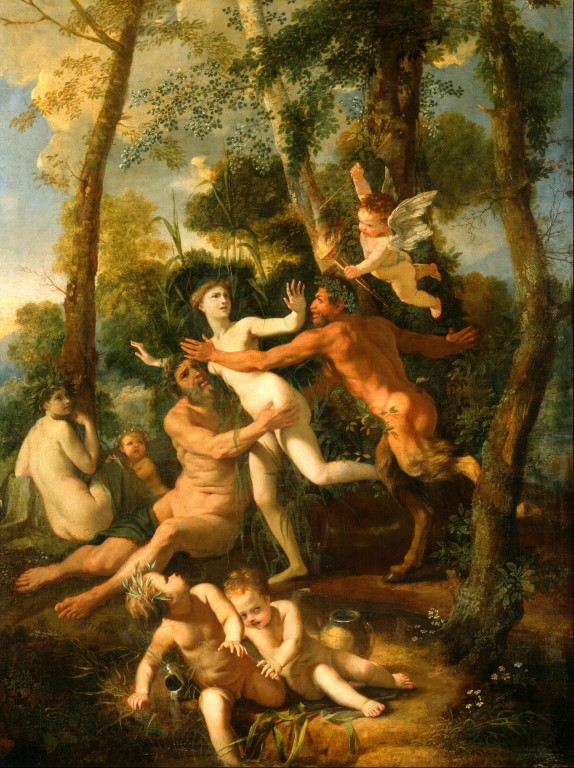
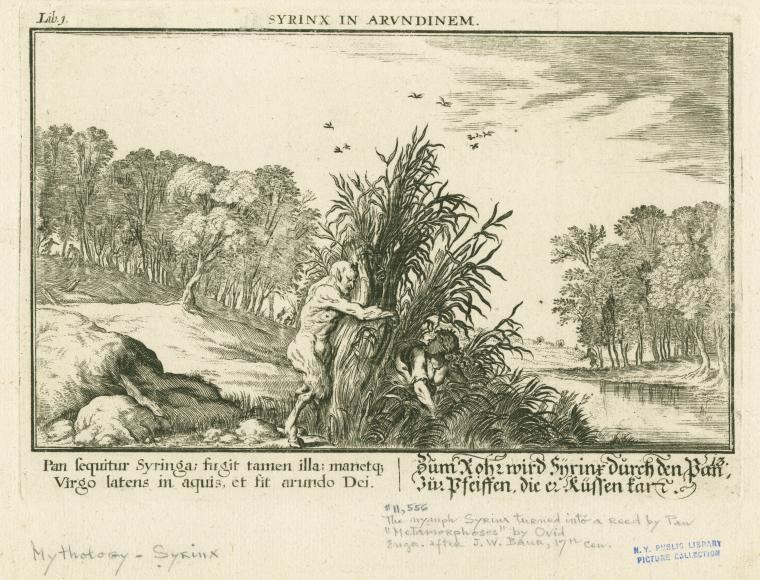
The reed is mentioned as early as the time of Homer, as the arrows of warriors in the Iliad were made of reed! In the Minoan era, it seems to have a significant role, since at Knossos, in the southeast house, fragments of frescoes have been found depicting, other than lilies, ears of reeds. Aristophanes and Euripides describe that the instrument of Pan, a flute, is made with reeds from the lakes. Consequently, the musical dimension of the reed was also linked to religion, as Pan, God of the fields, almost always holds a syrinx made of reeds of unequal length. The myth of Pan and Syrinx is described in detail by Nonnus. Syrinx was a nymph of the rivers of Arcadia, famous for her virtue and purity. When the god Pan fell in love with Syrinx, she tried to avoid him, as she wanted to remain independent. To escape Pan’s persistence, she transformed into a reed, among the other river nymphs. Despite this transformation, the spirit of Syrinx did not vanish completely: the winds passing through the reed beds produce sounds, and from this sound Pan crafted the syrinx (pan flute), a musical instrument that bears her name to this day.
Herodotus describes how in India, certain tribes live in the river marshes and fish from boats made of reeds, where each boat consists of a single reed joint (internode of large reeds), and their clothes are made from the textile fibers of the reed. Of course, reeds are recorded as far as the Euphrates region. Theophrastus describes reeds as plants with fibrous and flexible stems, with a strong and extensive root system capable of enduring in wet areas and lakes. Reeds are frequently mentioned together with other water-loving plants like willows and alders, which thrive in marshes and rivers. They are also found in the lake of Orchomenus (Aliartos area). The “Field of Reeds” (Aaru/Sekhet-Aaru) is the ancient Egyptian concept of paradise, an idyllic, fertile land mirroring the Nile Delta, where worthy souls traveled after successfully passing the Weighing of the Heart Ceremony. In Orthodox worship, soldiers scourged Jesus with reeds and put a reed in his hand, mocking his kingship. In the same texts, reeds are used to offer sponges with vinegar to Jesus on the Cross.
In antiquity, the plant was one of the most valuable materials for early civilizations. Ancient Egyptians, Greeks, and Romans utilized its hard, hollow stem for a multitude of practical applications, such as making arrows for hunting and war, light building materials for roofs and fences, as well as fishing rods. Perhaps one of its most important uses was its utilization as a stylus (pen), thus allowing the development of writing on papyrus and parchment. Furthermore, it is directly linked to the birth of music, as it constituted the material for the construction of the first wind instruments (aulos).
Dioscorides describes the plant and mentions that it is astringent and induces diuresis. For this reason, when boiled, it is administered to those suffering from kidney diseases and strangury (difficulty urinating). It induces menstruation and is used for vaginal baths for therapeutic purposes (sitz baths).
Polybius and Thucydides note that reeds were used to cover troops or horses in wet areas, offering natural concealment, or for building earthworks after mixing them with clay. Also, reeds constituted raw materials for the construction of semi-permanent structures, barriers, and partition spaces in agricultural and aquatic areas. On the other hand, as Pliny describes, the wet soils where reeds thrived contributed to soil fertility, the production of aromatic plants, and the support of other crops, such as cereals and legumes. Strabo mentions that vineyards on riverbanks were often supported on trellises made of reeds to be protected from the waters and to ensure the growth of the vines, while in Roman times their utilization for reinforcing plants and their importance in protection against erosion is noted. Furthermore, reeds were used for making tools; in the late Hellenistic and Roman periods, “reeds with a pointed tip” became the writing tool as scholars, scribes, and students wrote with reed pens on papyrus or pottery shards (ostraca). In the Roman era, the calamus is now identified with the writing tool of the man of letters, while Ovid speaks vividly of the reed that “runs upon the wax”.
In the modern era, the most important and specialized use of Arundo donax globally concerns the music industry. The wood of the reed possesses unique acoustic properties, hardness, and flexibility, characteristics that make it the top natural raw material for manufacturing reeds for woodwind instruments, such as the clarinet, saxophone, and oboe. The species finds application in the industrial sector, where due to its rapid growth and the enormous biomass production that can be generated, it is cultivated intensively to produce biofuels and cellulose for paper. On a more traditional level, it continues to be used in the rural economy for the construction of reed mats, shelters, and support Sfor other plants, while environmentally it is utilized for stabilizing soils on slopes and banks, although its use requires caution due to its invasive nature. It is also administered as a tonic for the gastrointestinal system, diuretic, and antigalactic (to stop milk production), in the form of a decoction.
(Note: Ethnobotanical data regarding the medicinal uses of plants must be handled with caution, and their application should be carried out exclusively under medical supervision).
- https://www.worldfloraonline.org
- https://powo.science.kew.org
- https://www.greekflora.gr
- https://www.rhs.org.uk
- https://mediplantepirus.med.uoi.gr
- https://www.iucngisd.org
- Aristophanes, “Frogs”, line 225
- Aubriet, C. (ca. 1700). Arundo sativa (now Arundo donax) [Drawing]. RHS Lindley Collections, London, United Kingdom.
- Baur, J. W. (ca. 1700). Wonders: Images of the ancient world. Mythology – S-Z [Image collection]. The New York Public Library, New York, NY, United States.
- Columella, “De Re Rustica”, 4.4.1, 4.30.2
- David, R. (2003). Handbook to life in Ancient Egypt (Rev. ed.). Facts on File.
- Dioscorides, “De Materia Medica”, XVII
- Euripides, “Iphigenia in Tauris”, line 1123
- Gospel of Mark, 15:19, 15:36
- Gospel of Matthew, 27:29, 27:30
- Herodotus, “Histories”, 3.98
- Homer, “Iliad”, 5.75
- Kantor, H. J. (1945). Plant ornament in the Ancient Near East: Chapter VIII. The decorative flora of Crete and the Late Helladic mainland. [Unpublished doctoral dissertation or monograph]. University of Chicago.
- Nonnus, “Dionysiaca”, 42.365
- Ovidius, “Tristia”, 1.1.11
- Plinius secundus, “Naturalis Historia”, 5.70, 5.73, 16.48.1, 13.6.1, 17.47.2, 18.65.2
- Polybius, “Histories”, 3.71.3
- Strabo, “Geographica”, 9.2, 16.4.1
- Theophrastus, “Enquiry into Plants”, 1.6.9, 4.10.2, 4.9.14.16.1
- Thucydides, “Histories”, 2.76
- Varro, “De re rustica”, 1.8.1, 1.24.4;
- Xenophon, “Anabasis”, 1.5
During each season you will see:
SPRING
New shoots and leaves
SUMMER
Leaves
Few flowers
AUTUMN
Leaves
Flowers
WINTER
Shedding of leaves
References in Αrt
The presence of the reed in art is inextricably linked to Greek mythology. More specifically, in the myth of the god Pan and the nymph Syrinx, as recorded in Ovid’s “Metamorphoses” the nymph Syrinx, to escape the amorous pursuit of Pan, transformed into a reed on the banks of the river Ladon. Pan, hearing the wind passing through the reeds, cut stems of different lengths and joined them with wax, creating the famous Pan flute. This scene of transformation and bucolic life has been a popular subject in painting, particularly during the Renaissance and Baroque periods. Landscapes depicting idyllic river scenes or mythological scenes (such as paintings by Poussin or Jordaens) often include clumps of reeds, which render the atmosphere of wild, aquatic nature.