
A species that thrives in tropical or subtropical sandy coastal areas and in semi-arid to slightly humid climates. It can grow in any type of soil, while sunlight is essential for its growth. It does not survive in low temperatures.
(height, leaf arrangement, leaf shape, root system)
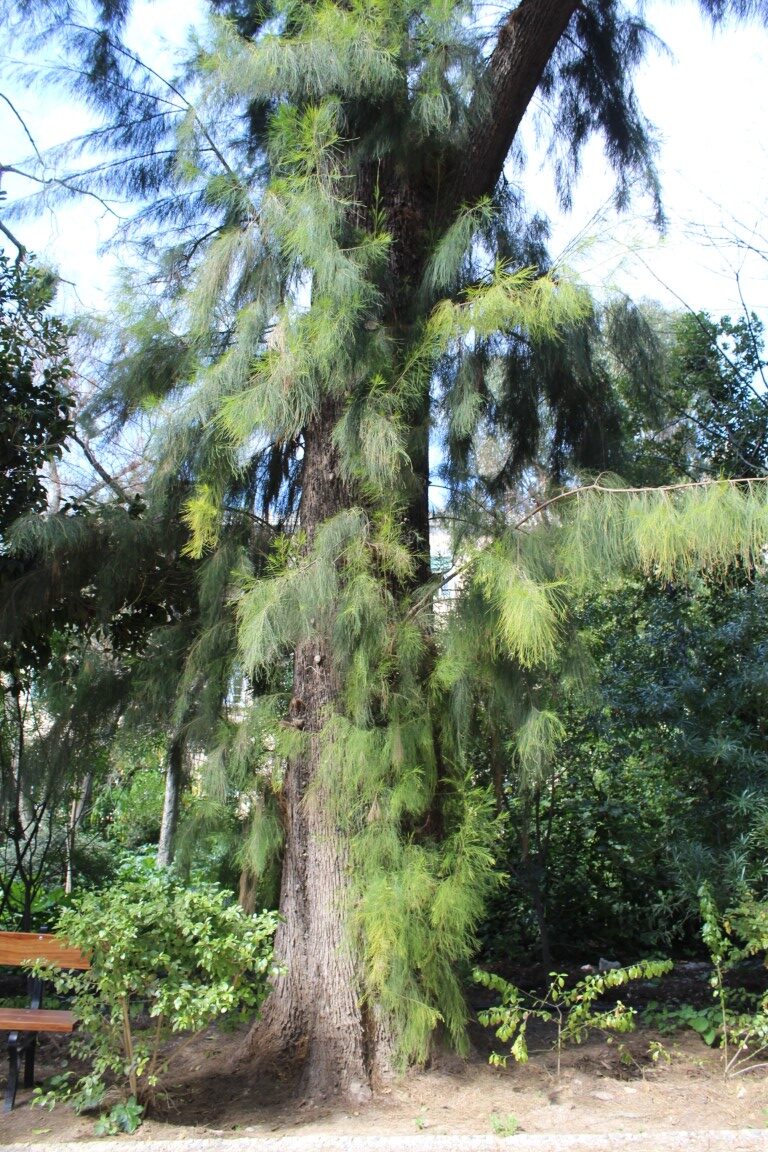
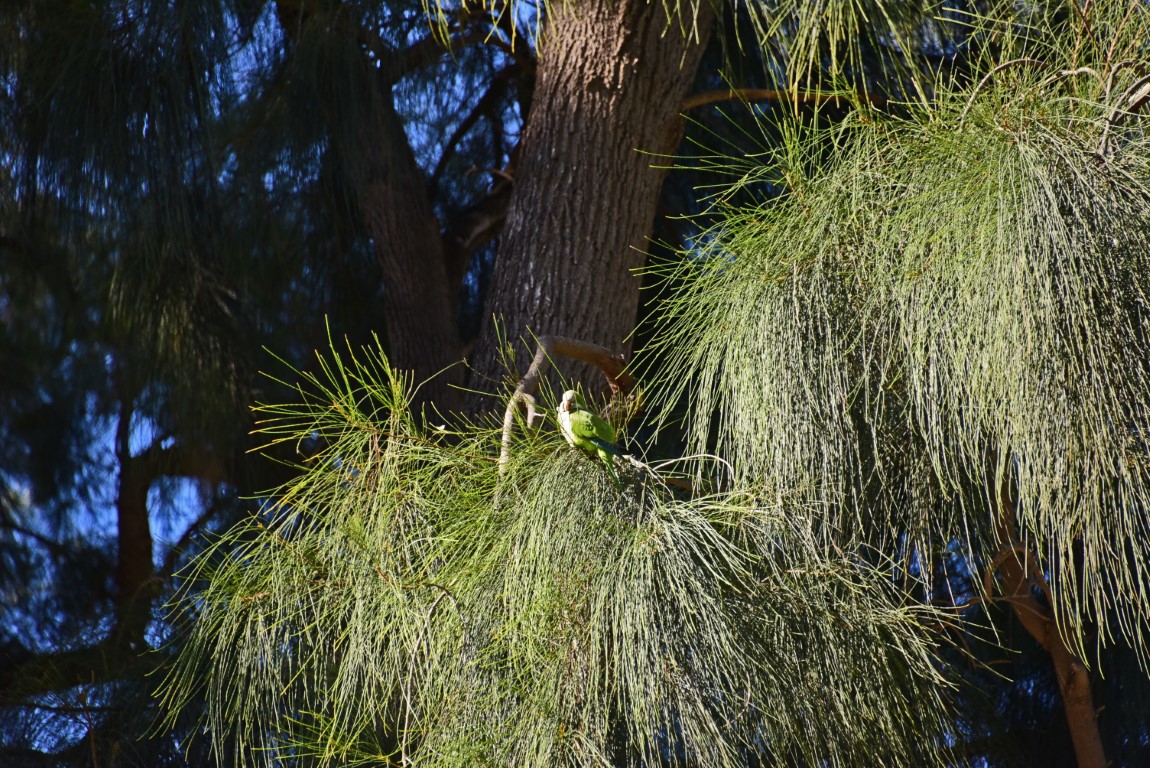
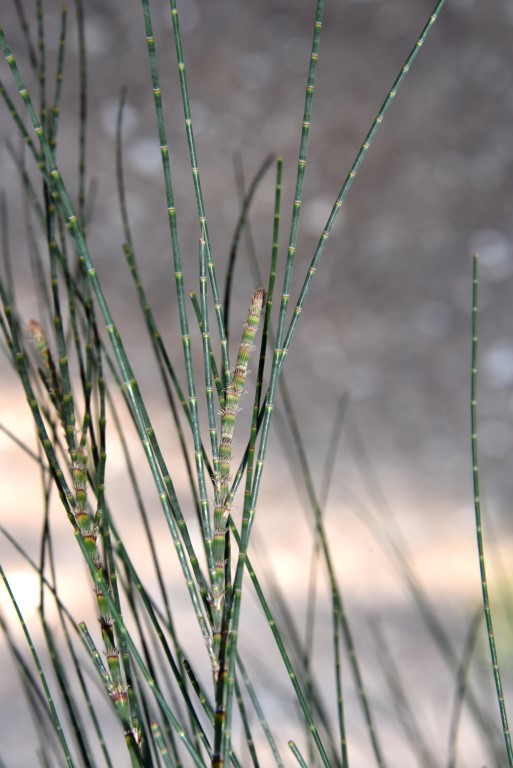
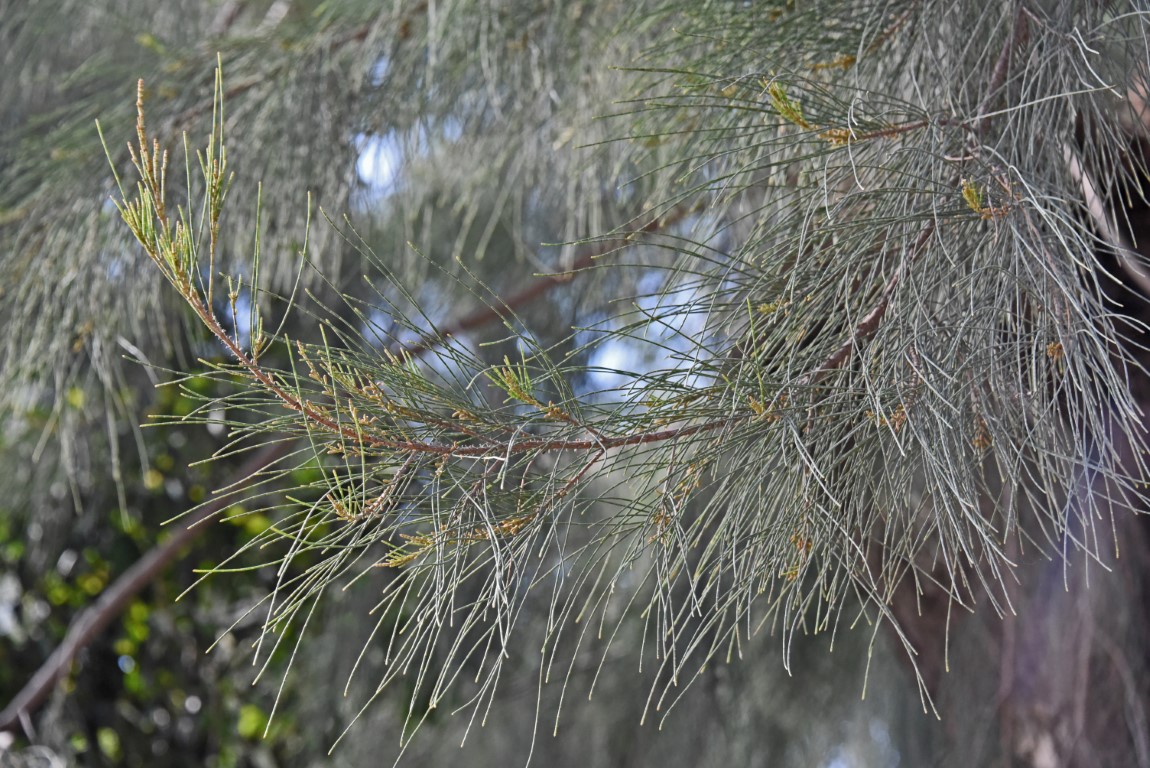
Fast-growing evergreen tree reaching a height of 10-30 m. Its crown is broad and pyramidal, with a final diameter of 8-10 m, while the trunk has a rough texture and a grey-brown or dark brown color. The leaves are dark green, simple, needle-like, and grow in whorls of 7 or 8. The root system is particularly extensive, a feature of the species that has led to its planting in areas where there is a need to limit soil erosion.
(flowering period, flowers, seeds)
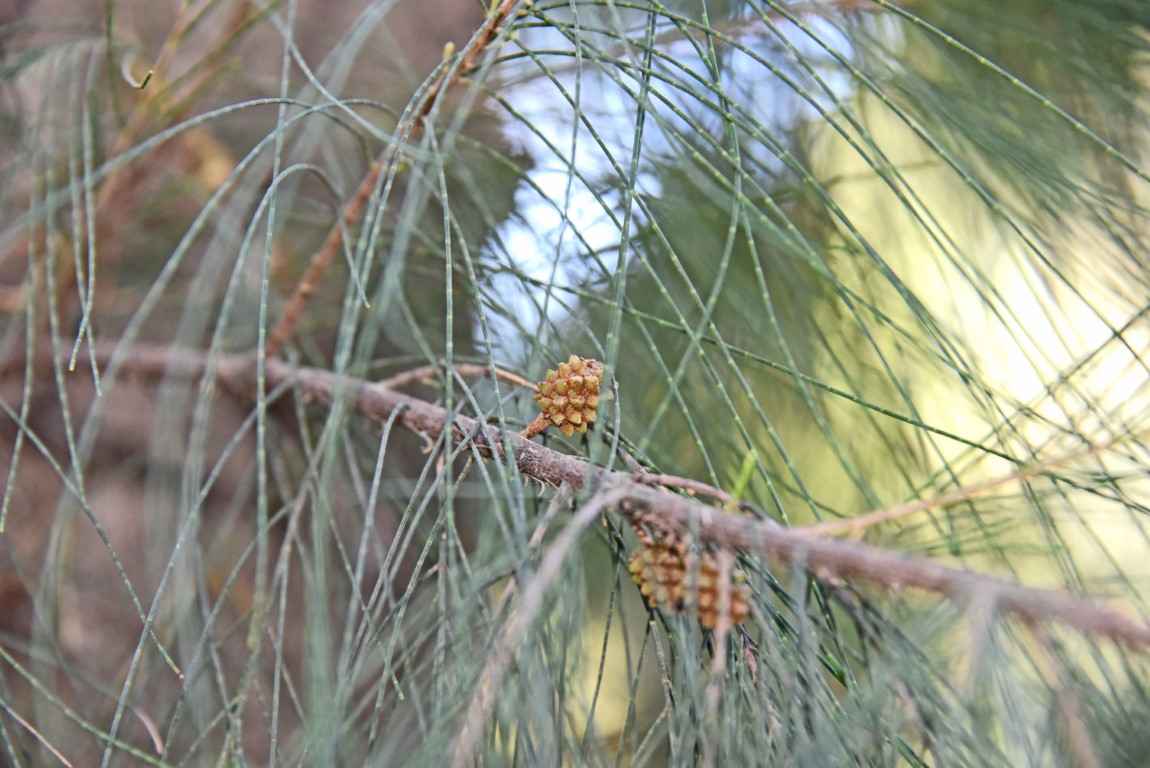
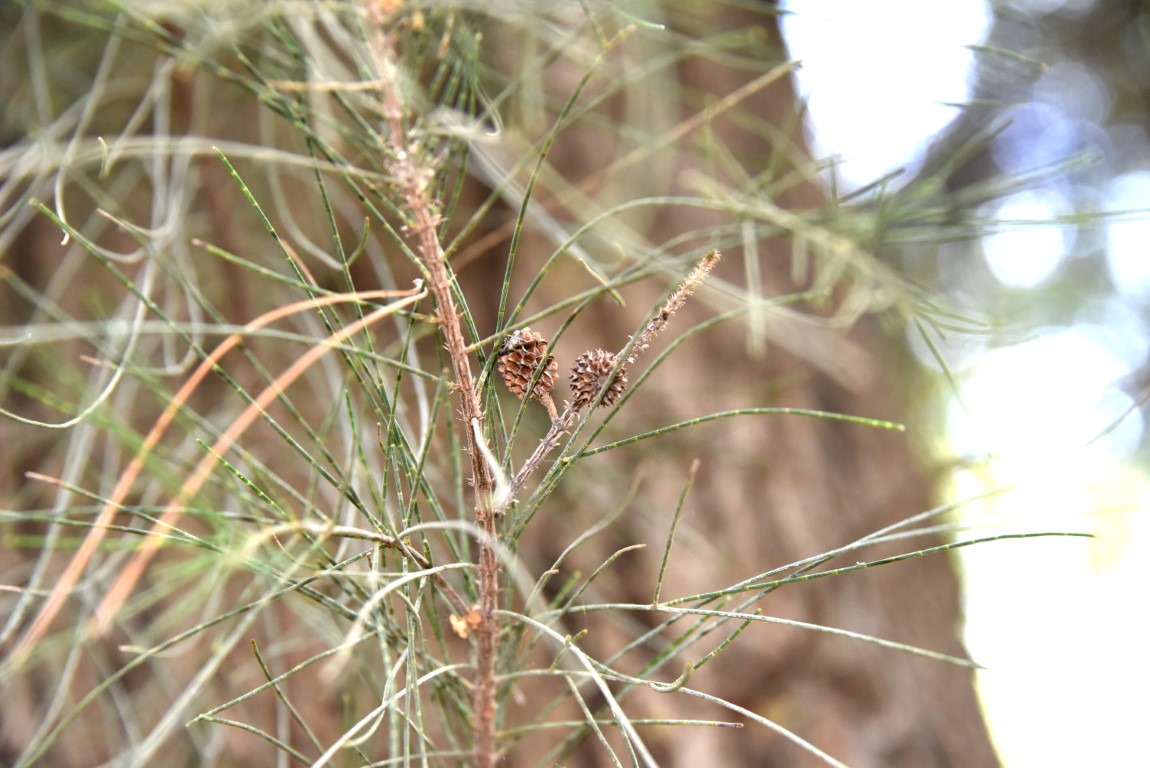
Monoecious species with separate male and female reddish flowers. The male flowers are organized in spikes 1-4 cm long, while the female ones are organized in racemose inflorescences of 3-5 cm. The flowering period lasts from April through June. After fertilisation, woody, oval-shaped fruits develop. These fruits are 1-2.5 cm long and 1 cm in diameter, resembling cones. They contain seeds named samaras, with a pale brown hue, elliptical shape, and length of 5-8 mm, including their wings.
Even though Casuarina equisetifolia resembles a pine due to the structure of its shoots and leaves, it does not belong to the conifers.
Structures called nodules are observed on the roots of the trees, which are created by bacteria of the genus Frankia. Symbiotic relationships prevail between the two types of organisms, as the bacteria convert atmospheric nitrogen into forms that can be assimilated by the plant organism, allowing it to grow in nutrient-poor soils.
The first official description of the species was made in 1759 by Carl Linnaeus in his work Amoenitates Academicae. Its name is linked to the Cassowary (tropical bird) due to the resemblance of the foliage to its plumage. The specific epithet equisetifolia translates as “horsehair” and concerns the appearance of the leaves. In 1898, seeds of the species were introduced to Florida to be planted on the banks of canals and to stabilize the soil.
In the traditional culture of the Aborigines of Australia, the casuarina was used for the construction of weapons (boomerangs). The wood of the trees is hard and durable, traits that make it ideal for use in building constructions. It’s also used as fuel and for paper pulp production. Furthermore, the bark’s high tannin content makes it useful for dyeing leather and other fabrics. Various parts of the plant exhibit pharmaceutical actions, among which is antibacterial and anti-inflammatory activity. As it is resistant to salt and drought, the Casuarina grows even in sandy, coastal soils and in nitrogen-poor soils, while its roots stabilize the ground, making it useful in reforestation and erosion control projects.
(Note: Ethnobotanical data regarding the medicinal uses of plants must be handled with caution, and their application should be carried out exclusively under medical supervision).
- https://prosea.prota4u.org
- https://powo.science.kew.org
- https://www.worldfloraonline.org
- https://www.researchgate.net
- https://www.treesandshrubsonline.org
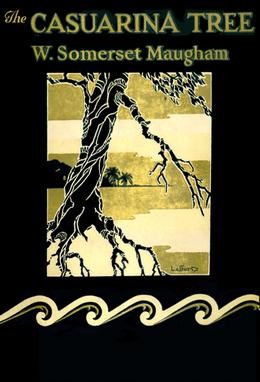
- Maugham, W. S. (1928). The Casuarina Tree (Dust jacket illustration by W. E. Lefferts). Heinemann; George H. Doran Company.
During each season you will see:
References in Αrt
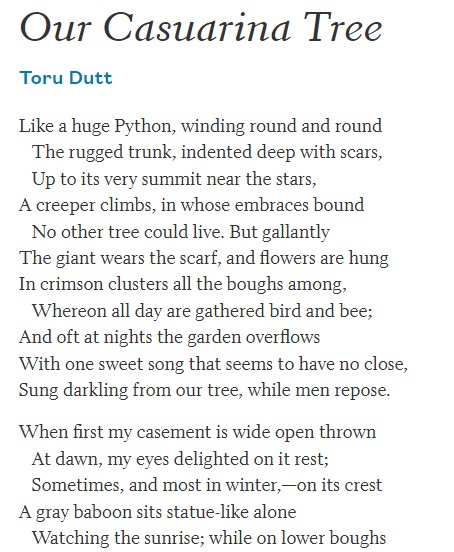
The species has been referenced in poetry, notably in the poem “Our Casuarina Tree” (1881) by Toru Dutt, where the tree serves as a symbol of her childhood and the nostalgia she feels. In W. Somerset Maugham’s short story collection “The Casuarina Tree” (1926), the tree symbolizes the English settlers in the Malay Peninsula and Borneo, who arrived after the pioneers and brought organization and stability to society, much like these trees stabilize the soil.