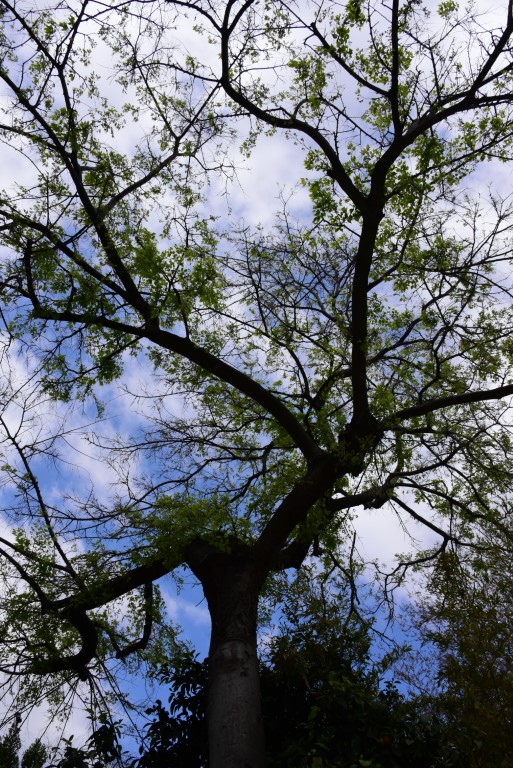

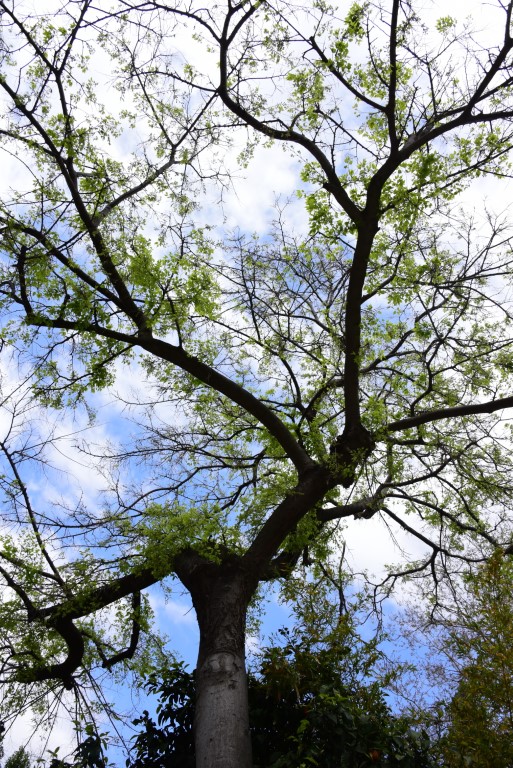
Classified as a Phanerophyte (P). Its habitat is “Forests and shrublands (W)”. It is a species that thrives in areas with hot summers. It exhibits resistance to drought, atmospheric pollution, and high temperatures, while it can survive for a short time even in low temperatures down to -15 °C. It prefers deep, fertile, and well-drained soils and sunny locations. It is usually found in sparse forests and scrublands.
(height, leaf arrangement, leaf shape, root system)
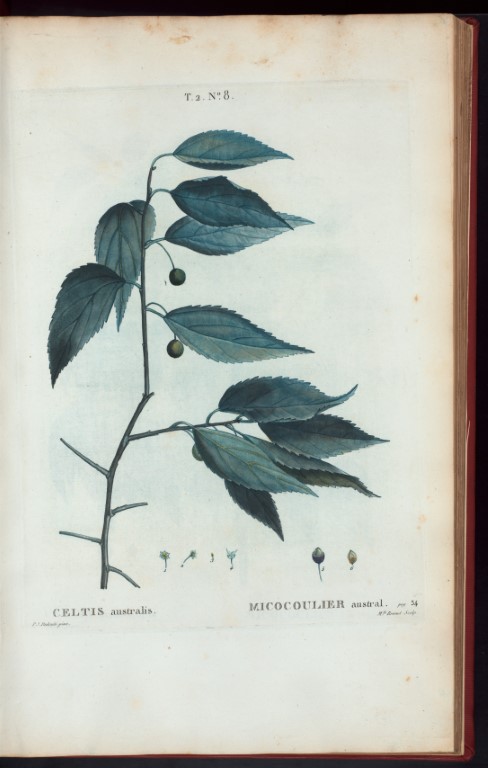
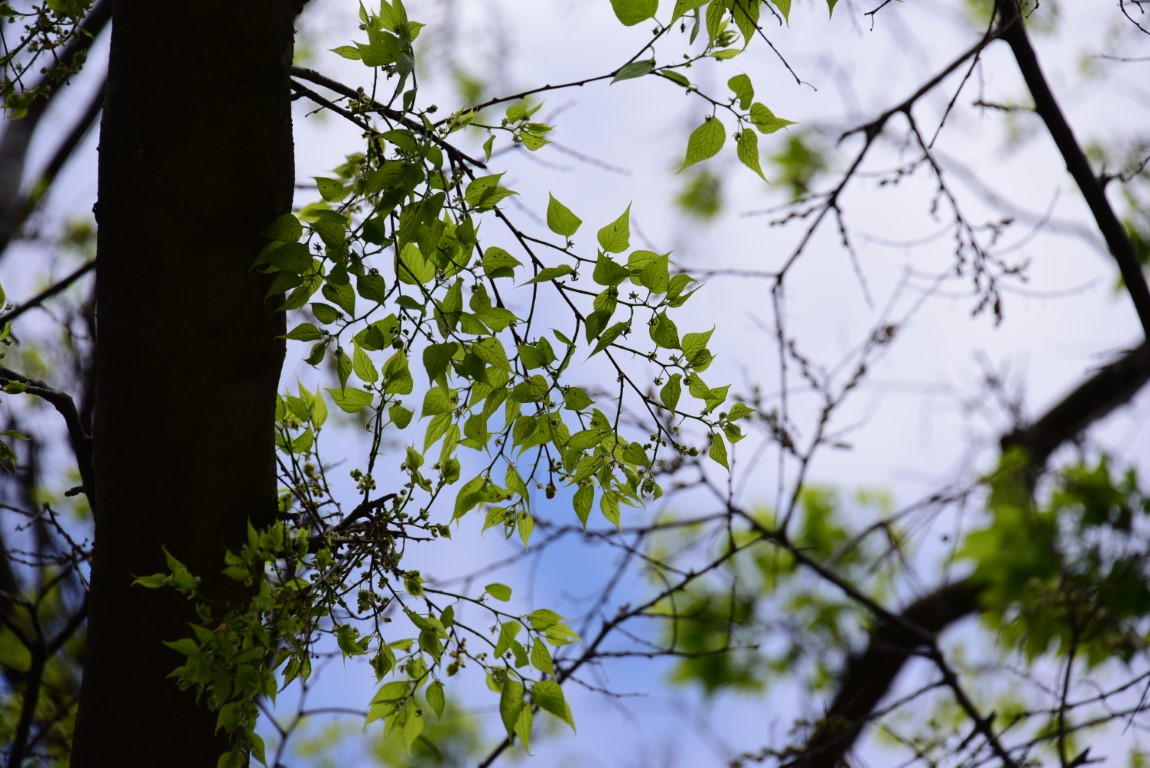
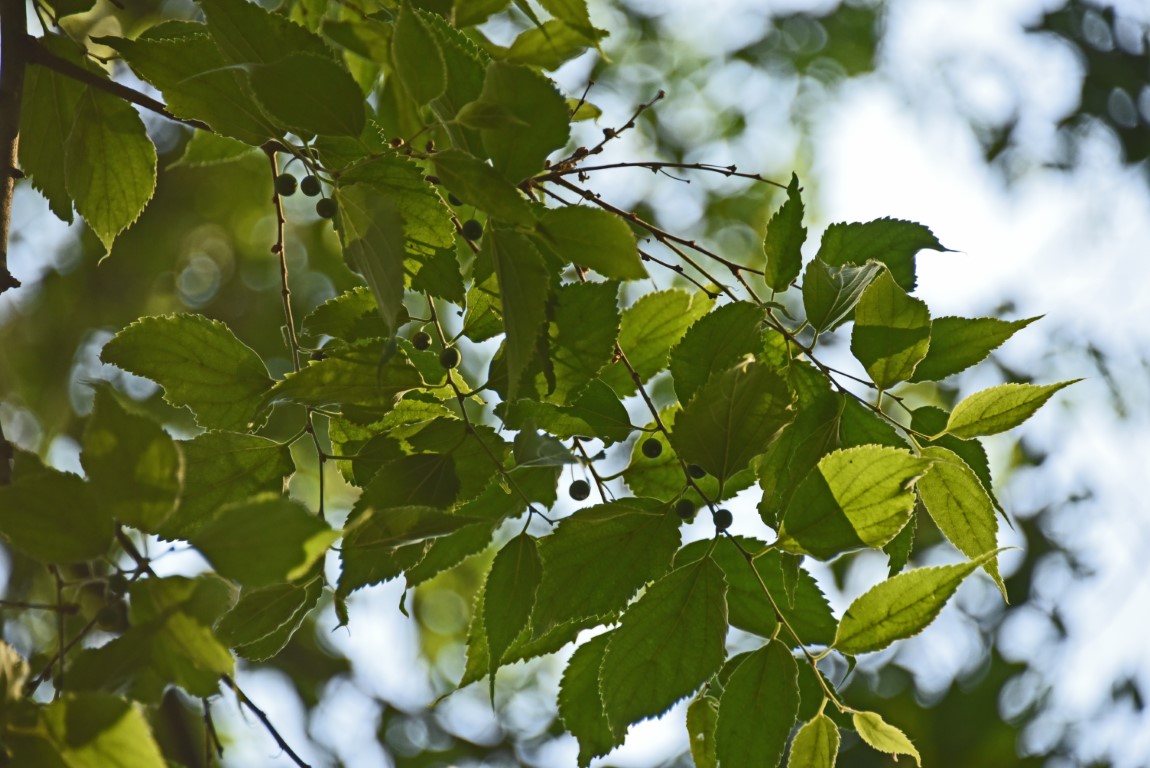
Deciduous tree that can attain a height of 10-30 m, depending on the climate of the area where it grows. It has a smooth grey trunk and a round and broad crown. Its dark green leaves grow alternately, have a short petiole, an ovate to lanceolate shape, an acuminate tip, a serrated margin, and an underside with dense hair and a green-grey color. The root system extends widely to great depths, a trait that allows the tree to survive in drought conditions.
(flowering period, flowers, seeds)
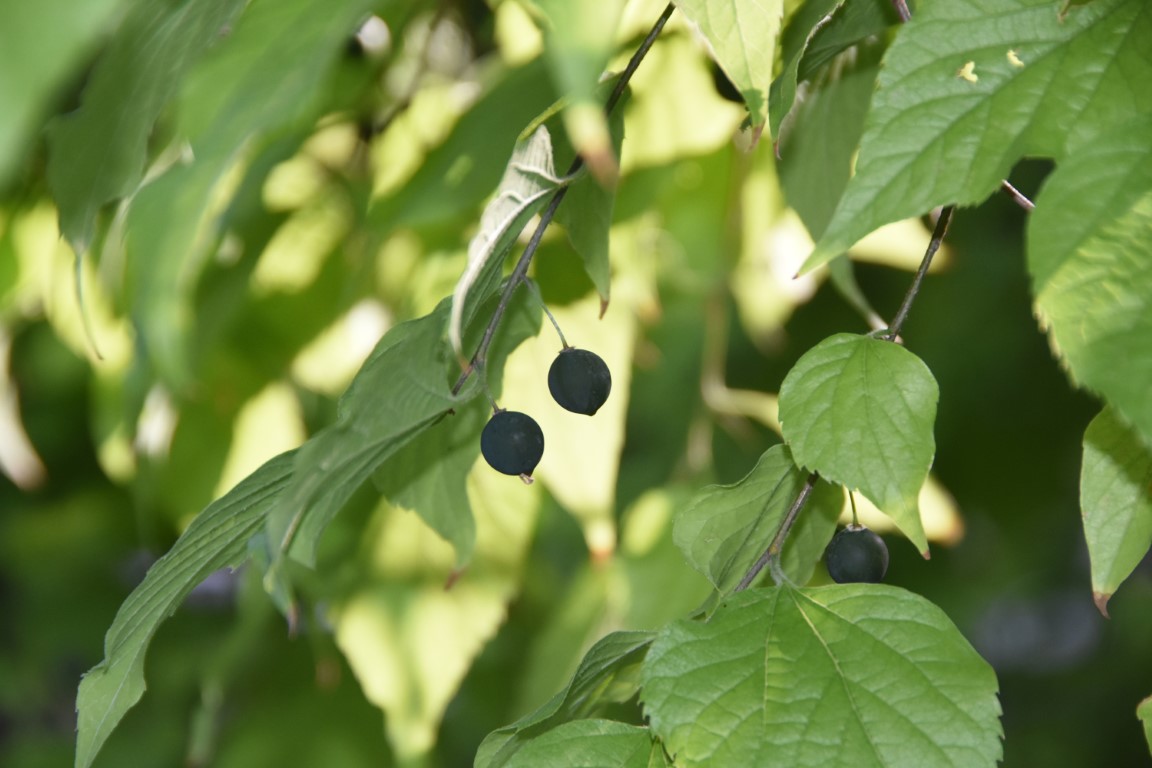
A monoecious species with small, greenish-white, scentless, and apetalous hermaphroditic flowers found either singly or in groups in the leaf axils. Flowering takes place from March to April. After fertilization of the flowers, small edible fruits of a dark purple color and a diameter of 1 cm are produced. They are classified as drupes, meaning each fruit contains one round seed. The fruits ripen within September and October.
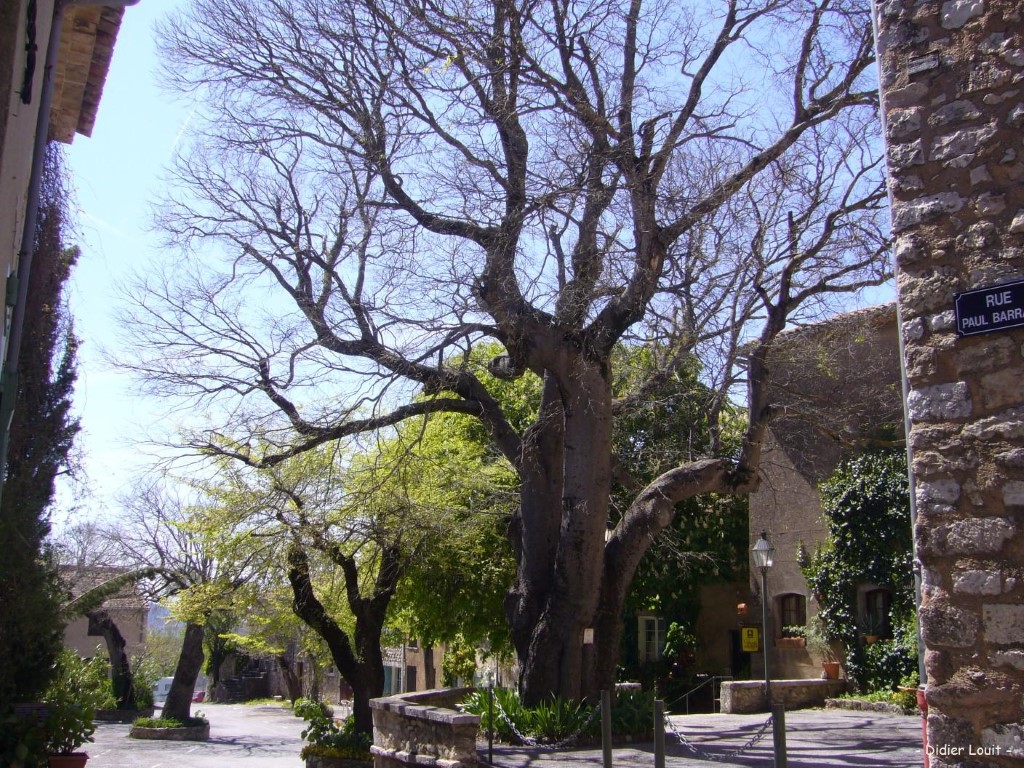
Individuals of the species can survive under suitable conditions for many years, with one of the most famous cases concerning a tree planted in 1550 in the village of Fox-Amphoux in southern France!
The origin of the nettle tree is the Mediterranean basin and Western Asia. Specifically, the plant is found from the Iberian Peninsula and Morocco to Syria, including the Mediterranean islands and areas around the Black Sea and the Caucasus. In Turkey, it is native mainly to the Mediterranean, Northern, and Western Anatolia. This origin also explains the species’ adaptation to thermophilic, semi-arid, and sub-humid bioclimates. The nettle tree was known since antiquity for the durability and high quality of its wood. Theophrastus mentions that its wood is hard, black in color, similar to that of cedar, and is used for making furniture, beds, and statues. The wood presents a dense texture and dense heartwood, a characteristic that makes it resistant to wear and suitable for high-quality constructions, such as the bolts of expensive doors. The longevity and dense shade of nettle trees were also known to the Romans, as Pliny mentions, pointing out their presence in private residences as impressive and lasting elements of the landscape. Planted nettle trees also exist in a holy temple in Jerusalem, with Islamic tradition considering these trees sacred and believing that amulets made from their wood can drive away demons.
Other than its ornamental use, the species is utilized for both nutritional and pharmaceutical purposes. More specifically, various preparations from leaves, bark, and fruits were traditionally used in Asia, Europe, and the Middle East for the treatment of gastrointestinal disorders, colic, amenorrhea, diarrhea, dysentery, rheumatism, and skin diseases. In India, leaf extract is used as an astringent and diuretic. Leaves and fruits also present antioxidant, antibacterial, and antifungal activity, while the fruits have a high content of sugars and nutrients such as proteins, dietary fibers, oils, minerals, and phenolic components. The seeds contain fatty acids and proteins, making them a source of nutritional and bioactive molecules. In the Mediterranean, it is applied in reforestation and restoration of natural ecosystems, highlighting the ecological and pharmacological importance of the species. Furthermore, the bark of the tree is used for the production of yellow dye, while the wood, due to its durability and hardness, finds application in furniture making.
(Note: Ethnobotanical data regarding the medicinal uses of plants must be handled with caution, and their application should be carried out exclusively under medical supervision).
- https://www.greekflora.gr
- https://temperate.theferns.info
- https://www.worldfloraonline.org
- https://www.missouribotanicalgarden.org
- https://powo.science.kew.org/
- Benamar, K., Koraichi, S. I., & Fikri-Benbrahim, K. (2022). Ethnobotany, phytochemistry and pharmacological activities of Celtis australis: A review. Journal of Herbmed Pharmacology, 12(1), 54–72. https://doi.org/10.34172/jhp.2023.05
- Demır, F., Doğan, H., Özcan, M., & Haciseferoğullari, H. (2002). Nutritional and physical properties of hackberry (Celtis australis L.). Journal of Food Engineering, 54(3), 241–247. https://doi.org/10.1016/s0260-8774(01)00210-2
- Dimopoulos, P., Raus, Th., Bergmeier, E., Constantinidis, Th., Iatrou, G., Kokkini, S., Strid, A., & Tzanoudakis, D. (2013). Vascular plants of Greece: An annotated checklist. Botanic Garden and Botanical Museum Berlin-Dahlem; Hellenic Botanical Society. https://doi.org/10.3372/en.31
- Duhamel du Monceau, M. (1801). Traité des arbres et arbustes qui se cultivent en France en pleine terre. Chez Didot ainé, Michel, et Lamy.
- Heldreich, T. v. (1925). Τα δημώδη ονόματα των φυτών προσδιοριζόμενα επιστημονικώς [The popular names of plants determined scientifically]. Ιωάννης Δ. Κολλάρος, Βιβλιοπωλείον της Εστίας.
- Hooper, H. E. (Ed.). (1910–1911). Encyclopaedia Britannica (11th ed., Vol. 17). Horace Everett Hooper.
- Martínez-Varea, C. M., Carrión Marco, Y., Raigón, M. D., & Badal, E. (2023). Redrawing the history of Celtis australis in the Mediterranean Basin under Pleistocene–Holocene climate shifts. Forests, 14(4), 779. https://doi.org/10.3390/f14040779
- Ota, A., Višnjevec, A. M., Vidrih, R., Prgomet, Ž., Nečemer, M., Hribar, J., Cimerman, N. G., Možina, S. S., Bučar‐Miklavčič, M., & Ulrih, N. P. (2016). Nutritional, antioxidative, and antimicrobial analysis of the Mediterranean hackberry (Celtis australis L.). Food Science & Nutrition, 5(1), 160–170. https://doi.org/10.1002/fsn3.375
- Plinius secundus, “Naturalis Historia”, 1-11, 17.1.1
- Plinius Secundus, G. (1938–1963). Naturalis historia [Natural history] (H. Rackham, W. H. S. Jones, & D. E. Eichholz, Trans.). Harvard University Press. (Original work published c. 77–79 CE).
- Safari, F., Hassanpour, H., & Alijanpour, A. (2023). Evaluation of hackberry (Celtis australis L.) fruits as sources of bioactive compounds. Scientific Reports, 13(1), 12233. https://doi.org/10.1038/s41598-023-39421-x
- Simchoni, O., & Kislev, M. E. (2011). Early finds of Celtis australis in the southern Levant. Vegetation History and Archaeobotany, 20, 267–271. https://doi.org/10.1007/s00334-011-0290-6
- Theophrastus,. “Enquiry into plants”, .2.5, 4.2.9, 5.3.10, 5.4.2, 5.3.2, 5.5.3, 1.8.2, 5.8.1
- Tutin, T. G., Heywood, V. H., Burges, N. A., Moore, D. M., Valentine, D. H., Walters, S. M., & Webb, D. A. (Eds.). (1964–1980). Flora Europaea (Vols. 1–5). Cambridge University Press.
During each season you will see:
References in Αrt
It is believed that the fruits of this tree were the lotuses that caused Odysseus’ companions, upon their arrival in the land of the Lotus-Eaters, to forget their identities. Pliny may be the first to mention it, describing that:
“Africa also, where it faces in our direction [i.e., Italy], produces a remarkable tree, the lotus, called in the vernacular celthis, which also has been naturalized in Italy, though it has been altered by the change of soil. “
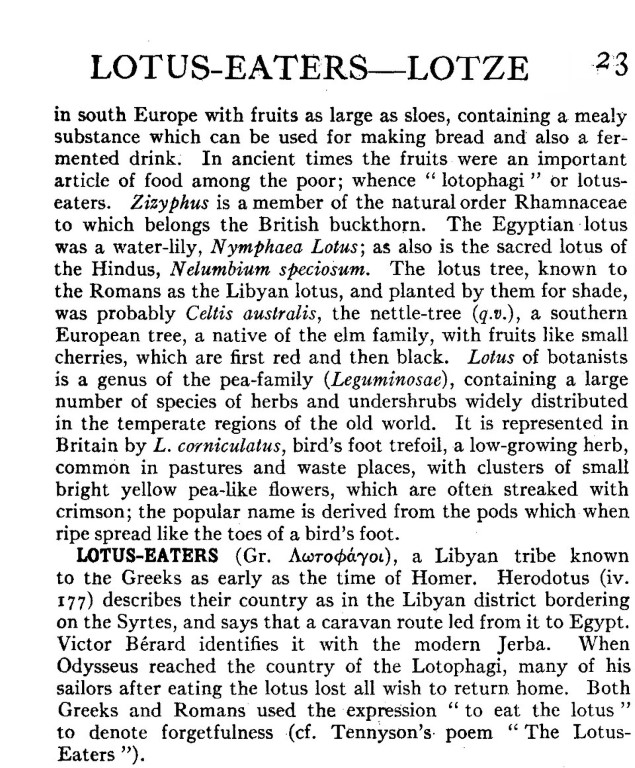
The 1911 edition of the Encyclopædia Britannica, under the entry “LOTUS,” notes:
“The lotus tree, known to the Romans as the Libyan lotus, and planted by them for shade, was probably Celtis australis, the nettle-tree (q.v.).” In this context, the English poet Alfred Tennyson describes the fruits of the honeyberry and their effects in his work “The Lotos-Eaters” (1832). Theodor von Heldreich, in 1925, reported that the vernacular name of the plant in Thessaly was “lotus,” and its fruits were called “lotus apples.”
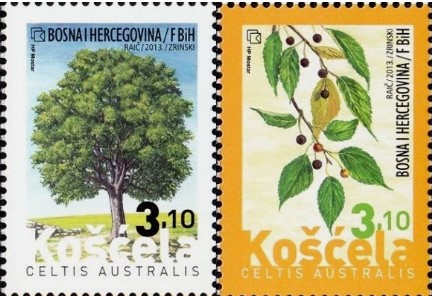
The tree has also been depicted on a 2013 postage stamp from Bosnia and Herzegovina.