
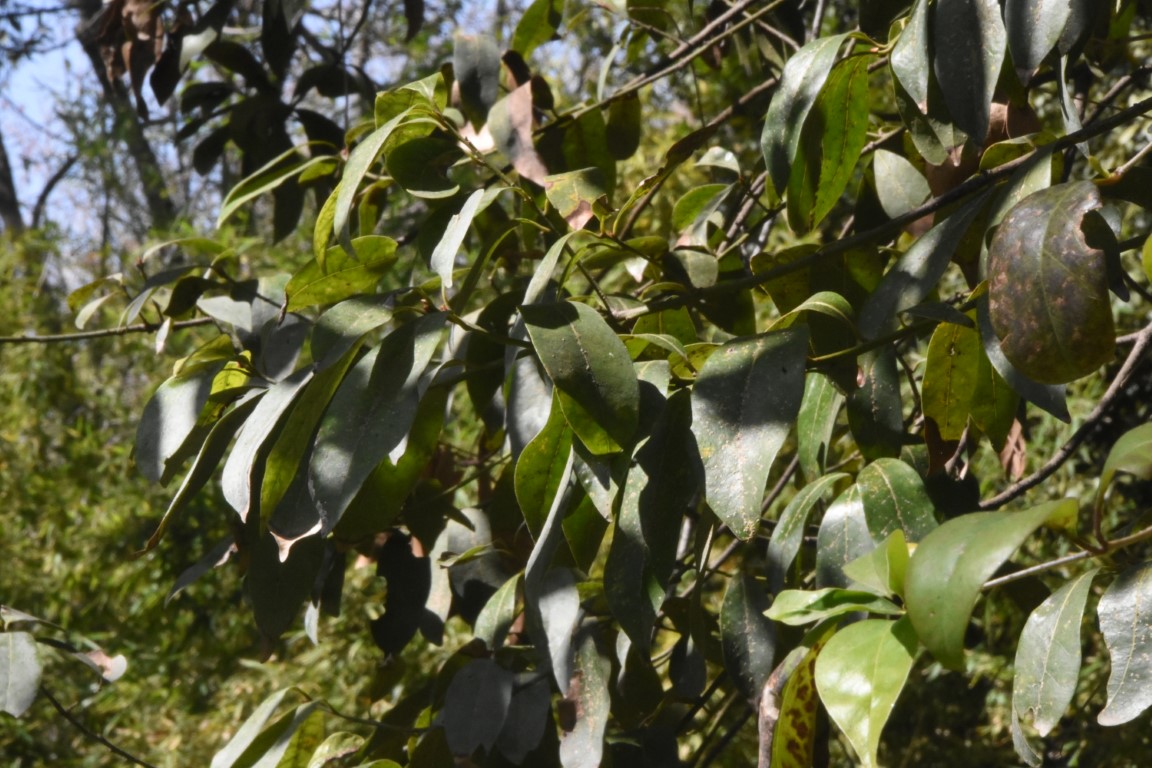
The species thrives in a warm climate with an optimal average annual temperature of 22°C-24°C, but it can survive temperatures up to 45°C, provided the soil is sufficiently watered. These trees are sensitive to cold periods. Exposure to temperatures as low as -4°C can cause significant damage to their growth. No particular soil composition is required if climatic conditions are ideal.

(height, leaf arrangement, leaf shape, root system)

Bitter orange trees are trees 3-10 m in height, with many branches and a round crown. Young shoots are angular and bear thin, short thorns. Older branches have thorns up to 8 cm long. The leaves are simple, alternate, dotted with glands, and aromatic when crushed. They have a petiole 2–3 cm long. The blade is broad, ovate to elliptical, 7-12 cm long and 4-7 cm wide. The species is evergreen, as its foliage is maintained throughout the year. The root system is branched. It extends to great depth, but also along the horizontal axis to a lesser degree, a fact that makes it strong and robust.

(flowering period, flowers, seeds)

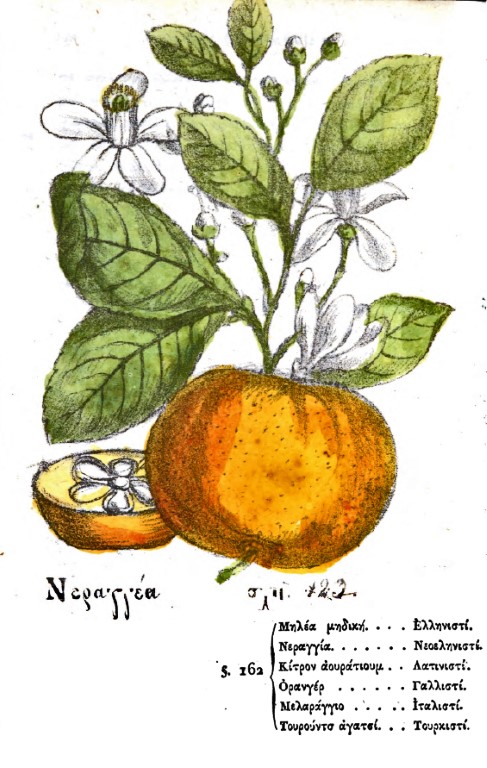
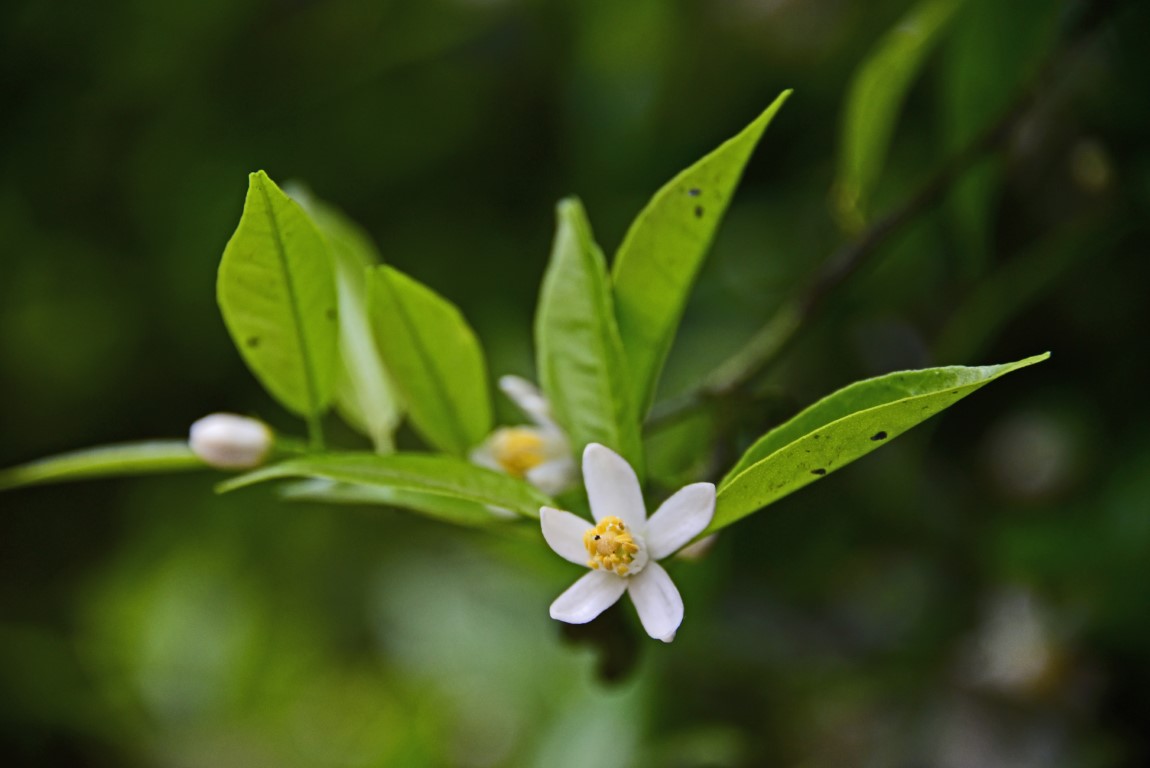
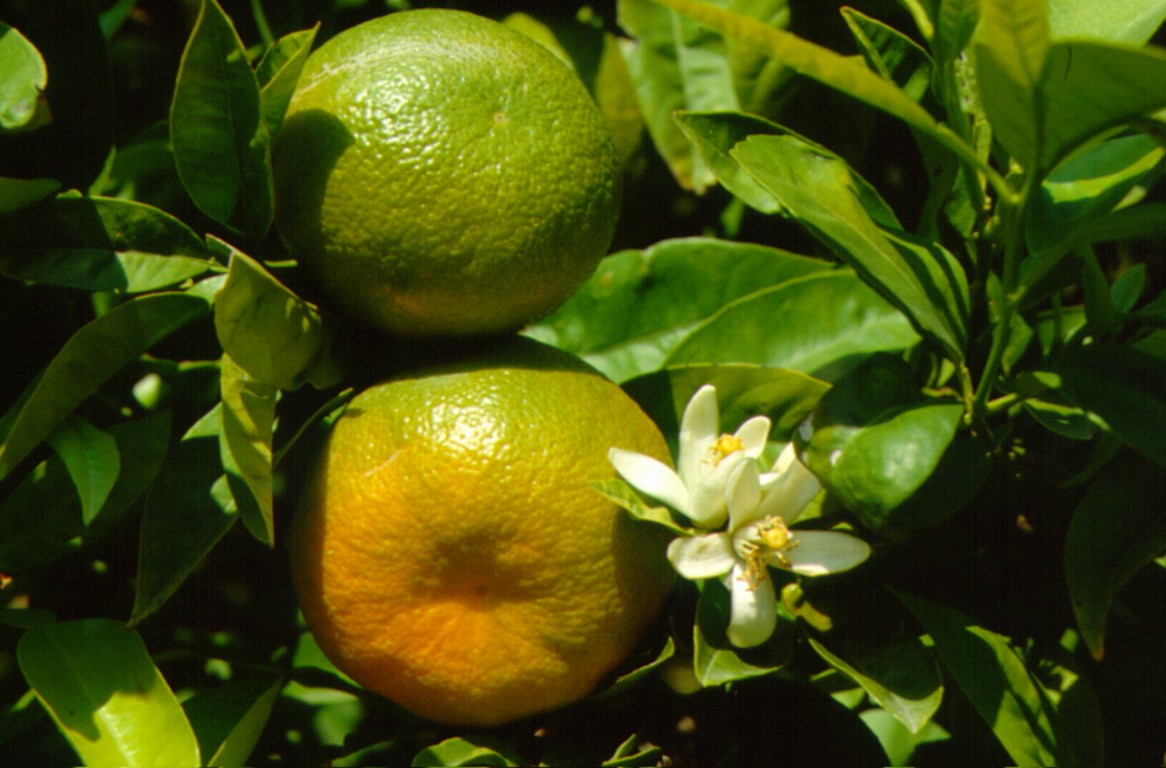
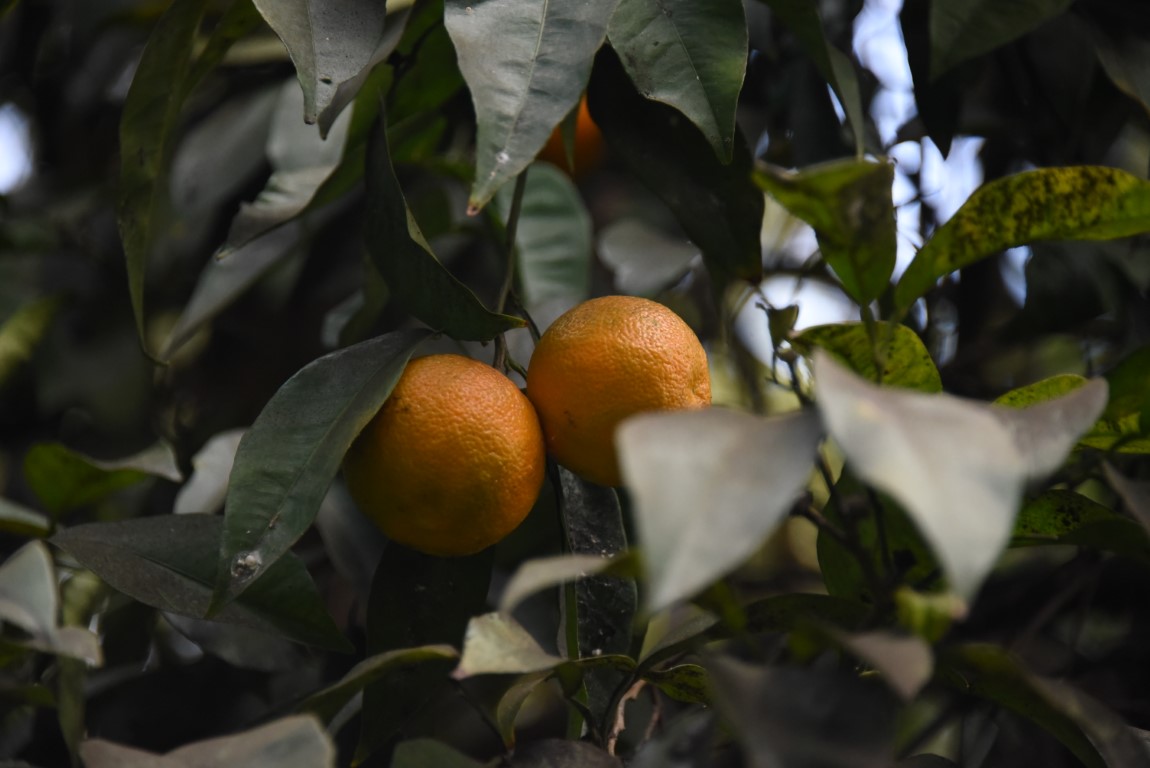
The flowers of the species are axillary and hermaphroditic, meaning they possess male and female reproductive organs. They are large, white, and particularly aromatic. Flowering takes place from mid-Spring up to the beginning of Summer. The fruits of the trees are berries of a special form called hesperidia. They have a thick and rough peel, which is green while the fruits are unripe and acquires a dark orange color upon maturation. The ripening period of the fruits differs depending on the variety. Each fruit contains 10-15 seeds.

Trees of the species require minimal care, with which they can live up to 600 years. They closely resemble orange trees, a species that also belongs to the citrus family.

The species Citrus × aurantium was created during the hybridization of the species Citrus maxima (pomelo) and Citrus reticulata (mandarin). It originates from southeast Asia, with probable initial domestication in China and present-day Vietnam, while it is considered to have spread widely via commercial and cultural exchanges. The Arabs played a decisive role in the transport of the species to the Middle East in the 9th century and subsequently to the Mediterranean, where it was cultivated in Sicily as early as the 11th century and in Spain, particularly in Seville, from the 12th century. It was cultivated widely in Spain, Italy, and Greece. For centuries it constituted the only species of orange tree in Europe. From there it was transported to the New World in the 16th century, spread to the Caribbean, South America, and Florida, where it acclimatized and often grows wild. Today it is cultivated widely in tropical and subtropical regions globally, with a particular presence in India, China, Mediterranean countries, and the Americas, constituting an important agricultural, cultural, and economic plant.

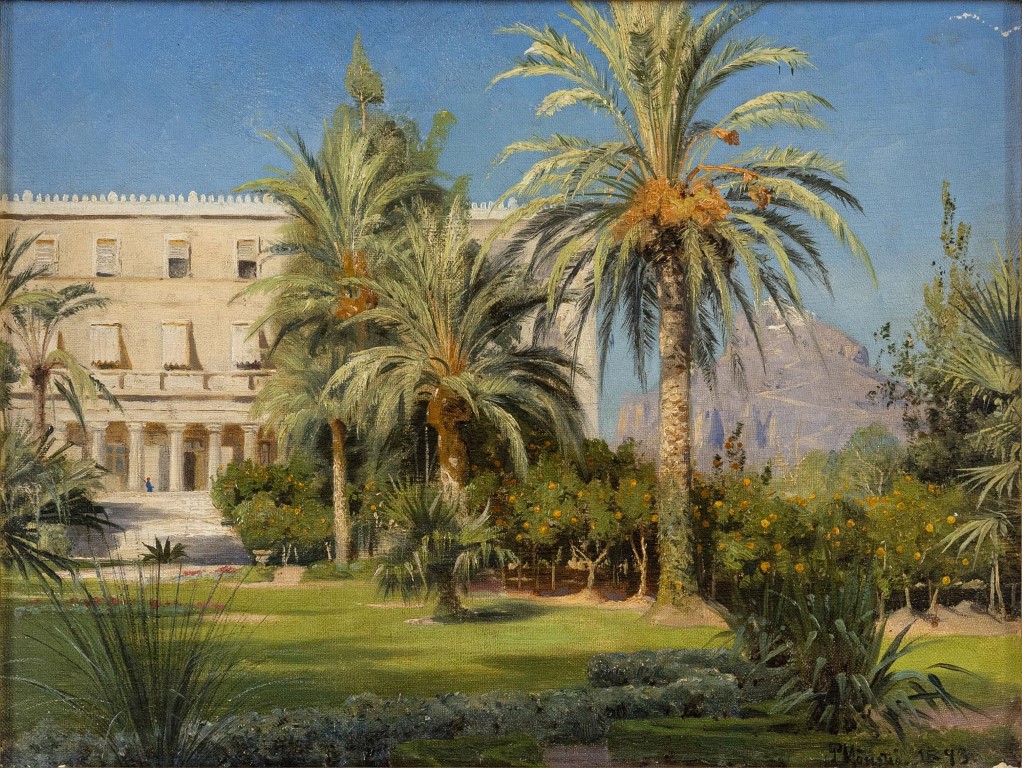
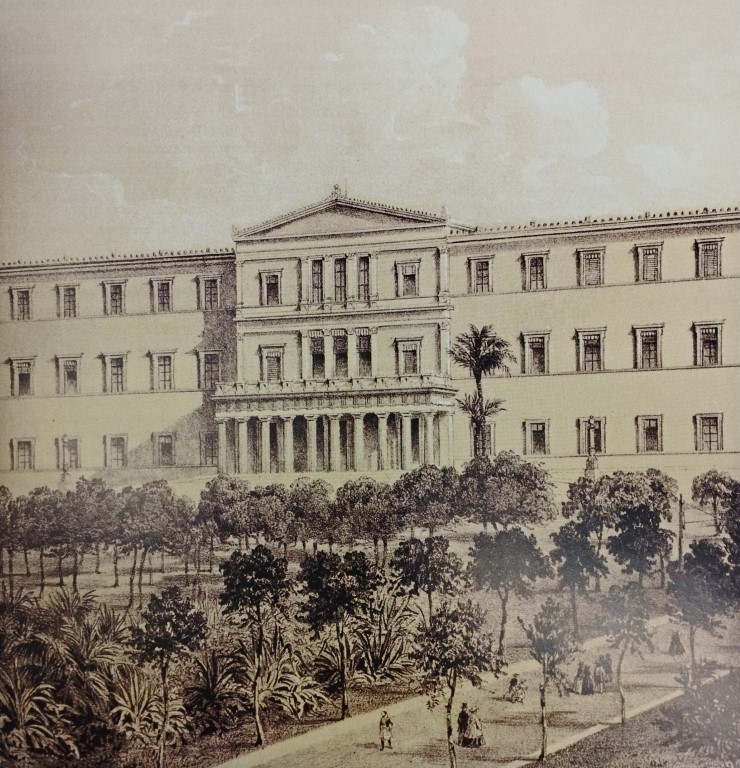
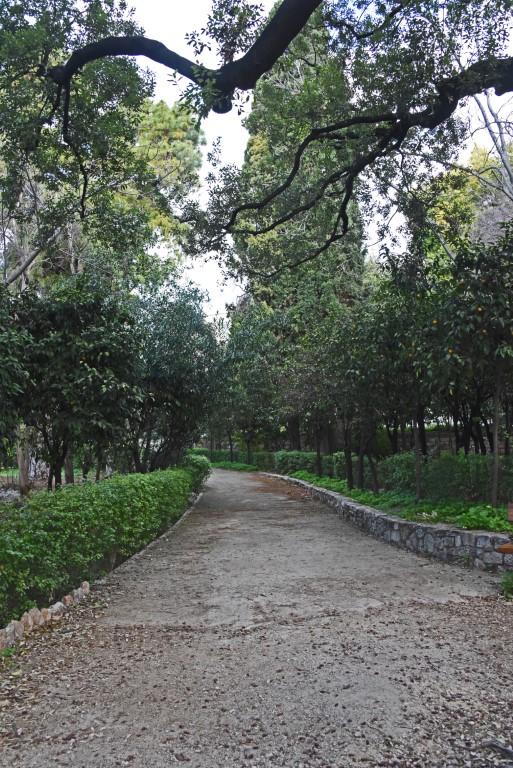
In the National Garden, bitter orange trees were planted by Queen Amalia, which arrived from Genoa along with other plants. The bitter orange grove was created gradually and was reinforced by later plantings by subsequent monarchs. Gradually, alongside the National Garden, the sidewalks of Athens also filled with bitter orange trees and their wonderful scent. During the Occupation, many of the trees were used by citizens for firewood, while the resistance fighter Iakovos Vagiakis recounts that German soldiers in 1941 cut bitter oranges from the city’s trees, likely thinking they were oranges, and ate them.

The Bitter Orange holds a long and multifaceted ethnobotanical significance, being widely used in diet medicine, perfumery, and folk traditions. The fruits and especially their peel are utilized for the preparation of marmalade, for “spoon sweets” (preserves), and to produce liqueurs (such as triple sec, neratzelo or neroli, Grand Marnier, Campari, and Curaçao) and aromatic preparations. The essential oil from the peel, leaves, and flowers constitutes a basic ingredient of perfumes, teas (e.g., Earl Grey), and cosmetics. In traditional Chinese and Japanese medicine, as well as in Mediterranean folk medicine, the dried unripe fruits, leaves, and flowers are used for digestive disorders, as mild laxatives, tonics, and aromatics. At the same time, modern pharmacological and technological studies highlight the antimicrobial, antifungal, antiseptic, anti-inflammatory, and preservative properties of the essential oils; as such, it is utilized for the production of skin and hair care products, but also perfumes, reinforcing the importance of the species as a natural raw material in the food and herbal product industry.

(Note: Ethnobotanical data regarding the medicinal uses of plants must be handled with caution, and their application should be carried out exclusively under medical supervision).

  • https://www.kew.org
  • https://plant-directory.ifas.ufl.edu
  • https://www.worldfloraonline.org
  • https://sevilleoranges.com
  • https://domnasamiou.gr/song/nerantzoyla-foyntomeni/
  • https://www.greek-language.gr
  • https://kanellatou.gr
  • Anwar, S., Ahmed, N., Speciale, A., Cimino, F., & Saija, A. (2015). Bitter Orange (Citrus aurantium L.) Oils. In Elsevier eBooks (pp. 259–268). https://doi.org/10.1016/b978-0-12-416641-7.00029-8
  • Bousse, V., & Bousse, M. (2011). Unpublished Letters of Queen Amalia to Her Father, 1836–1853, Volume II. Estia.
  • Duhamel du Monceau, M. (1801). “Traité des arbres et arbustes qui se cultivent en France en pleine terre”. Paris: Chez Didot ainé, Michel, et Lamy.
  • Kaats, G. R., Miller, H., Preuss, H. G., & Stohs, S. J. (2013). A 60 day double-blind, placebo-controlled safety study involving Citrus aurantium (bitter orange) extract. Food and Chemical Toxicology55, 358–362. https://doi.org/10.1016/j.fct.2013.01.013
  • Koncz, D., Tóth, B., Bahar, M. A., Roza, O., & Csupor, D. (2022). The Safety and Efficacy of Citrus aurantium (Bitter Orange) Extracts and p-Synephrine: A Systematic Review and Meta-Analysis. Nutrients14(19), 4019. https://doi.org/10.3390/nu14194019
  • Mejri, H., Wannes, W. A., Azeiz, S., Hammami, M., Hamdaoui, G., Dussault, C., Legault, J., & Saidani-Tounsi, M. (2024). Phytochemical analysis, antiproliferative, antibacterial, antifungal, and antiviral activities of bitter orange (Citrus aurantium ) leaf essential oil. Plant Biosystems – an International Journal Dealing With All Aspects of Plant Biology158(3), 408–418. https://doi.org/10.1080/11263504.2024.2320127
  • Papadopoulos, M. V. (1860). New Athens, or a Concise Description of the Capital of Greece, Including Steamship Departures, Exchange Rates Between Greek and Foreign Currencies, Official Carriage Fares, etc. Printed by P. A. Sakellariou.
  • Pyrros, D. the Thessalian. (1838). Practical Botany: Adapted to Medicine and Economy. Athens: Angelos Angelidis Printing House.
  • Stohs, S. J., Preuss, H. G., & Shara, M. (2011). The Safety of Citrus aurantium (Bitter Orange) and its Primary Protoalkaloid p‐Synephrine. Phytotherapy Research, 25(10), 1421–1428. https://doi.org/10.1002/ptr.3490
  • Stohs, S. J., Preuss, H. G., & Shara, M. (2012). A Review of the Human Clinical Studies Involving Citrus aurantium (Bitter Orange) Extract and its Primary Protoalkaloid p-Synephrine. International Journal of Medical Sciences, 9(7), 527–538. https://doi.org/10.7150/ijms.4446
  • Suryawanshi, J.A.S. (2011). An overview of Citrus aurantium used in treatment of various diseases.  African Journal of Plant Science, 5(7), 390-395

References in Αrt

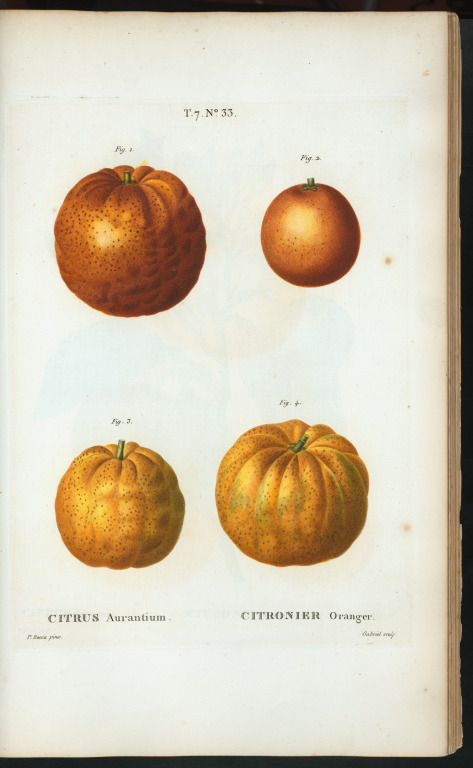
The tree has been depicted in a work by the botanist and painter Pierre-Joseph Redouté, one of the most respected botanical illustrators in history, and indeed has constituted the main subject in many other paintings. In the painting by Bartolomeo Bimbi, “Agrumi” (arance, bergamotti, cedri, limoni e lumie), all citrus fruits are presented. The painting was a commission by the Medici family. Bitter oranges are also presented in the painting “Sour Orange, Terrestrial Mollusk, and Larkspur” by Joris Hoefnagel.

Kostis Palamas, in his work “The City and Solitude, Fifth Book”, writes about the “unseen bitter orange blossoms in the garden”, referring to the National Garden in his poem of the same name, while Kostas Karyotakis has written the poem “Bitter Orange Tree” (Nerantzia), which belongs to his collection “Songs for Children” (1919-1922). George Seferis refers frequently to the bitter orange trees of Athens in his diaries (Days), where the scent of their flowers functions as an image of fleeting beauty within the urban landscape.

In Greek traditional music, the song of erotic content originating from Achaia, Peloponnese, “Na ‘cha nerantzi” (If I had a bitter orange), is recorded, as well as the Peloponnesian wedding song “Nerantzoula fountomeni” (Bushy little bitter orange tree).