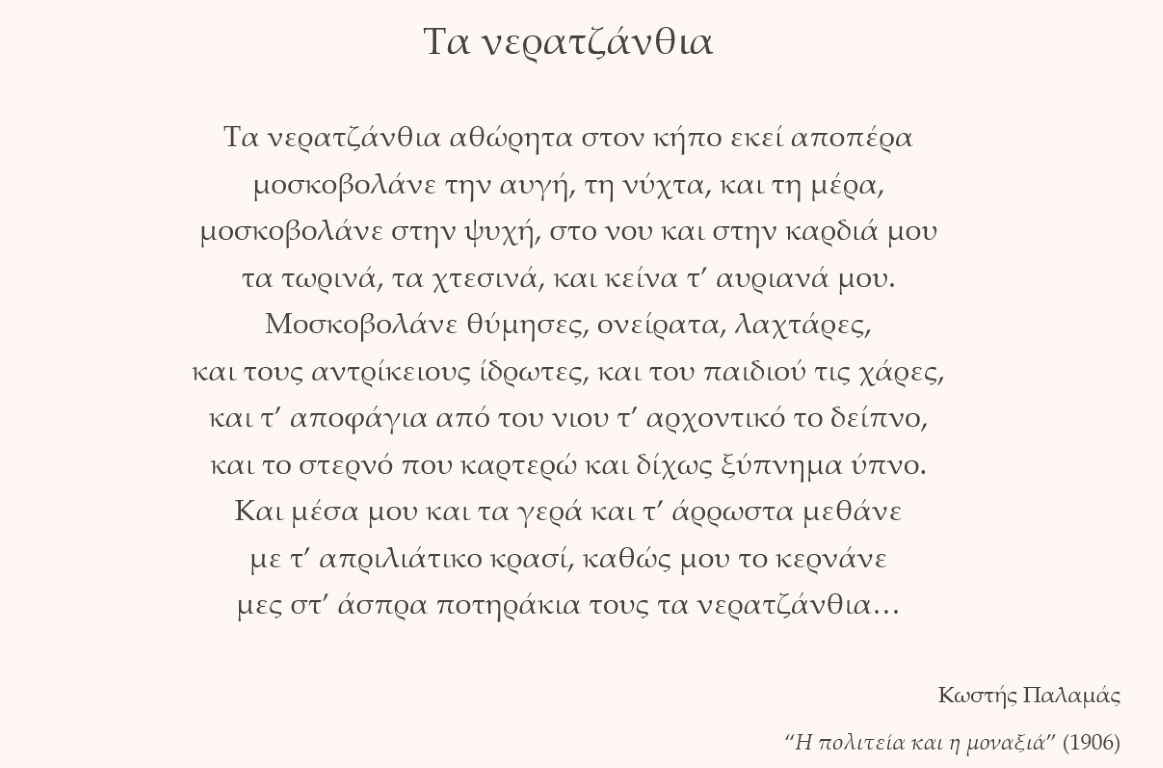

Cultivated variety observed in Mediterranean gardens that is not found as a native species.

(height, leaf arrangement, leaf shape, root system)

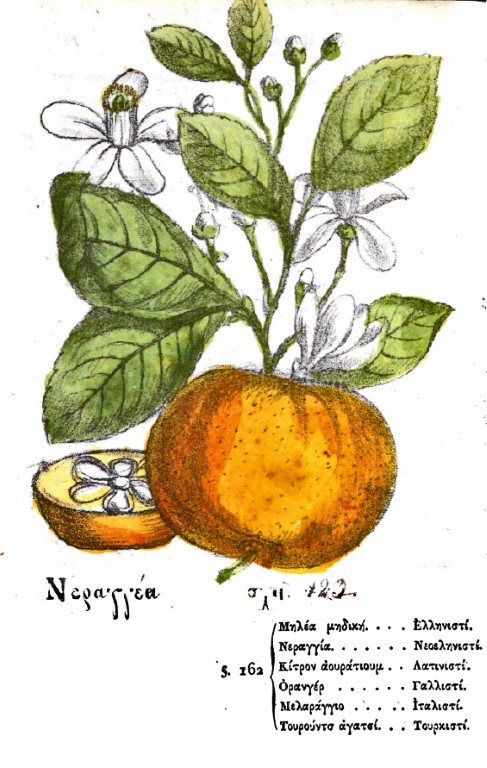
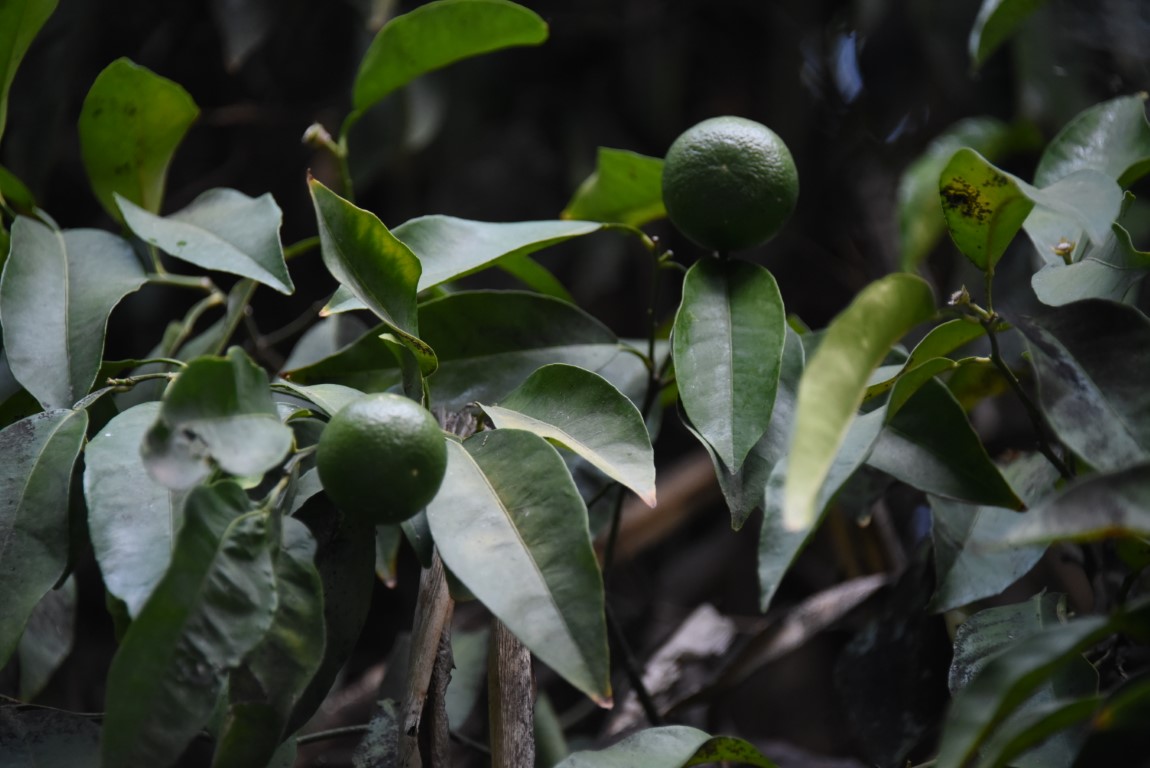
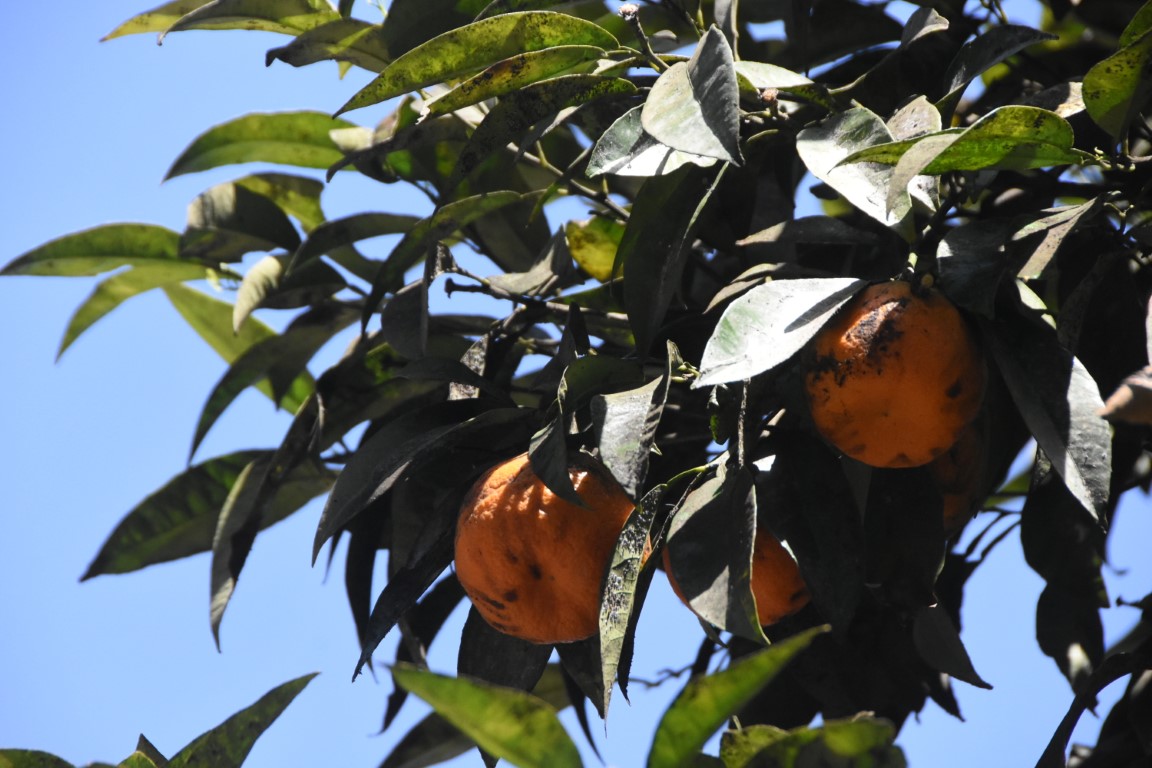
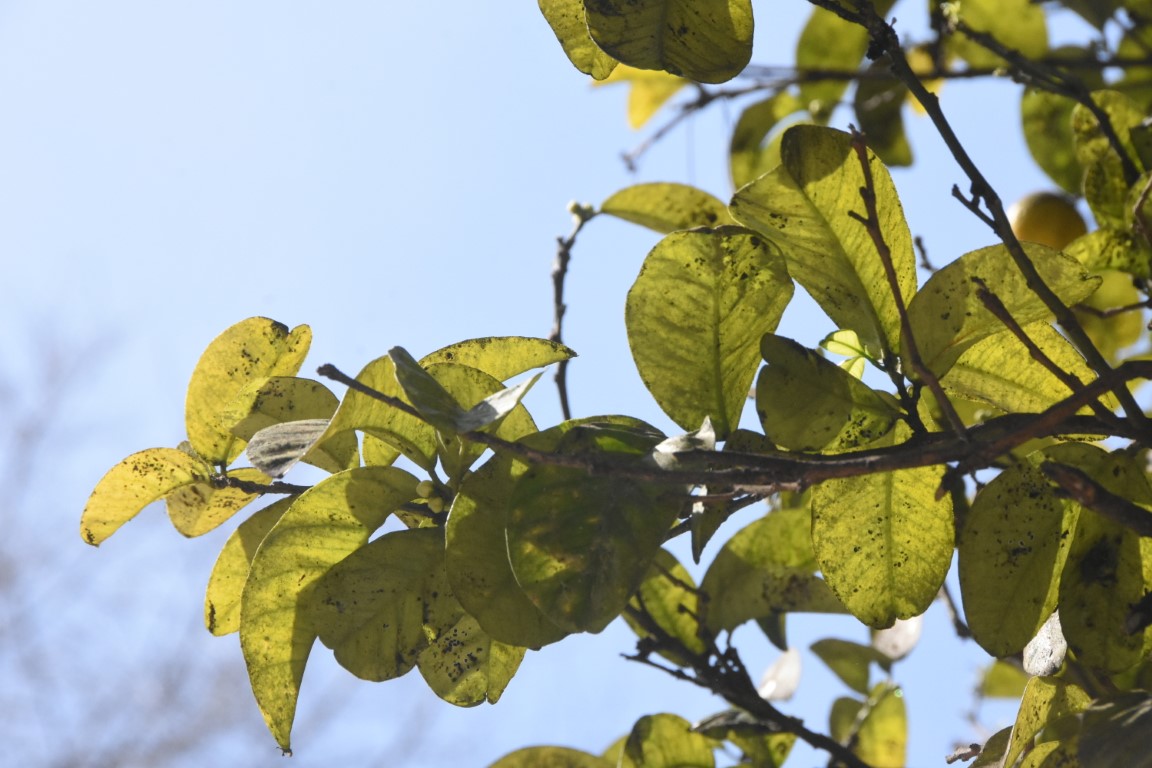
Evergreen shrub or small tree with a round crown, approximately 2–3 m in height, but it can reach up to 8 m under favorable conditions. Its leaves are small, lanceolate, leathery, and dark green, similar to those of the myrtle. This specific variety does not present thorns on its shoots. The leaves are simple, alternate, and dotted with glands. They are aromatic when crushed. They have a petiole 2–3 cm long. The blade of each leaf is broad, ovate to elliptical, 7-12 cm long and 4-7 cm wide. The root system is a taproot with lateral roots. It is branched and does not extend to great depth, as in most citrus species. There are also surface roots which play a supportive and absorptive role.

(flowering period, flowers, seeds)

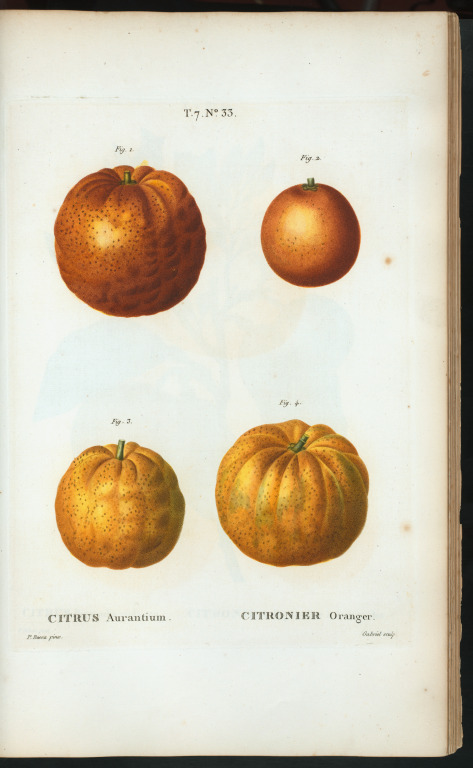
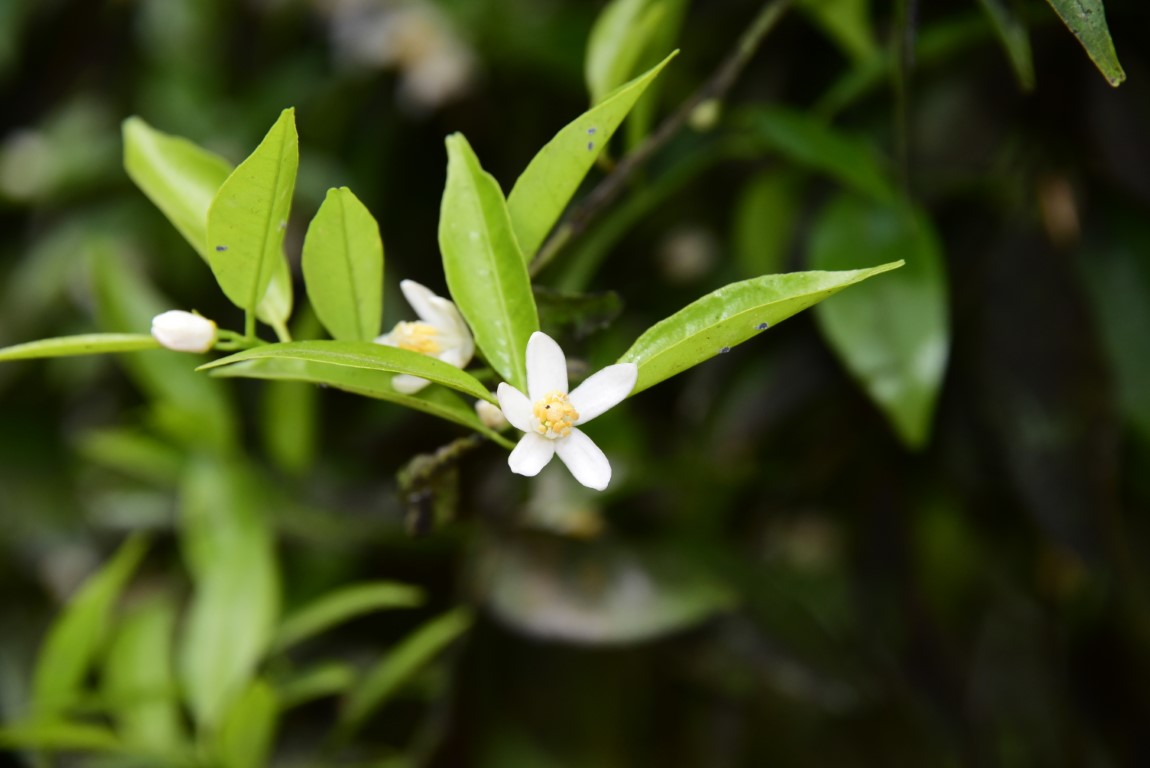
The flowers are axillary and hermaphroditic, meaning they possess both male and female reproductive organs. They are small, white, and particularly aromatic. Flowering takes place mainly during the Spring months. The fruits of the trees are berries of a special form called hesperidia. They have a thick and rough peel, which is green while the fruits are unripe and acquires a dark orange color upon maturation. The maturation period of the fruits is approximately 8 months. The seed content of the fruits differs significantly from fruit to fruit (there may be many, few, or none), a characteristic of the variety.

This specific variety produces small orange-like fruits. Its leaves resemble those of common myrtle, giving the variety its name, Citrus × aurantium var. myrtifolia.

The species Citrus × aurantium was created during the hybridization of the species Citrus maxima (pomelo) and Citrus reticulata (mandarin). It was introduced by the Arabs to the Mediterranean region during the 10th to 11th century and during the Medieval period was cultivated widely in Spain, Italy, and Greece. The variety Citrus × aurantium var. myrtifolia has been cultivated in Italy since the 16th century. More specifically, it was cultivated in the gardens of the Medici family in Florence, according to the record of the author Agostino Del Riccio from 1595. It is particularly widespread in Liguria, where it was linked to the production of liqueurs and sweets.

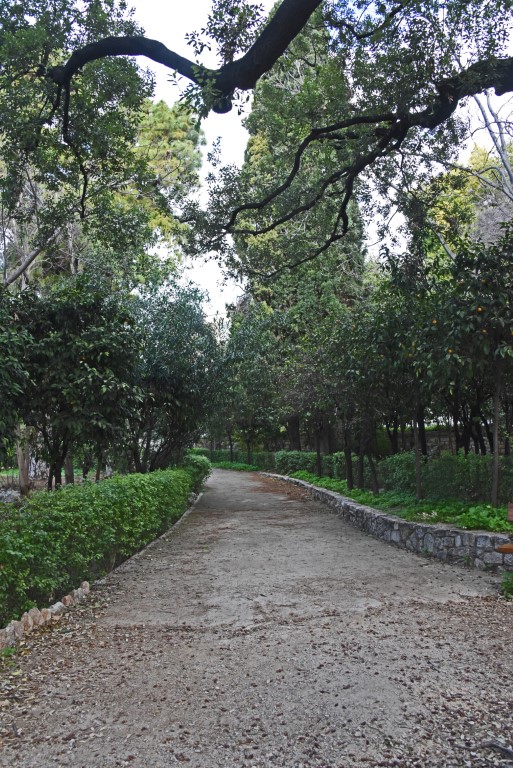
It is used in the production of the soft drink chinotto. In addition to beverages, the essential oil extracted from the peel is also used in the production of sweets, syrups, and marmalades, as well as for flavor enhancement in confectionery and other food products. Although originally a product of limited consumption, chinotto has now gained international popularity, particularly in regions such as the United States, Canada, Australia, and Northern Europe, mainly due to its introduction and dissemination by Italian communities abroad. Chinotto essential oil is also a key ingredient in many perfume compositions, especially in traditional fragrances from the region of Savona, Italy. Its high content of limonene (≈80%), along with linalool and linalyl acetate, gives it a strong citrusy, fresh, and floral aroma, making it highly valuable as a fragrance raw material in perfumes, cosmetics, personal care products, and aromatherapy. Certain compounds isolated from the peel have demonstrated biological activity, with potential anti-inflammatory and other bioactive properties, although further studies are required to fully confirm their pharmacological applications. The plant is also widely planted along roadsides and used as an ornamental tree in gardens, valued especially for its distinctive fragrance.

(Note: Ethnobotanical data regarding the medicinal uses of plants must be handled with caution, and their application should be carried out exclusively under medical supervision).

  • https://www.kew.org
  • https://www.oscartintori.it
  • https://www.greek-language.gr
  • https://kanellatou.gr
  • www.domnasamiou.gr/song/nerantzoyla-foyntomeni/
  • Bousse, V., & Bousse, M. (2011). Unpublished letters of Queen Amalia to her father, 1836–1853 (Vol. II). Estia.
  • Chialva, F., & Doglia, G. (1990). Essential oil constituents of chinotto (Citrus aurantium L. var. myrtifolia Guill.). Journal of Essential Oil Research, 2(1), 33–35. https://doi.org/10.1080/10412905.1990.9697813
  • Chialva, F., & Doglia, G. (1990). Essential Oil Constituents of Chinotto (Citrus aurantium L. var. myrtifolia Guill.). Journal of Essential Oil Research, 2(1), 33–35.
  • Duhamel du Monceau, M. (1801). “Traité des arbres et arbustes qui se cultivent en France en pleine terre”. Paris: Chez Didot ainé, Michel, et Lamy.
  • Duhamel du Monceau, M. (1801). Traité des arbres et arbustes qui se cultivent en France en pleine terre. Chez Didot aîné, Michel, et Lamy.
  • Papadopoulos, M. V. (1860). New Athens, or a concise description of the capital of Greece, including steamship departures, exchange rates between Greek and foreign currencies, official carriage fares, etc. P. A. Sakellariou Press.
  • Pyrrhus of Thessaly. (1838). Practical botany: Adapted to medicine and economy. Angelos Angelidis Printing House.
  • Salvo, A., Costa, R., Albergamo, A., Arrigo, S., Rotondo, A., La Torre, G. L., Mangano, V., & Dugo, G. (2019). An in-depth study of the volatile variability of chinotto (Citrus myrtifolia Raf.) induced by the extraction procedure. European Food Research and Technology, 245(4), 873–883.
  • Salvo, A., Costa, R., Albergamo, A., Arrigo, S., Rotondo, A., La Torre, G. L., Mangano, V., & Dugo, G. (2019). An in-depth study of the volatile variability of chinotto (Citrus myrtifolia Raf.) induced by the extraction procedure. European Food Research and Technology, 245(4), 873–883. https://doi.org/10.1080/10412905.1990.9697813

References in Αrt

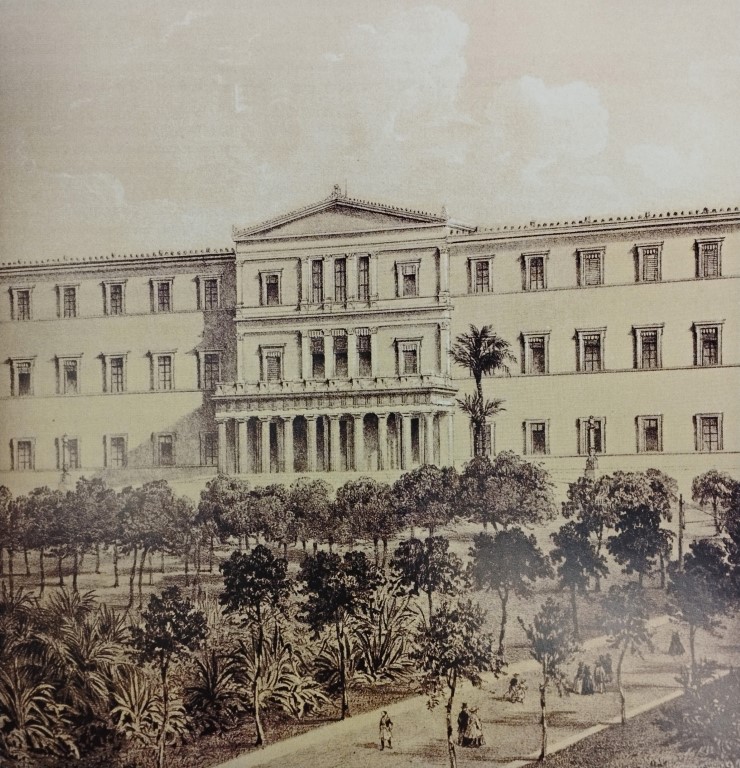
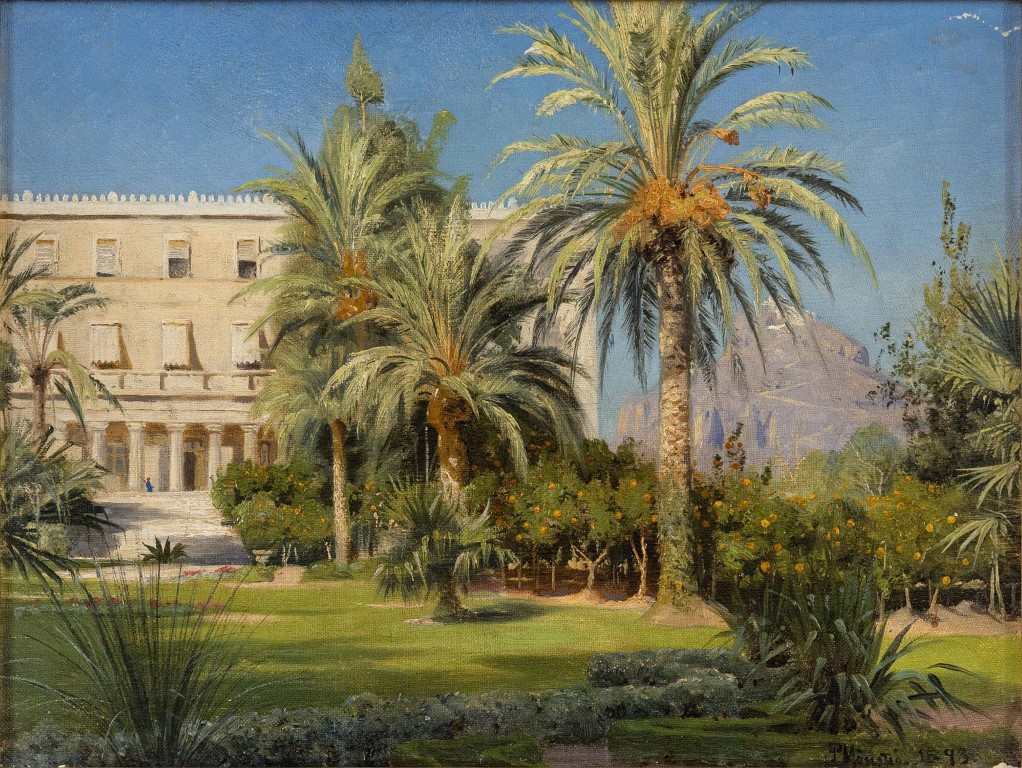
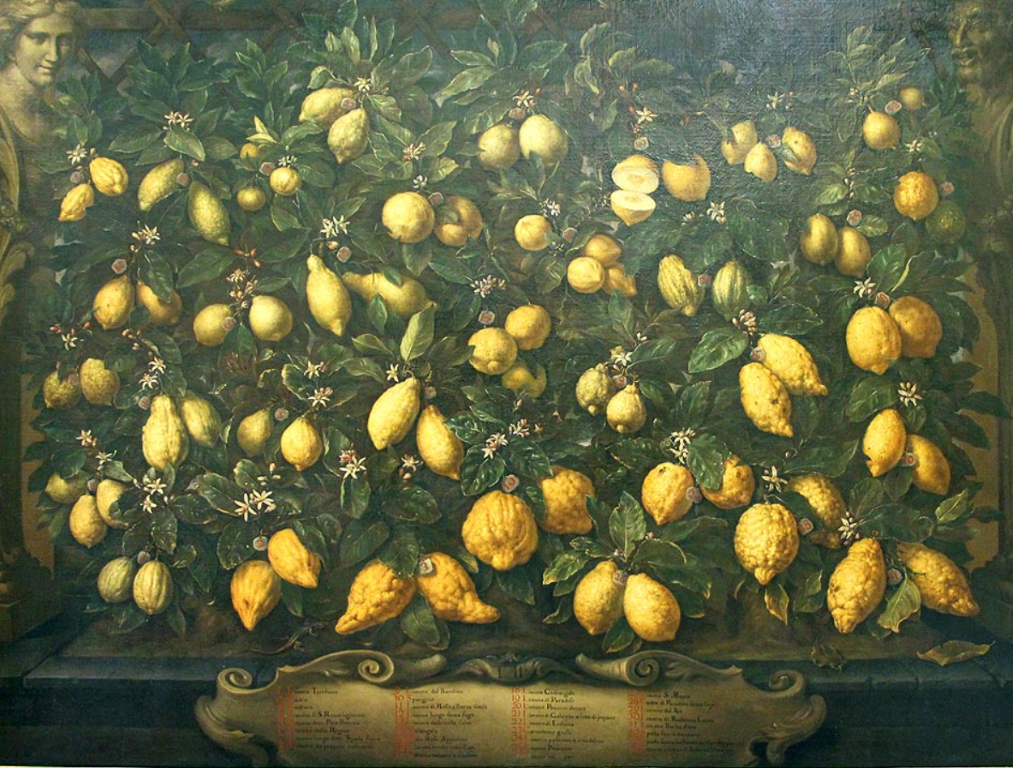
In the painting by Bartolomeo Bimbi, “Agrumi” (arance, bergamotti, cedri, limoni e lumie), all citrus fruits are presented. The painting was a commission by the Medici family. Bitter oranges are also presented in the painting “Sour Orange, Terrestrial Mollusk, and Larkspur” by Joris Hoefnagel. Kostis Palamas, in his work “The City and Solitude, Fifth Book”, writes about the “unseen bitter orange blossoms in the garden”, referring to the National Garden in his poem of the same name, while Kostas Karyotakis has written the poem “Bitter Orange Tree” (Nerantzia), which belongs to his collection “Songs for Children” (1919-1922). George Seferis refers frequently to the bitter orange trees of Athens in his diaries (Days), where the scent of their flowers functions as an image of fleeting beauty within the urban landscape.

In Greek traditional music, the song of erotic content originating from Achaia, Peloponnese, “Na ‘cha nerantzi” (If I had a bitter orange), is recorded, as well as the Peloponnesian wedding song “Nerantzoula fountomeni” (Bushy little bitter orange tree).