

Tropical and subtropical forests, shrublands, and agricultural landscapes. The species thrives in a variety of soils and is drought – resistant.
(height, leaf arrangement, leaf shape, root system)
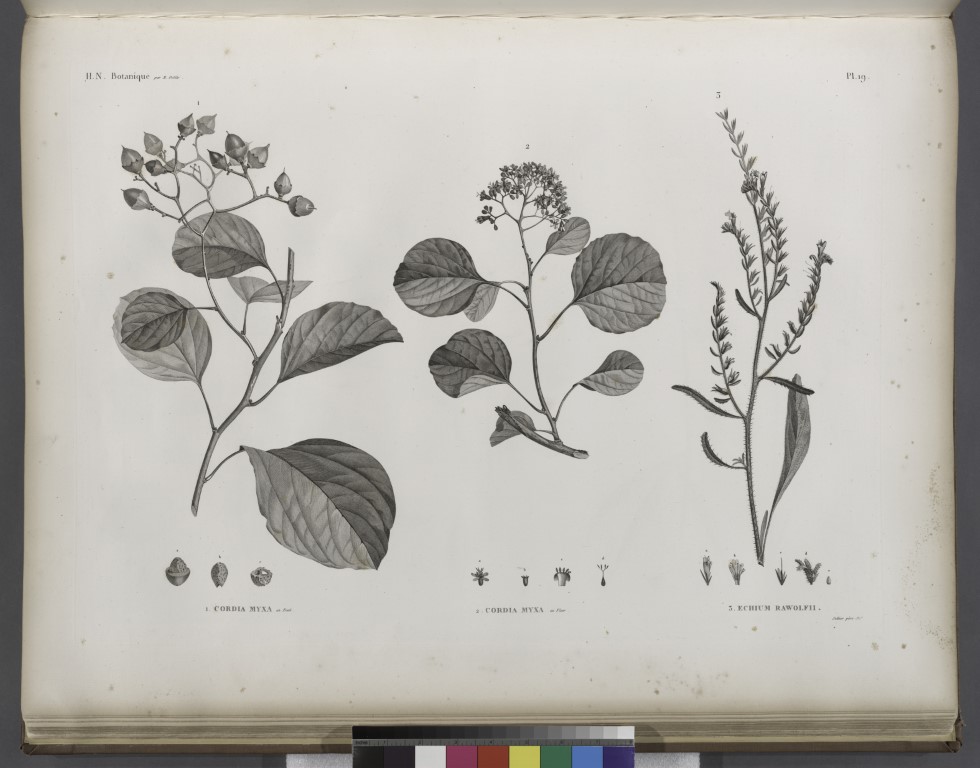
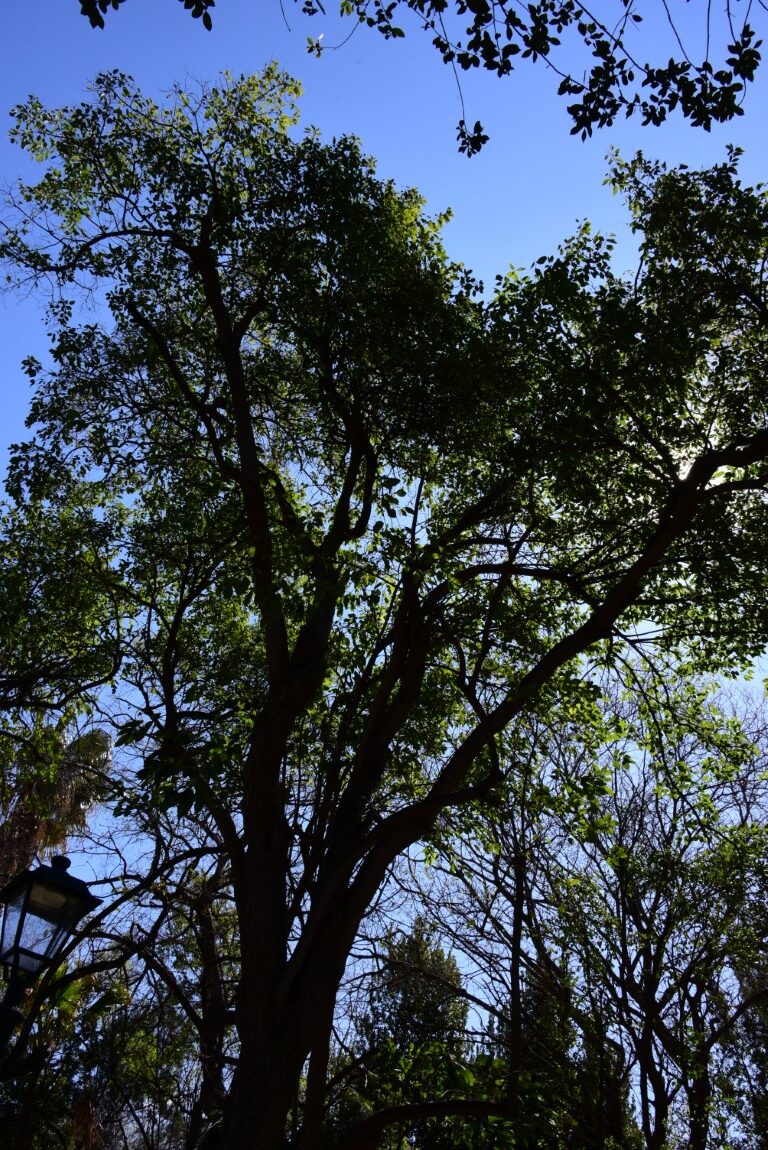
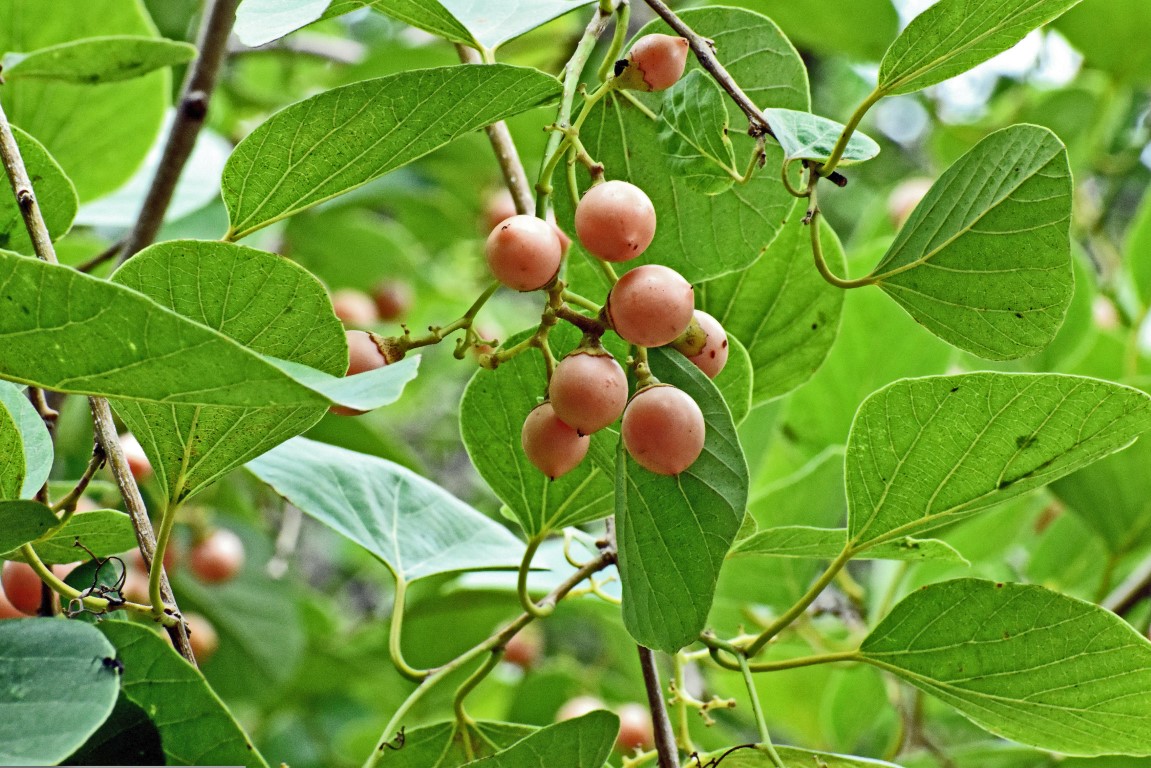
Deciduous shrub to medium-sized tree, up to 12 m in height, with a grey – brown trunk that has a diameter up to 40–50 cm with characteristic ridges. The leaves are simple, alternate, ovate to elliptic, 7–15 cm long, rough to the touch, with hairs on the abaxial (lower) surface. The root system consists of a taproot and strong lateral roots.
(flowering period, flowers, seeds)
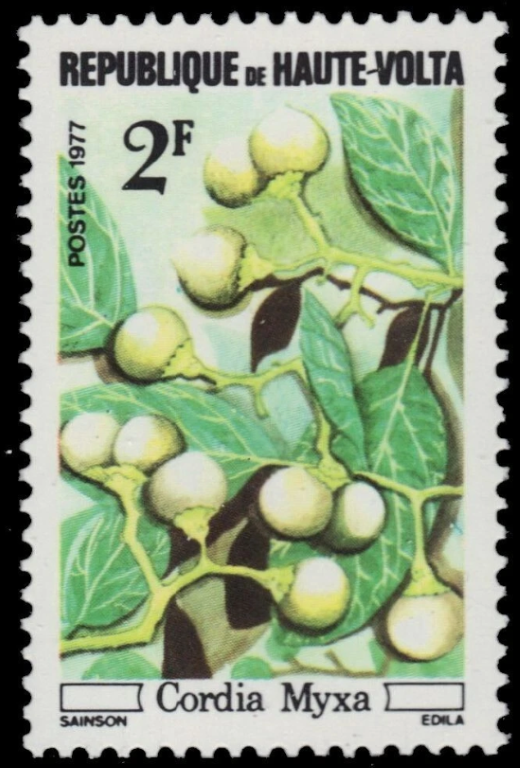
Flowers are small, white, hermaphroditic, organized in corymbs. Flowering takes place from March to May. The fruit of the species is categorized as a drupe. It is spherical, 1–2 cm in diameter, initially green and sticky, and upon maturation acquires a yellow – orange to brown hue. It contains 1 light brown seed per fruit.
The plant is notable for its sticky fruit pulp, a trait that inspired its common Greek name “myxiáà”’ which stems from the word “myxa” (mucus).
The first recording of the species was made in 1753 by Carl Linnaeus in his work “Species Plantarum”. It has been cultivated and used since antiquity in South Asia and the Middle East for its edible and medicinal fruits and is even mentioned in ancient medical texts of Ayurveda (a system of traditional medicine created in India about 3,000 years ago) and traditional Persian medicine.
In the past, the fruits and seeds were consumed as food, while the leaves and the bark were used traditionally for medicinal purposes in many cultures. In Malaysia and Tanzania, they were applied for the treatment of skin diseases and parasitic infections, in Africa for wounds and ulcers, while in the Comoros the bark was used to improve the healing of bone injuries. Modern studies support the use of fruits, leaves, and bark in traditional medicine, as they exhibit anti-inflammatory, anti-diabetic, anti-parasitic (against Leishmania infantum), and antimicrobial activity. The fruits contain a high concentration of fatty acids, phenolic compounds, alkaloid saponins and coumarins, and significant percentages of sugars.
(Note: Ethnobotanical data regarding the medicinal uses of plants must be handled with caution, and their application should be carried out exclusively under medical supervision).
- https://www.worldfloraonline.org
- https://en.wikipedia.org
- https://tropical.theferns.info
- Al-Ati, T. (2011). Assyrian plum (Cordia myxa L.). In Postharvest biology and technology of tropical and subtropical fruits (pp. 116–126e). Woodhead Publishing. https://doi.org/10.1533/9780857092762.116
- Al-Khafaji, S. A., Alsaadawi, M. A., Al-Yasari, A. M., & Al-Saadawe, M. A. (2021). Article review: Cordia myxa L.: The gift of the nature, a review. Basrah Journal of Agricultural Sciences, 34(2), 267–277. https://doi.org/10.37077/25200860.2021.34.2.20
- Al-Snafi, A. E. (2016). The pharmacological and therapeutic importance of Cordia myxa—A review. IOSR Journal of Pharmacy, 6(6), 47–57.
- Al-Snafi, A. E. (2024). Antiparasitic activities of medicinal plants: An overview. GSC Biological and Pharmaceutical Sciences, 27(2), 167–223. https://doi.org/10.30574/gscbps.2024.27.2.0184
- Bhardwaj, V. (2024). Assyrian plum (Cordia myxa): A valuable ethnomedicinal plant. Journal of Pharmacology and Pharmaceutics, 1(1), Article 1001.
- Jomard, E. F. (Ed.). (1811–1817). Description de l’Égypte: Ou, recueil des observations et des recherches qui ont été faites en Égypte pendant l’expédition de l’armée française. Antiquités. Planches (Vol. 2). Imprimerie Impériale.
- Tutin, T. G., Heywood, V. H., Burges, N. A., Moore, D. M., Valentine, D. H., Walters, S. M., & Webb, D. A. (Eds.). (1964–1980). Flora Europaea (Vols. 1–5). Cambridge University Press.
During each season you will see:
SPRING
Leaves
Flowers
SUMMER
Leaves
Unripe fruits
AUTUMN
Leaves
Ripe fruits
WINTER
Leaves