Natural populations are found in deciduous forests and rocky slopes. The species can thrive in urban environments as well.

(height, leaf arrangement, leaf shape, root system)

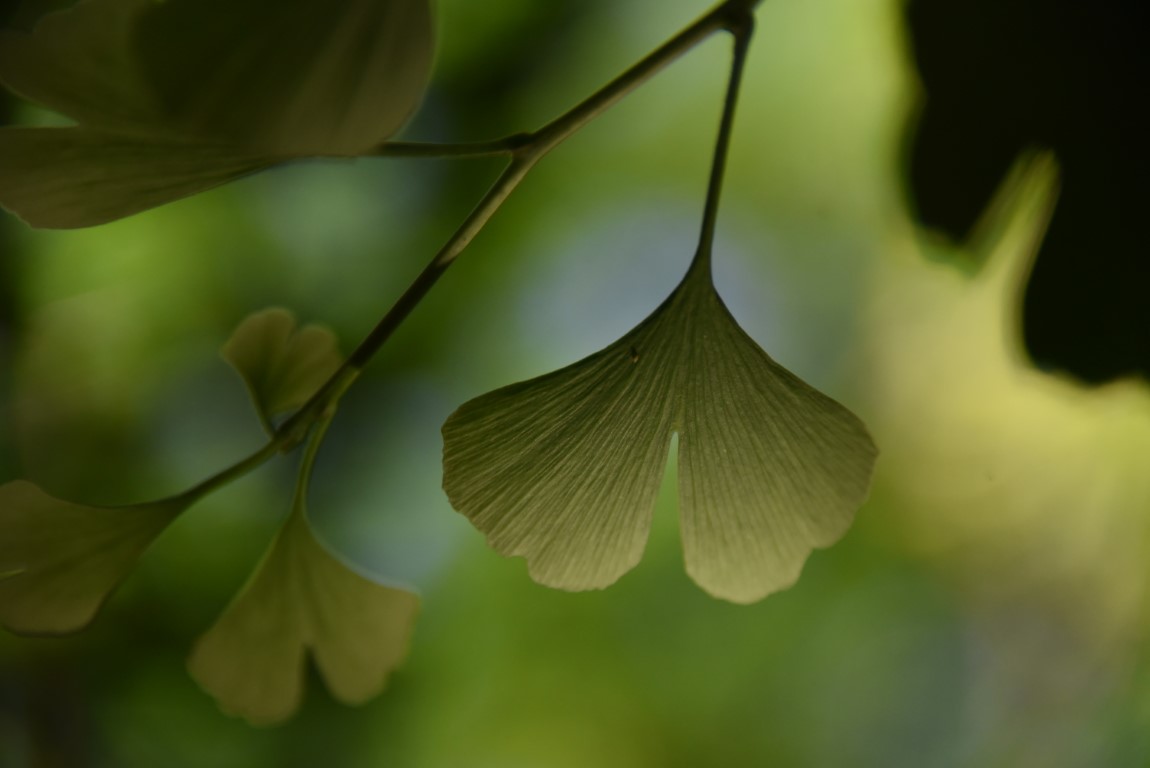
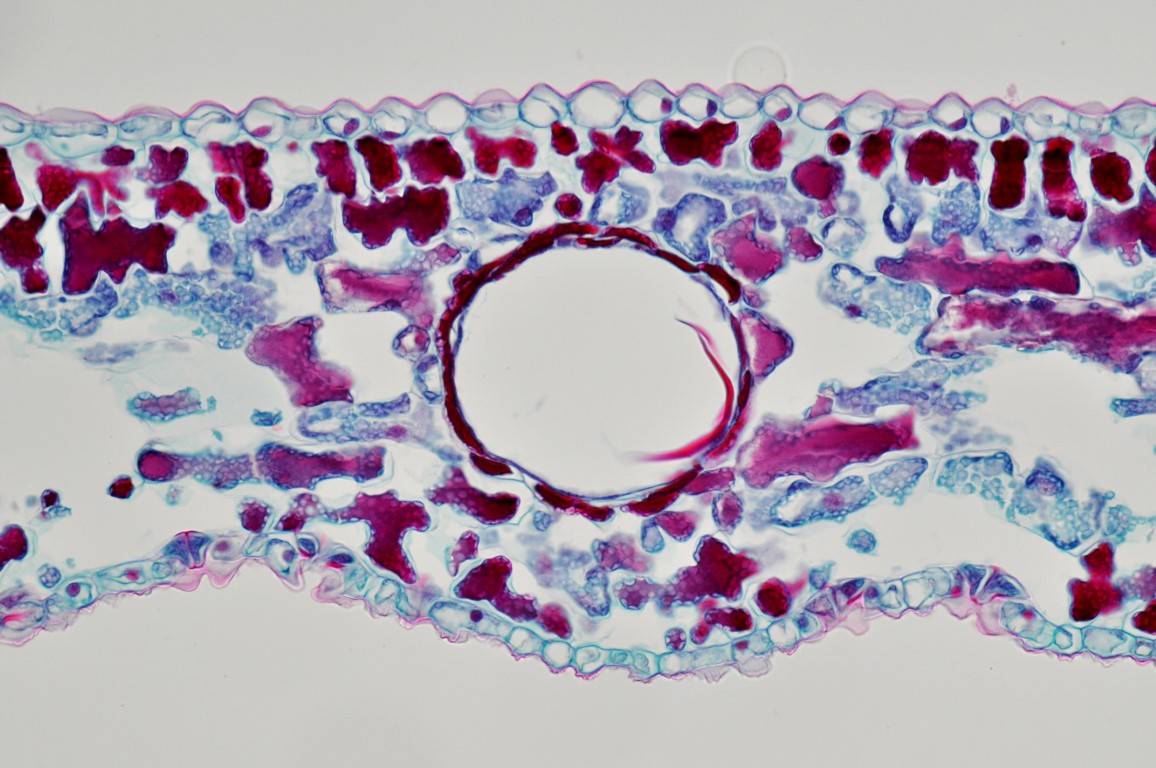
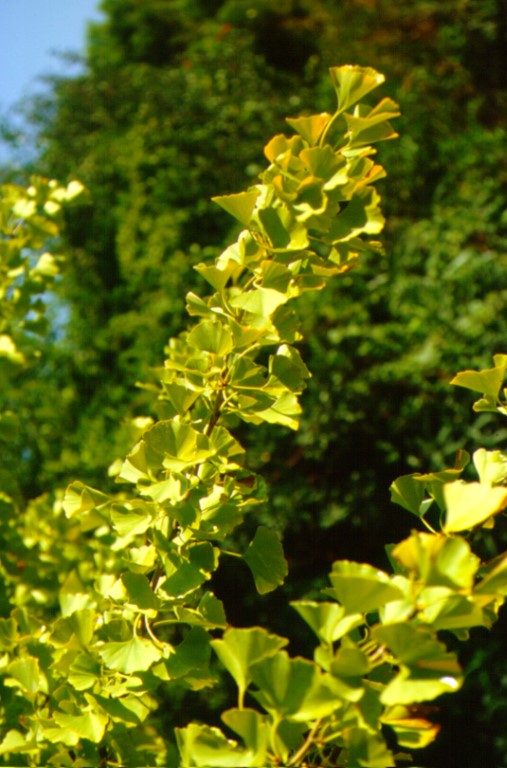
Deciduous tree up to 40 m in height with a cylindrical trunk reaching up to 3 m in diameter. Its bark has a grey to brown hue and deep furrows. The crown is initially conical, but in the process acquires an oval shape. The leaves of the species are fan-shaped, petiolate, hairless, and are characterized by a bilobed blade, a fact to which the specific epithet “biloba” is owed. The leaf has parallel venation; the veins do not bifurcate. They have a light green color, which during the autumn period turns into impressive gold. The root system is deep and extensive.

(flowering period, flowers, seeds)

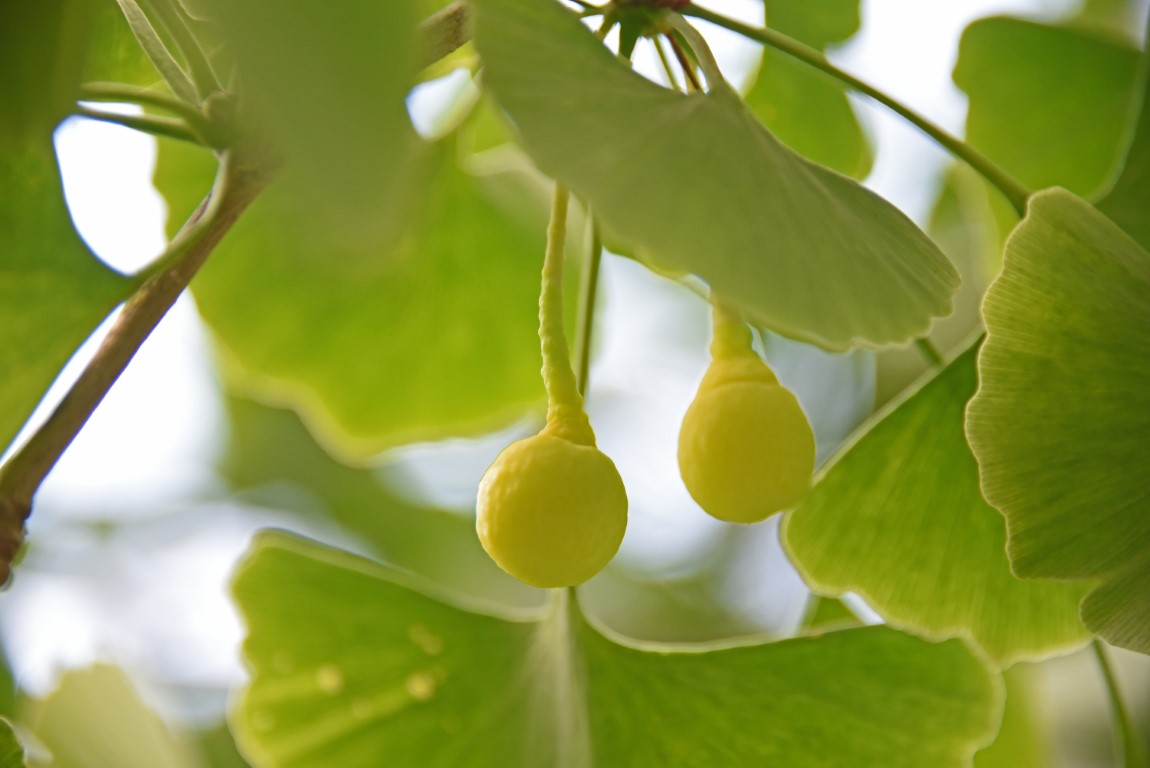
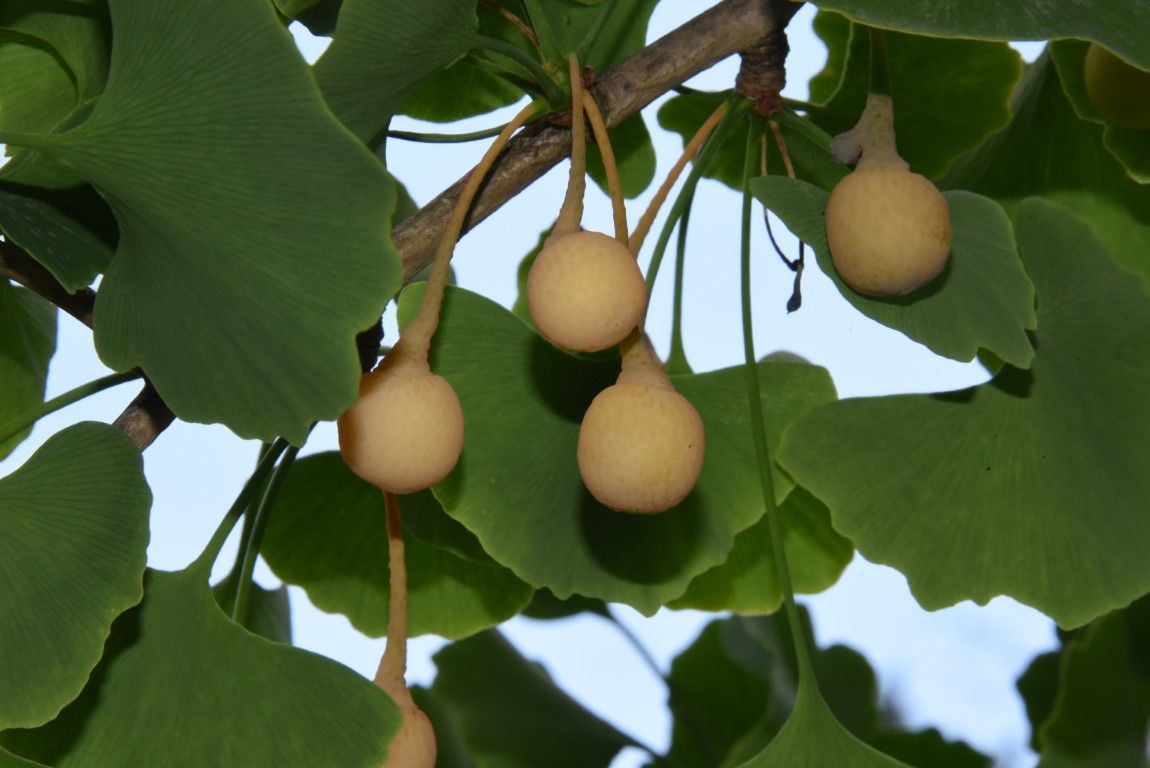
While capable of vegetative reproduction, this species primarily reproduces sexually. It is dioecious, meaning there are separate male and female individuals, with the males producing catkin-like cones and the females producing structures resembling drupes. The reproductive organs appear at the beginning of spring. Each stalk bears two ovules, of which only one develops. The ovules swell and become seeds with an ellipsoid to spherical shape, fleshy morphology, and orange-yellow color. After falling to the ground, during the autumn period, they produce a foul smell, which is due mainly to the presence of butanoic and hexanoic acids, the same fatty acids found in rancid butter.

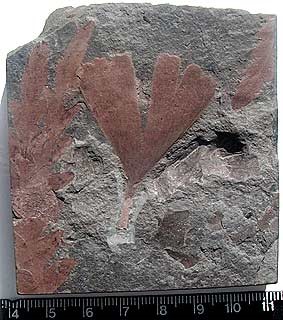
Ginkgo biloba constitutes the only surviving species of the family Ginkgoaceae. It is of high importance for the evolution of plants, as it is the only existing link between ferns and conifers. In fact, it is considered such an ancient species that it is characterized as a “living fossil”. It stands out for its resilience, as it is one of the few organisms that survived after the dropping of the atomic bomb on the city of Hiroshima in 1945.

According to the IUCN Red List, it is classified as “Vulnerable”.

The species appeared for the first time more than 290 million years ago, during the Permian period of the Paleozoic era, even before dinosaurs appeared. The first references to the tree have been found in ancient Chinese texts dating from 1000 AD and concern its medicinal and other uses. The genus name “Ginkgo” comes from the explorer Engelbert Kaempfer, who encountered the species on one of his travels in 1712 and introduced it to the Western World for the first time. Carl Linnaeus adopted the initial name and added the specific epithet “biloba”. The scientific name Ginkgo biloba has particular linguistic and historical interest. The word Ginkgo comes from a Japanese pronunciation (ginkyo or gin-kyo), which was rendered incorrectly in Latin script by European botanists in the 18th century. This spelling “error” was maintained and established internationally. The name originally refers to the silver-colored seed of the plant. The common English name “maidenhair tree” is attributed to the resemblance of its leaves to those of the fern Adiantum (maidenhair fern), while in various languages the plant’s name is linked both to its aesthetic value and to its longevity and symbolic significance in Asian cultures.

The seeds are utilized for culinary purposes in China, Japan, and Korea. They also constitute an important ingredient in pharmaceutical preparations in Traditional Chinese Medicine for the treatment of respiratory, urological, and mental ailments. In the Western World, use is made mainly of leaves for the improvement of blood circulation and brain function. The wood of the species is utilized widely in furniture making, while the trees are often planted for ornamental purposes.

(Note: Ethnobotanical data regarding the medicinal uses of plants must be handled with caution, and their application should be carried out exclusively under medical supervision).

References in Αrt

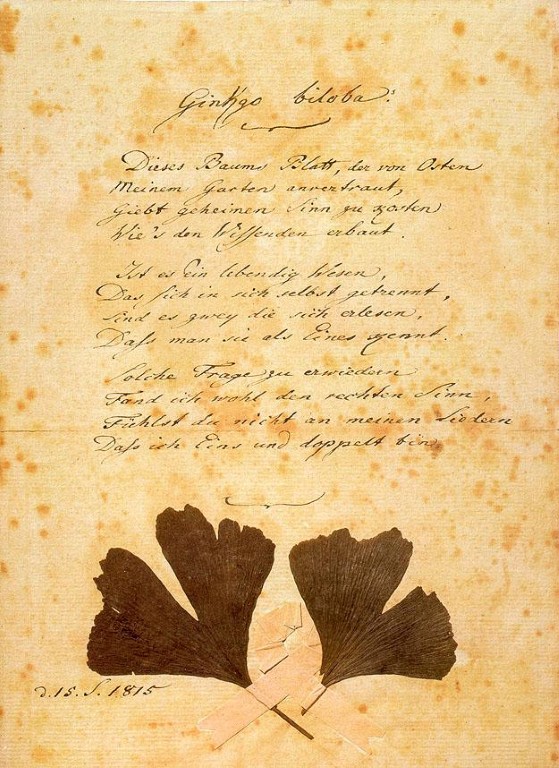
Due to its characteristic appearance and the symbolism accompanying it, the Ginkgo has constituted a source of inspiration for art in Asia and Europe for centuries. In Japan, Ginkgo leaf motifs were used widely for the decoration of furniture, ceramic vessels, kimonos, and other fabrics. In the early 20th century, with the Arts and Crafts movement, images of Ginkgo leaves appeared frequently in Art Nouveau designs on ceramic and metal objects and in architecture. The species constitutes a symbol of peace, longevity, and love. As such, it has been mentioned in both Asian and European poetry. A characteristic example is the poem by Goethe “Ginkgo biloba”, where the author likens himself and his partner to the two lobes of a leaf; The poem employs the bilobed structure of the Ginkgo leaf to symbolize the interplay between unity and duality, reflecting how two distinct beings can form a single whole.