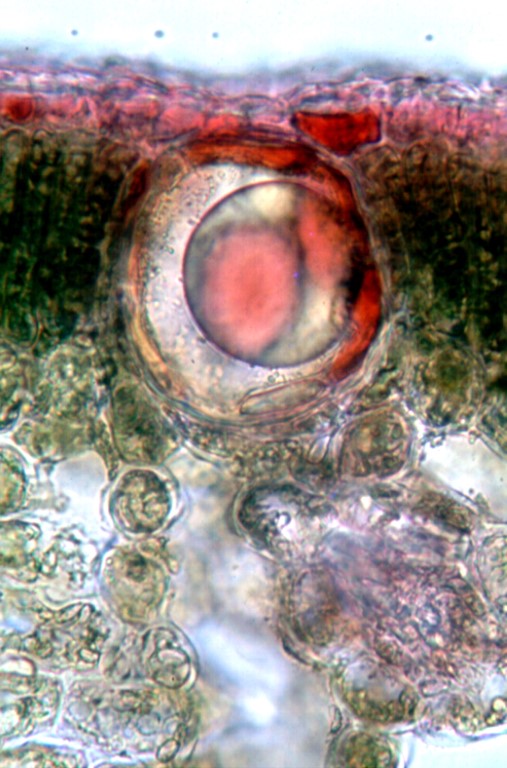


It is classified as a “Phanerophyte (P)”, and its habitat includes “Forests and shrublands (W)” and “Dry Mediterranean scrub and grasslands (P)”. It is found in the understory of pine and oak forests.
(height, leaf arrangement, leaf shape, root system)
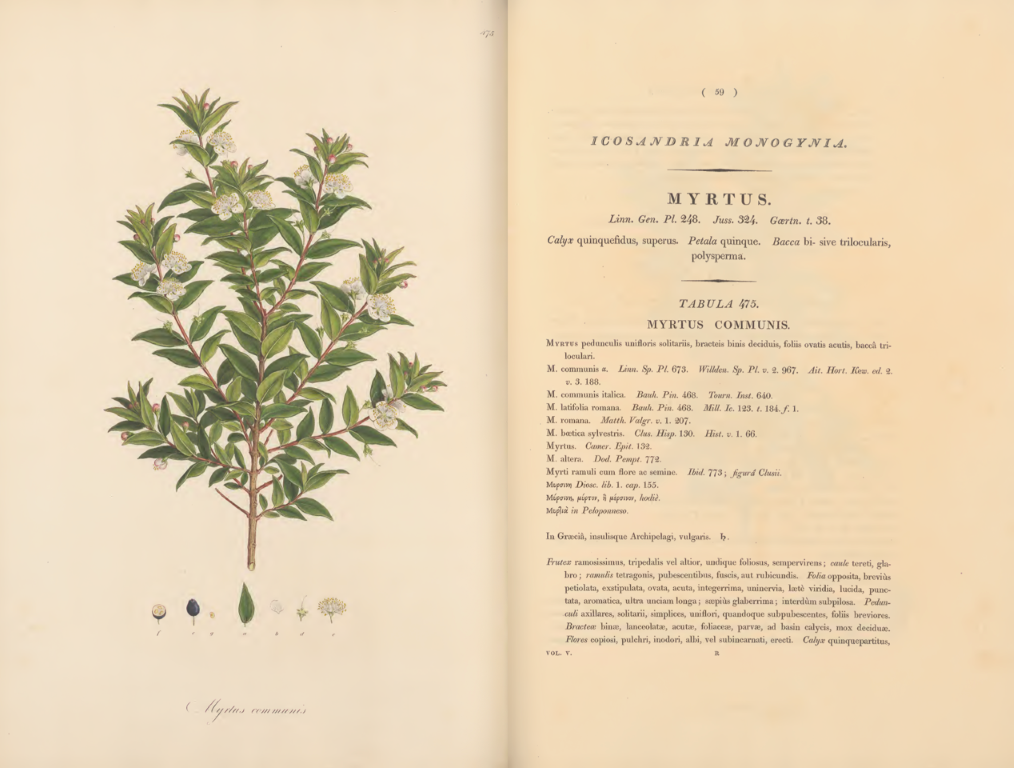
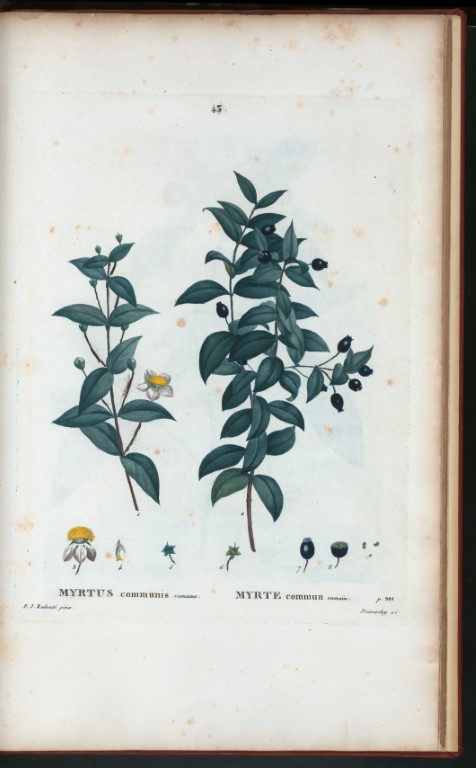
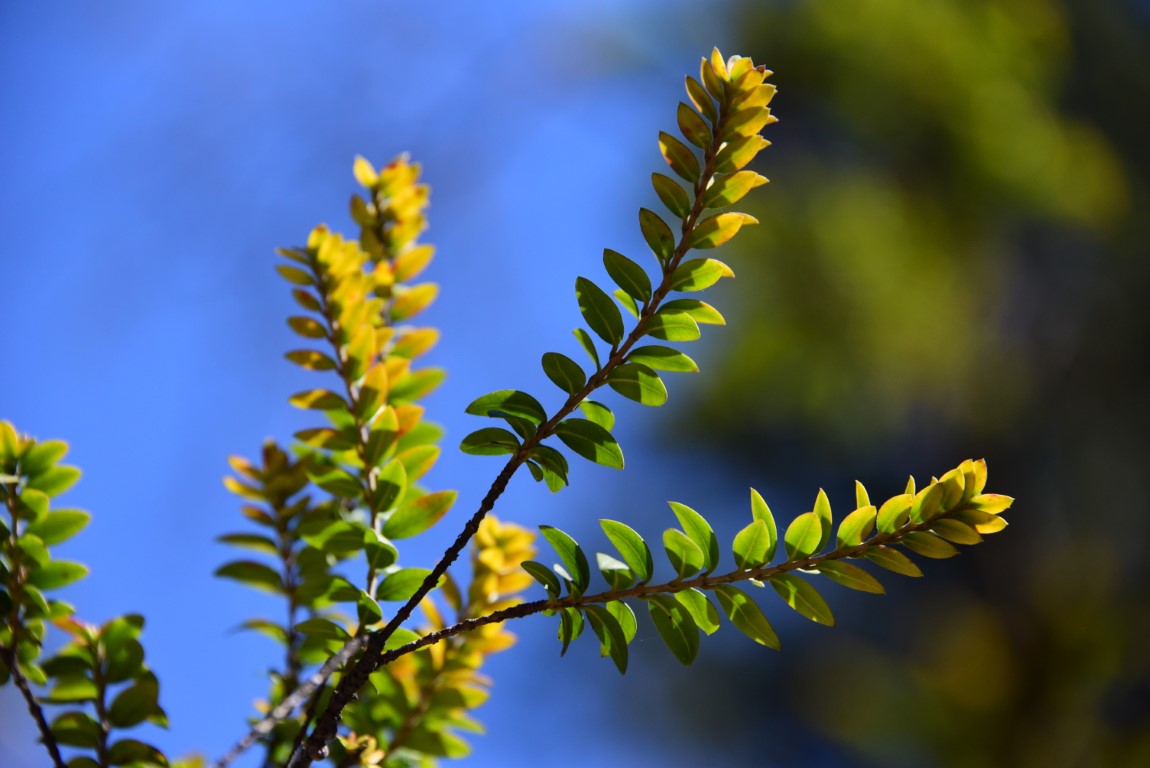
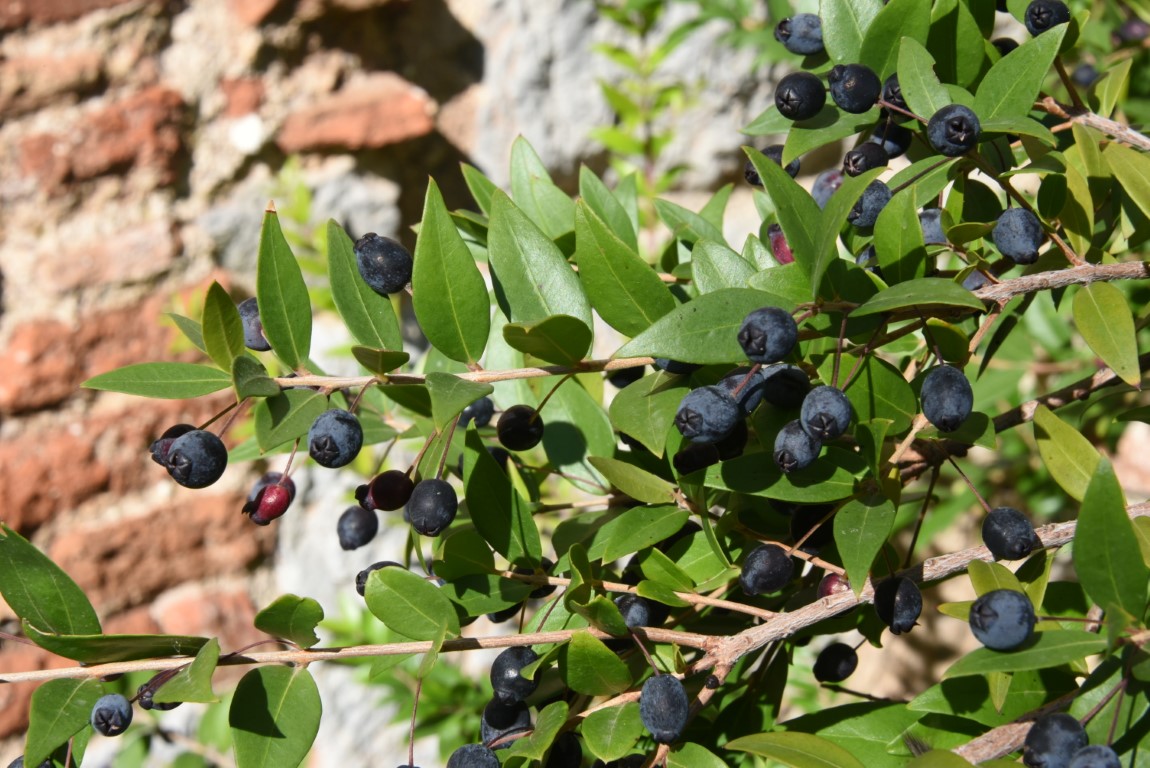
Evergreen shrub, reaching up to 5 meters in height. The leaves are opposite, leathery, 2 to 5 centimeters long, with a lanceolate-to-ovate blade and a sharp-pointed tip. Transparent glands containing essential oil can be observed on the leaf blade.
(flowering period, flowers, seeds)
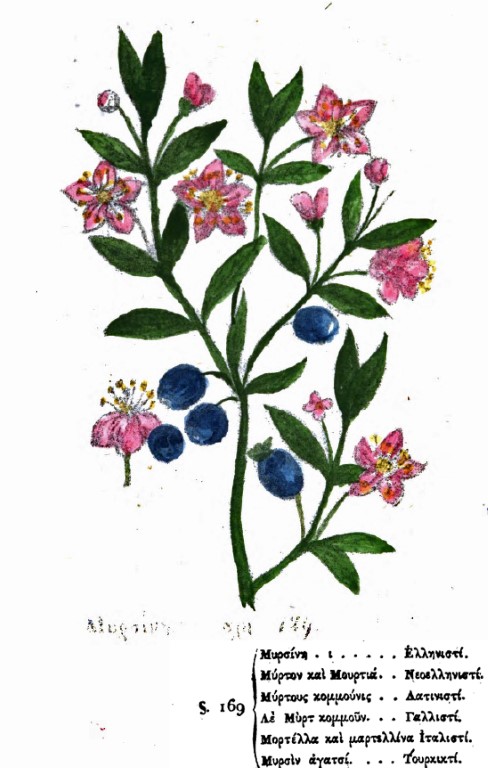
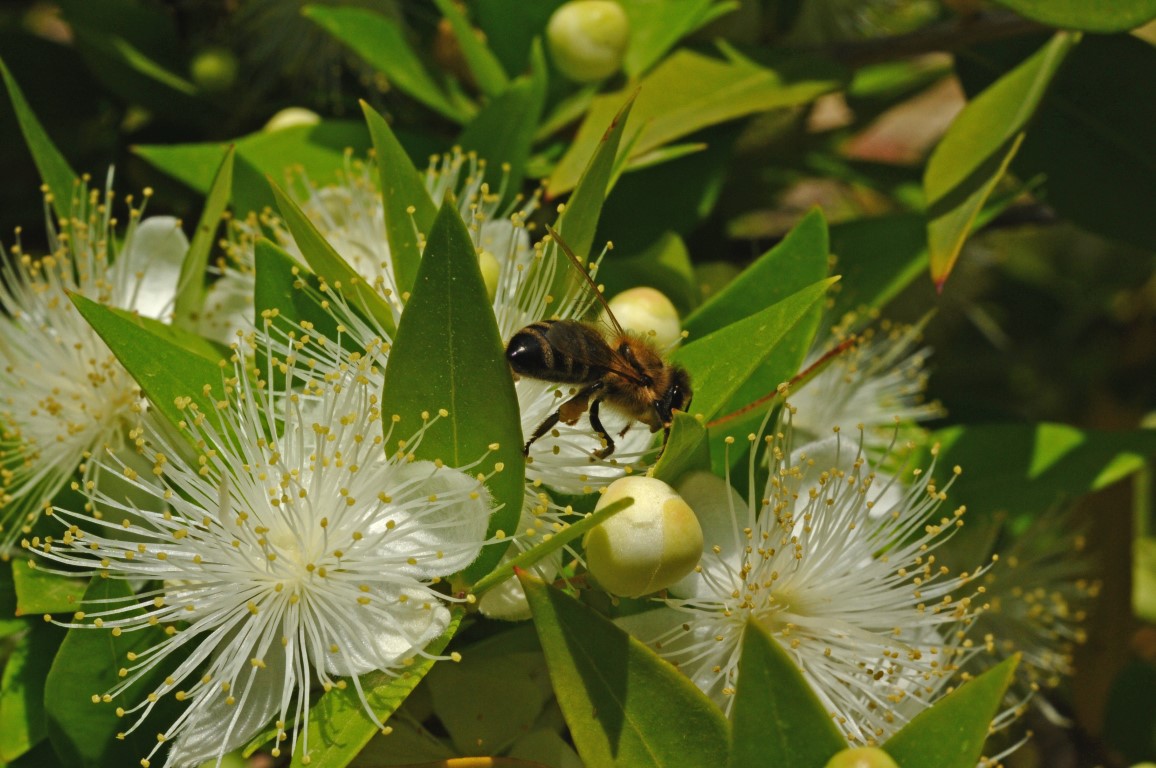
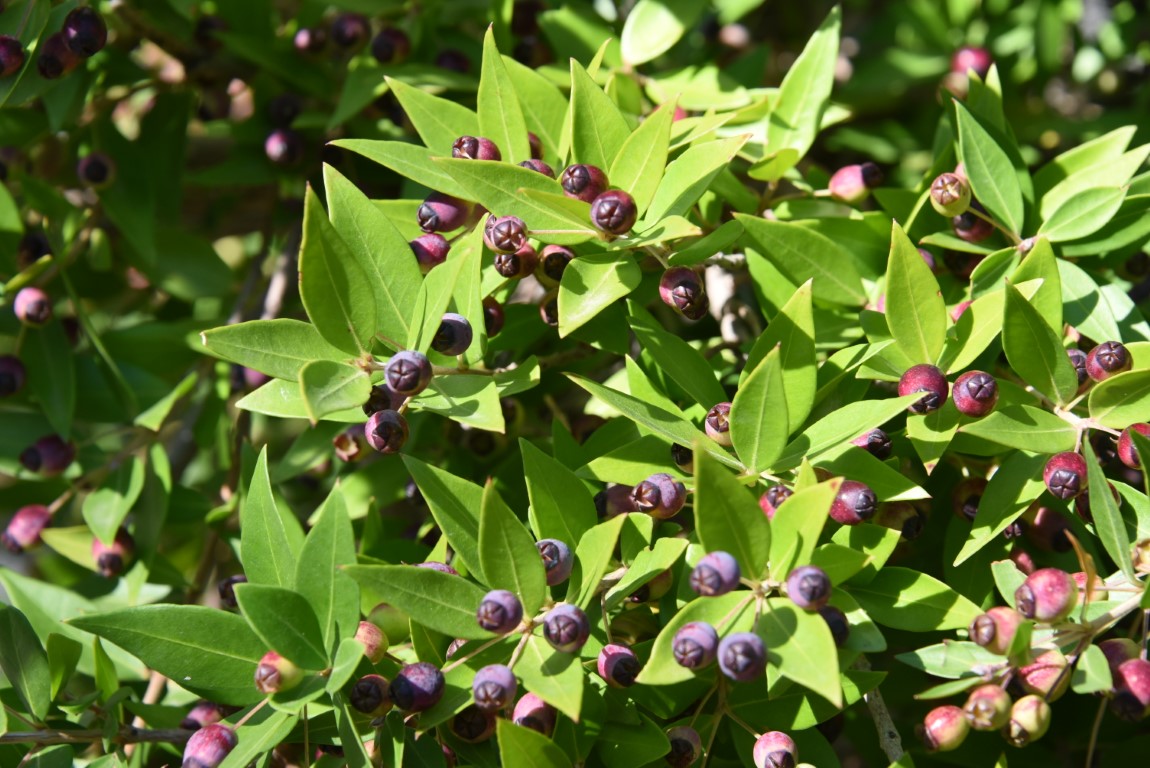
The species reproduces through seeds or cuttings. The flowers are white and strongly scented. They have 5 petals, a large number of stamens, and a diameter of up to 3 centimeters. They are pollinated by insects. The fruit is a berry-like, violet-colored drupe, with a diameter of up to 1 centimeter. The seeds are dispersed after the fruits are consumed by birds, or with the help of rain. Their germination takes place in April and May.
The leaves of the myrtle, observed in bright light, appear as if they are perforated. These transparent spots are the glands containing essential oil, while in mythology they are linked to the myth of Phaedra, who pierced the leaves of the myrtle out of sorrow because Hippolytus, a friend of her son Theseus, did not fall in love with her.
The first known written mention of the myrtle is found already in the Epic of Gilgamesh, where the plant is listed among others used in the composition of rituals and sacrifices intended to appease the deities. In ancient Greek tradition, the myrtle was associated with beauty, love, and youth; it was the sacred plant of Aphrodite of Paphos, about whom myth recounts that when she emerged from the sea, she hid behind a myrtle bush. During his travels in Troezen, Pausanias is the first to record the observation of the myrtle’s “pierced leaves”; he even explains the myth that attributed these spots to the distress of Phaedra, who pierced the leaves with her hairpin as she secretly observed Hippolytus, the son of Theseus, while he exercised at the nearby stadium. Today we know that these “holes” are simply the plant’s glands containing the essential oil responsible for its fragrance. Theophrastus, in turn, refers to this intensely aromatic oil (“polyosmon”) and notes its therapeutic uses. Indeed, the medicinal properties of myrtle oil were already known in antiquity; Theophrastus notes that the plant’s fruits are situated either in the center of the flower or at the apex of the fructiferous tube, while flowering and fruiting occur primarily on the woody growth of the previous year. Furthermore, he observes that the species can be propagated through various methods, such as from cuttings or sections of the trunk, and recommends planting two trees in close proximity. He also identifies specific geographical and climatic constraints: the myrtle struggles in cold regions and is notably absent from Mount Olympus. In contrast, he remarks that in Egypt, the plant is remarkably more aromatic than other flora. Finally, he refers to distinct varieties, characterized by white leaves and a biennial fruiting cycle.
Myrtle wreaths were widely prevalent in ancient Greece, serving as traditional victory prizes long before the establishment of the “κότινος – kotinos” (wild olive wreath). Pindar mentions that the victor of the pankration at the Isthmian Games was crowned with myrtle. Similarly, in the region of the Alpheus, during the festivals in honor of Eleusinian Demeter, funerary athletic competitions for men were held; as noted by both Theophrastus and Athenaeus, the victors received weaponry and a myrtle wreath (μυρρίνη – myrrhine). In Athens, there was even a specialized market dedicated to myrtle branches known as the ” μυρρίναι myrrhinaε”, a fact attested by Aristophanes.
According to testimonies by Seleucus (cited by Athenaeus), a specific type of myrtle wreath called the “ἐλλωτίς – hellotis” existed. It measured twenty cubits in circumference and was carried in procession during the “Ἐλλώτια – Hellotia”, a festival celebrated in ancient Corinth in honor of Athena Hellotis. Lastly, Aelian records that Agathocles, the tyrant of Syracuse, preferred wearing a myrtle wreath specifically to conceal his baldness.
Athenaeus, in his work “Deipnosophistae” (The Learned Banqueters), records the diverse uses of myrtle within the context of ancient symposia. He notes that prior to the meals, libations were performed which included myrtle berries, and that during the banquets, encomiums (songs of praise) dedicated to both myrtle and honey were commonplace. Furthermore, he mentions that myrtle berries were consumed as “ἥδιστα – hedista” (most pleasant) desserts, being regarded as among the sweetest and most delectable treats of the symposium.
Aelian also observes that myrtle was employed as a fragrant fuel for funeral pyres, alongside cedar, cypress, and laurel, thereby underscoring its aromatic and ritual significance. In alignment with this sacred use, the Neoplatonist philosopher Iamblichus includes myrtle among the plants utilized to honor the gods, together with cedar, laurel, and cypress. Regarding the sanctity of the plant and the institution of hospitality (xenia), Heliodorus describes instances where hosts would prepare seating adorned with myrtle and laurel branches to honor their guests.
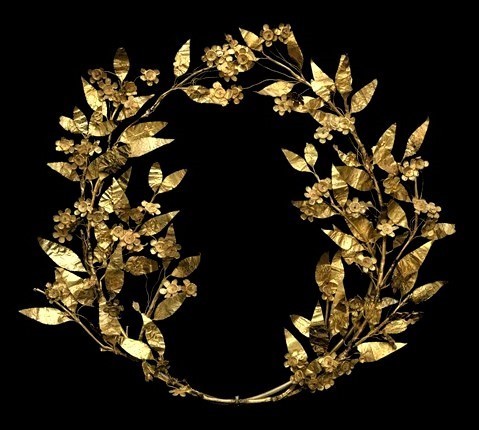
Beyond its association with Aphrodite, the myrtle was also sacred to Persephone, linking the plant to death and funerary practices in ancient Greece. It was customary to place a myrtle branch upon graves as a symbol of the deceased’s virtues and public esteem. Furthermore, the planting of myrtle trees on tumuli is attested in literary sources, such as Euripides in Electra. Euripides specifically laments the neglected tomb of Agamemnon, which lacked both offerings and myrtle boughs. Archaeological evidence corroborates this significance; a notable example is the exquisite golden myrtle wreath excavated from the Royal Tombs at Vergina.
Myrtle wreaths also played an early role in the Eleusinian Mysteries during the initiation rites (muēsis). The plant’s potent fragrance was considered a vital element in the soul’s purification process and its “guidance” toward the Elysian Fields. Additionally, due to the pleasant scent of myrtle oil, it was utilized as a personal deodorant by ancient women—a practice which, according to Theophrastus, likely originated in Egypt. This distinctly “feminine” association led to a prevalent trend of depositing myrtle branches primarily in the graves of women.
The myrtle appears across various ancient religious traditions, dedicated to deities of beauty and fertility, such as the Semitic Ishtar/Astarte and the Roman Venus. According to Pliny the Elder, and supported by the scholar Bauman, the plant’s essential oil, its large, fragrant white blossoms, and its aromatic fruit align perfectly with the attributes of goddesses of beauty. In the Roman era, Pliny records that victorious soldiers returning from battle were publicly honored with myrtle diadems (ovatio). In the Early Christian period, the myrtle—as a symbol of purity and fertility and a plant dedicated to the Virgin Mary—was integrated into the sacrament of marriage, where the priest would crown the couple with myrtle sprigs. Indeed, one of the prominent titles of the Virgin Mary in the Greek Orthodox tradition is “Panayia Myrtidiotissa” (Our Lady of the Myrtles).
The therapeutic properties of myrtle oil (myrsineleion) were well-established as early as antiquity. Dioscorides describes it as both astringent and cicatrizing (healing), recommending its topical application for exanthema (rashes), burns, and genital warts, as well as for joint conditions and hyperhidrosis (excessive sweating). Similarly, Galen prescribes its use as a treatment for alopecia (hair loss). Hippocrates, in his various treatises, references the use of wild myrtle root for the treatment of nerve ulcers and incorporates it into clinical protocols associated with preeclampsia. The wood of the myrtle tree is utilized in fine woodworking (joinery), while its flexible branches are employed in basket weaving. The essential oils extracted from the berries—and occasionally the leaves—serve as the primary ingredient for the production of the traditional liqueur “Mirto” in Sardinia, Corsica, and Capraia. Furthermore, myrtle extract is widely used in the food industry, perfumery, and cosmetics due to its antibacterial, decongestant, and anti-inflammatory properties.
(Note: Ethnobotanical data regarding the medicinal uses of plants must be handled with caution, and their application should be carried out exclusively under medical supervision).
- https://www.iucnredlist.org/species/203365/119997141
- https://powo.science.kew.org/taxon/urn:lsid:ipni.org:names:599719-1
- Aelianus “Varia Historia” 5.6, 11.4
- Aristophanes, “Thesmophoriazusae”, 448.
- Athenaeus, “Deipnosophistae”, 2.35, 2.36, 2.37, 3.14, 7.41, 13.6, 15.22.
- Baumann, H. (1993). The Greek flora in myth, art, and literature (P. Brousalis, Trans.; 2nd ed.). Hellenic Society for the Protection of Nature. (Original work published 1982).
- Dafni, A. (2016). Myrtle (Myrtus communis) as a ritual plant in the Holy Land—A comparative study in relation to ancient traditions. Economic Botany, 70(2), 222–234. https://doi.org/10.1007/s12231-016-9350-2
- Delord, T. (1847). Les fleurs animées (J. J. Grandville, Illus.). Gabriel de Gonet.
- Dimopoulos, P., Raus, T., Bergmeier, E., Constantinidis, T., Iatrou, G., Kokkini, S., Strid, A., & Tzanoudakis, D. (2013). Vascular plants of Greece: An annotated checklist (Englera 31). Botanic Garden and Botanical Museum Berlin-Dahlem; Hellenic Botanical Society. https://doi.org/10.3372/en.31
- Dioscorides, “De materia medica”, CLV.
- Duhamel du Monceau, H.-L. (1755). Traité des arbres et arbustes qui se cultivent en France en pleine terre. Chez H.L. Guerin & L.F. Delatour.
- Euripides, “Electra”, l. 512.
- Galen, “On the Composition of Drugs”, 336.
- Heliodorus, “Aethiopica – The Adventures of Theagenes and Charicleia”, 4.20.
- Herodotus, “The Histories”, Book VII (Polymnia), 54 and Book VIII (Urania), 99.
- Hippocrates, “On Ulcers”, 20, “On Fistulae”, 8.
- Iamblichus, “On the Pythagorean Life”, 28.154.
- New Testament, “Gospel According to Luke”, 17:6.
- Nonnus, “Dionysiaca”, 29.259
- Old Testament, “2 Kings (2 Samuel)”, 5:23-25.
- Ovid, “Fasti”, 4
- Pausanias, “Description of Greece”, Attica, 22.2.
- Pindar, “Isthmian Odes”, 4.110.
- Plinius secundus, “Naturalis Historia”, 12.2.1
- Plutarch, “Moralia (Table Talk)”, 640b.
- Procopius, “History of the Wars”, 8.17.5.
- Pyrrhos, D. (1838). Practical botany: Adapted to medicine and economy. Angelos Angelidis Printing Office.
- Sibthorp, J., & Smith, J. E. (1806–1840). Flora Graeca (Vols. 1–10). Taylor.
- Stefi, A. (2018). The effect of electromagnetic radiation on model biological systems [Doctoral dissertation, National and Kapodistrian University of Athens].
- Strabo, “Geography”, 8.2, 17.2.4.
- Theophrastus, “Enquiry into Plants”, 1.10.3, 1.13.3, 1.14.1, 2.1.3, 2.2.6, 5.6.2, 4.5.3, 6.8.4, 9.11.9.
Theophrastus, “On Odors”, 27, 61.
During each season you will see:
References in Αrt
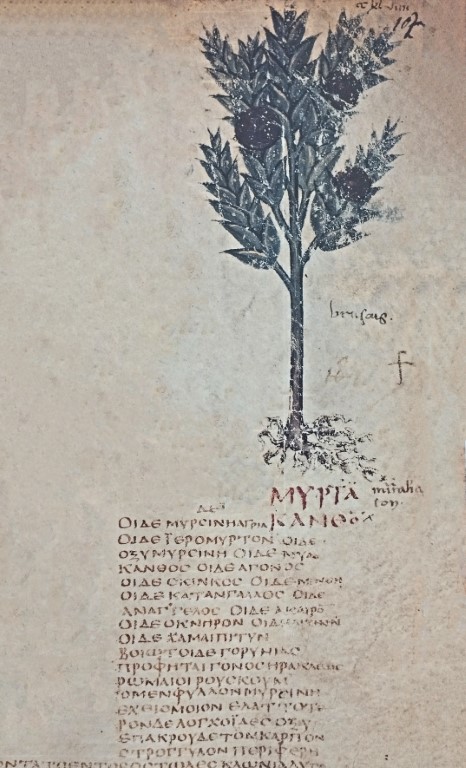
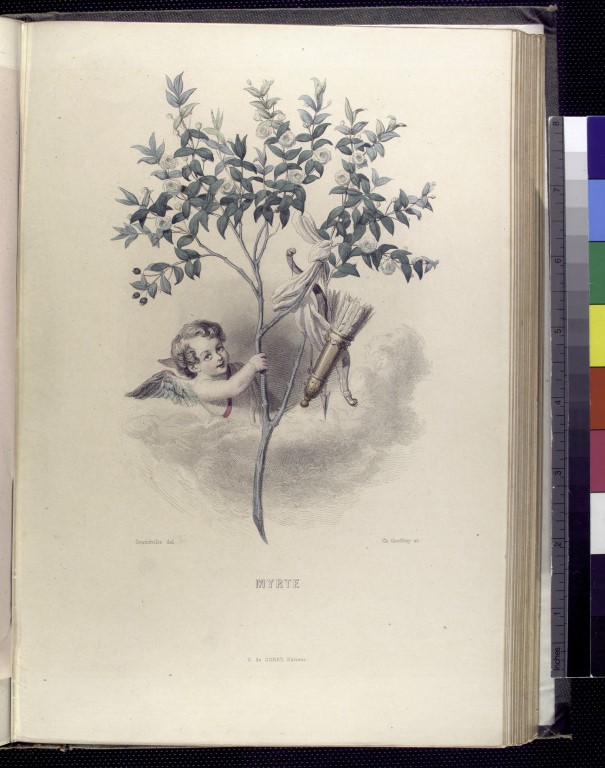
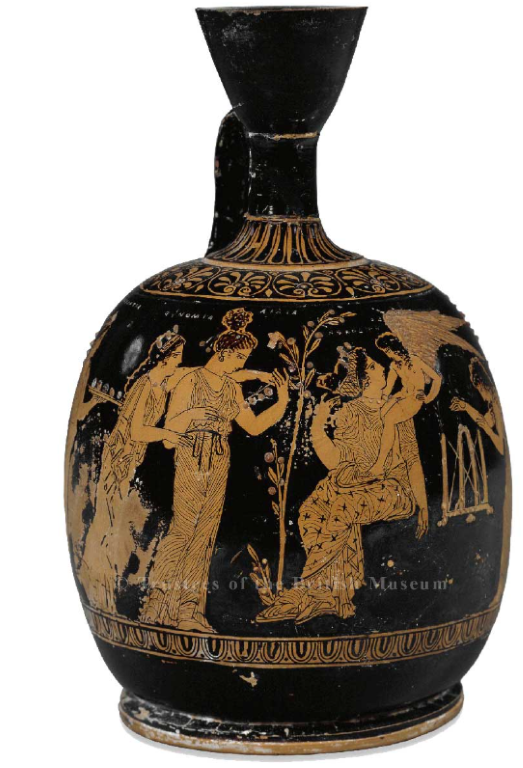
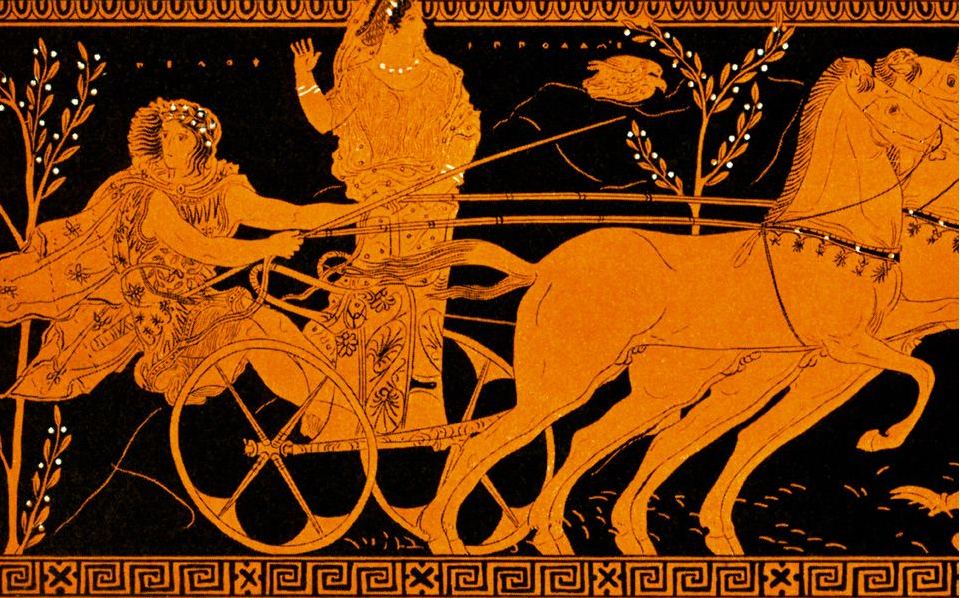
Myrtle leaves, flowering or fruiting branches, and wreaths are frequently depicted across a vast chronological spectrum of visual arts, including Ancient Greek and Roman pottery, painting, and sculpture, as well as in mosaics, hagiography, Medieval and Renaissance iconography, and folk art. A notable archaeological artifact is the gold wreath of myrtle leaves and blossoms dating to the 4th century BCΕ, discovered in the region of Macedonia.
The myrtle also holds a significant position in modern Greek poetry and traditional folk songs. Its presence ranges from the dynamic imagery of Odysseas Elytis in “The Axion Esti” with references such as “Now the wild beast of the myrtle” and the “glorious myrtle” to the lyrical nostalgia of Nikos Gatsos, who describes “a myrtle smiling at the wide windows”. Through these literary works, the plant continues to permeate Greek culture, its symbolic “fragrance” extending from ancient rituals into the verses of contemporary poets.