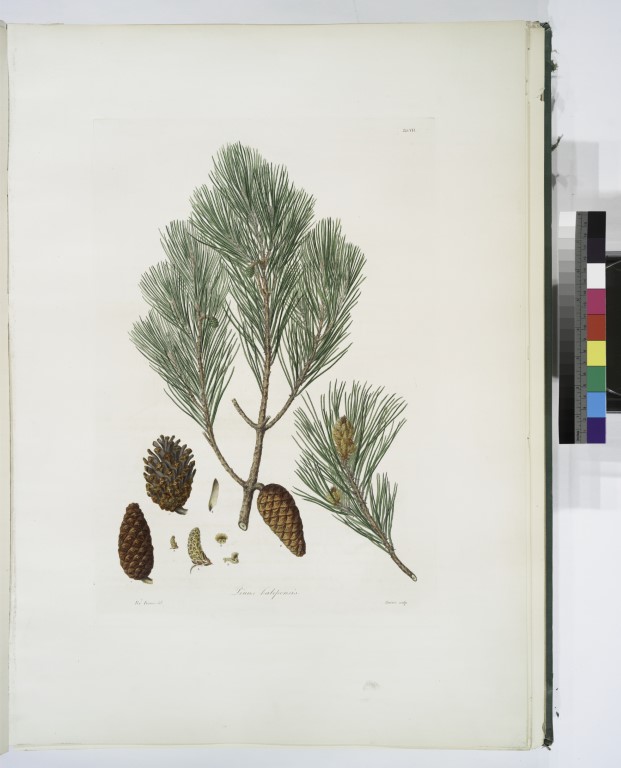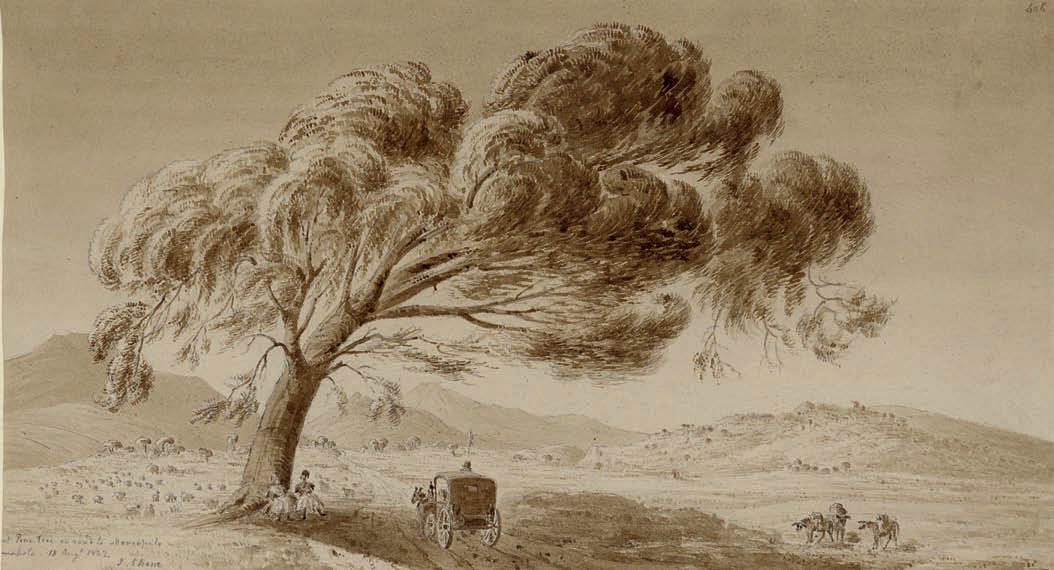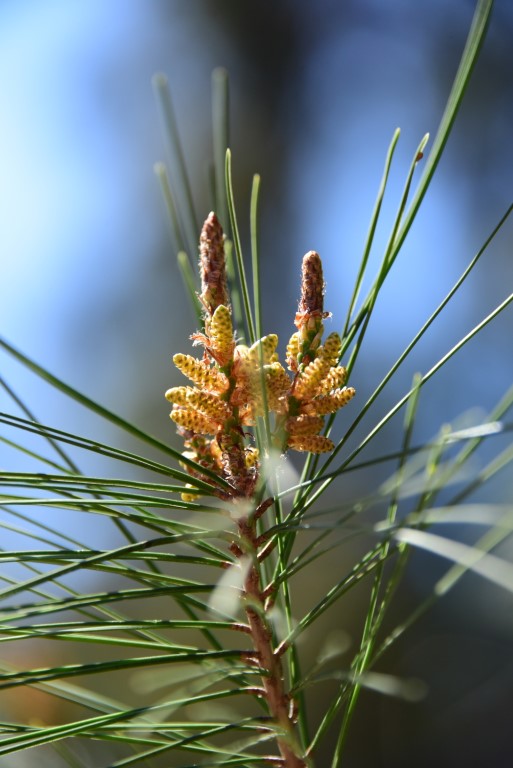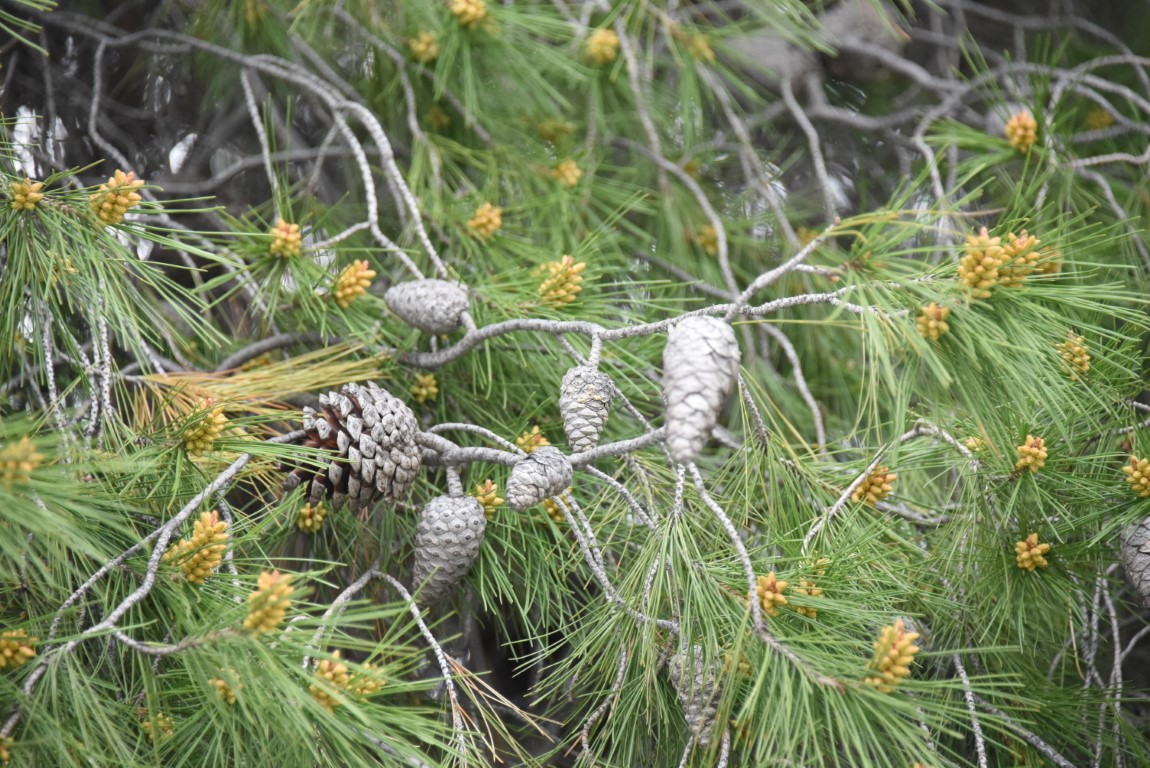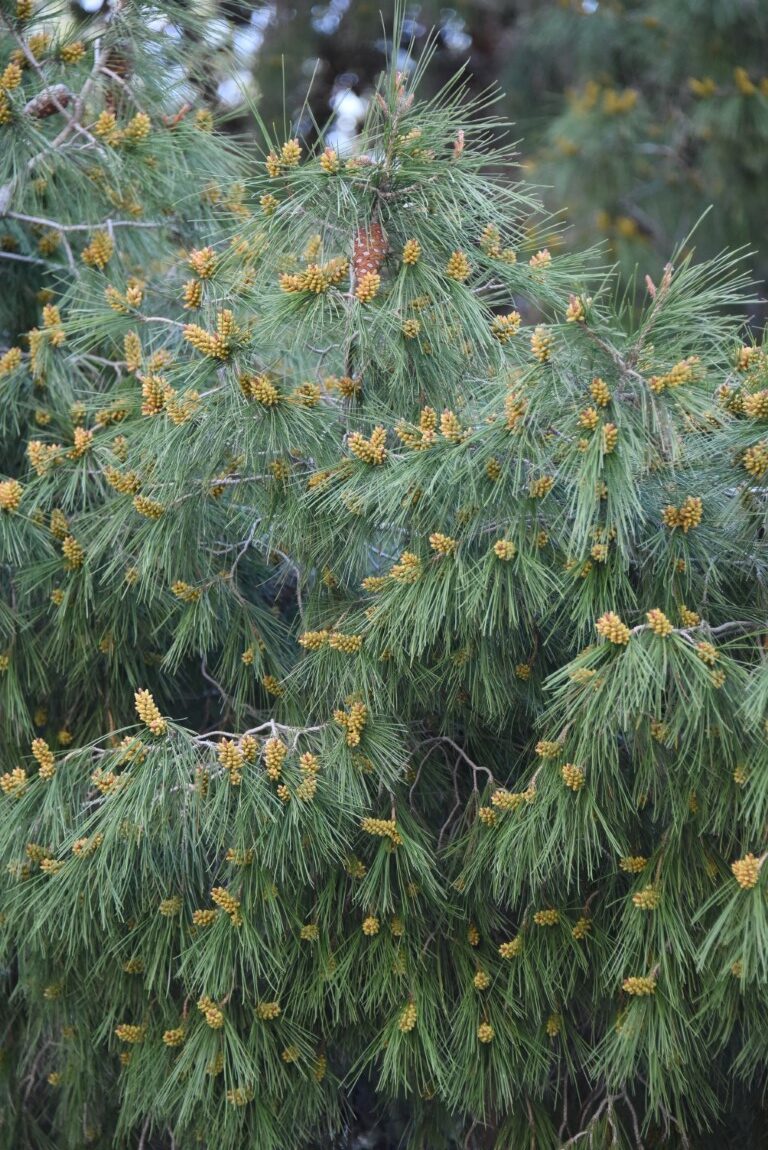


It is classified as a “Phanerophyte (P)”, and its habitat is “Woodlands and scrub (W).” It can be found in Aleppo pine forests, maquis vegetation, on limestone and dolomite.
(height, leaf arrangement, leaf shape, root system)
Evergreen tree, 15–30 m in height, with a trunk diameter up to 1 m, and relatively smooth to fissured reddish bark. The crown is open. Its leaves are thin yellow-green needles, up to 15 cm long that grow in pairs on short shoots.
(flowering period, flowers, seeds)
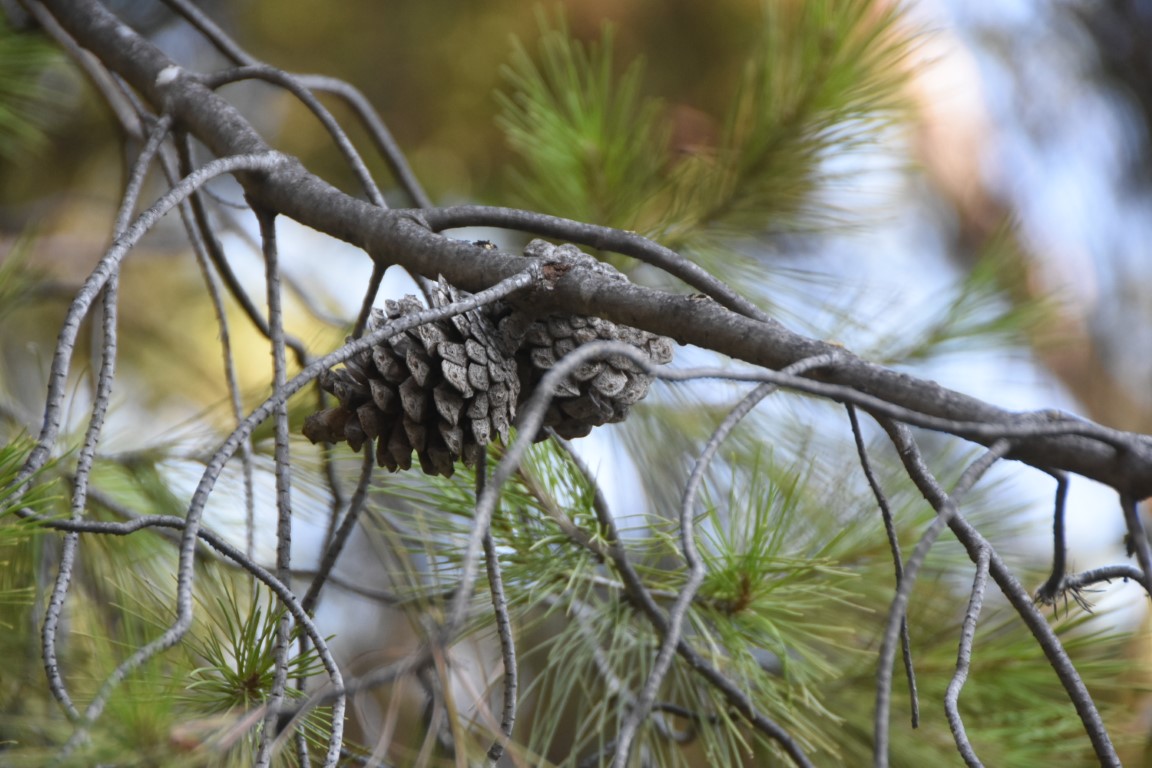
Reproduction occurs exclusively through its seeds, as it does not have the ability to resprout. The cones are narrow, 5–11 cm long, initially smooth and green, turning reddish-brown upon maturity, approximately two years later. They open gradually, especially after exposure to heat, to release the seeds, which are dispersed by wind thanks to their wing. Seed germination occurs from October to December.
It is one of the first species to appear after a fire, as the cones, if not completely burned, open due to high temperatures and disperse their seeds over a wide area.
Pinus halepensis (Aleppo pine) exhibits an extensive yet discontinuous distribution across the Mediterranean. Geographically, it spans from the Iberian Peninsula and Morocco to Jordan, with its northern limit reaching southern France. In the southernmost regions of its range, such as Israel, the species now survives only in relict populations. The contemporary geographical differentiation of the species is considered a result of both natural population migrations and anthropogenic influence. Studies of morphological, genetic, and chemical traits have shown that its populations are divided into distinct geographical groups, primarily categorized into those of the Western Mediterranean, the Eastern Mediterranean, and North Africa. Despite its broad geographical range, genetic differentiation between populations remains relatively limited, suggesting historical migrations and potential human-mediated dispersal across the Mediterranean basin.
In Ancient Greece, the pine was known as “πίτυς-pitys” derived from πετάννυμι, πίτ-νω – petannymi or pit-no, meaning to spread or extend. Theophrastus makes special mention of the species, distinguishing the “Aleppo pine” (chalepios peuke) from others. He notes that it is classified among trees with a woody core and conifers that propagate primarily from seeds. It is characterized by its hard, slender needles and the production of resin, which was primarily used as pitch. Resin is collected by incising the wood, a process dependent on environmental factors such as humidity, shade, and weather conditions. Theophrastus also records that the tree exhibits early budburst compared to other conifers and forms so-called “winter buds”, while it bears fruit after the setting of the Pleiades (approx. November).
The ancient inhabitants of Mount Ida and Macedonia distinguished pine species based on morphology and material properties. They identified the straight and robust Black Pine (Pinus nigra) as the “female” while the shorter Aleppo pine with harder needles was termed “male”. Empirical knowledge in Ancient Greece focused largely on the quality of pitch and timber. It was observed that although the Black Pine was richer in resinous wood (dadi) and produced fragrant, fluid pitch, it was less compact due to high moisture content. In contrast, the Aleppo pine yielded a more viscous and stable substance that withstood processing, despite its hard wood. These material differences dictated their usage: the softer, stable wood of the “female” species was considered superior for fine carpentry, whereas resin yield was critically influenced by the environment, with shaded and humid areas favoring the production of more fluid pitch. Indeed, Aleppo pine wood was utilized in the construction of light sections of triremes, in building works, and for large wooden tools, despite its tendency to decay relatively quickly.
The resin of the Aleppo pine held more than just practical and economic value; it acquired a potent symbolic character through literature and myth. The Hellenistic poet Nicander uses a striking image to describe resin, likening it to the “tears of the pine.” This imagery is linked to the myth of the satyr Marsyas, who dared to challenge Apollo to a musical contest. Following his defeat, Apollo punished him severely by flaying him alive. In Nicander’s poetic conception, the Aleppo pine “mourns this tragic event, presenting the resin dripping from its trunk as the tree’s tears.
General Observations on the Pine in Antiquity
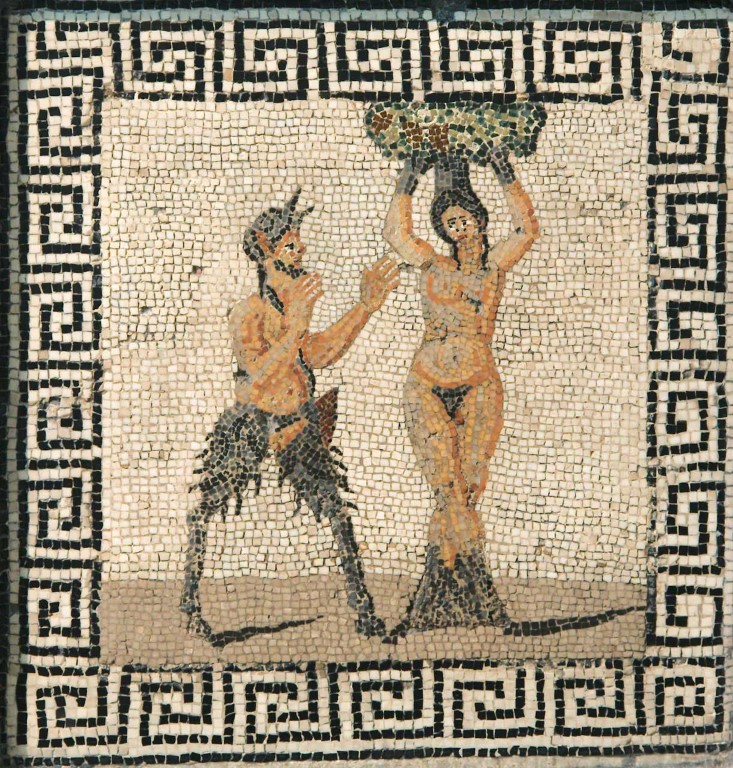
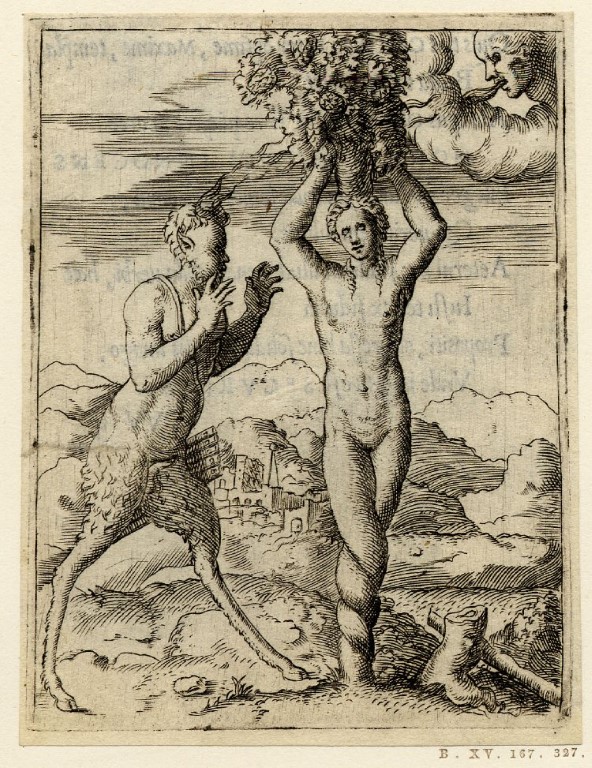
Pliny provides detailed information on the morphological characteristics of the pine, noting its slender, elongated leaves, almost hair-like, without strictly distinguishing between species. The pine was the favored tree of Rhea, symbolizing a link between the celestial and terrestrial worlds. Pitys is also mentioned as an Oread nymph pursued by both Pan and Boreas (the North Wind). As narrated by Nonnus of Panopolis, Boreas chased her to take her from Pan; Pitys resisted, and he cast her from a cliff. Pan then transformed her into a robust tree. To this day, when the north wind blows, Pitys remembering the pain caused by Boreas, “weeps” tears of amber.
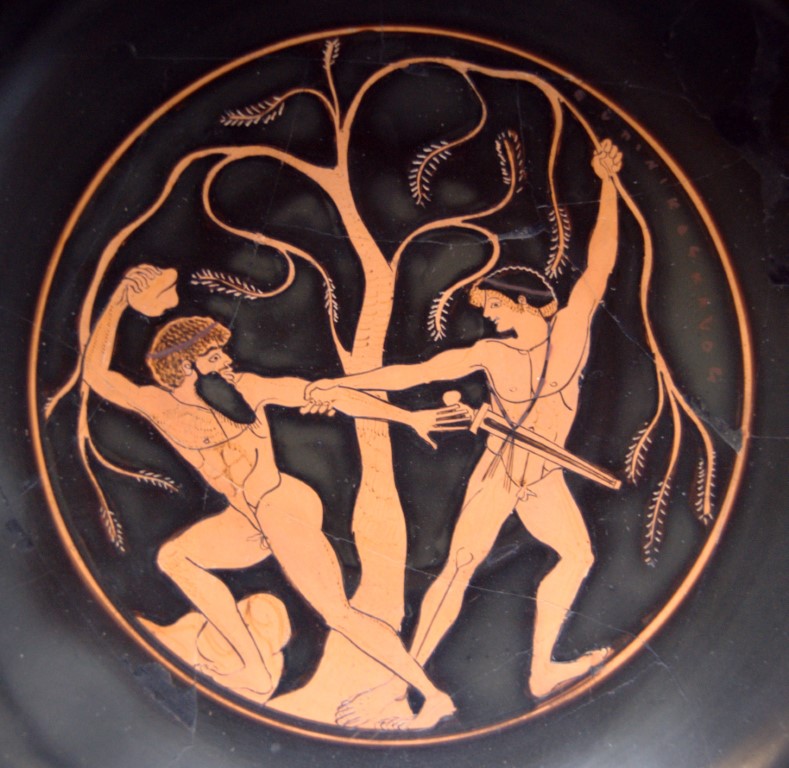
The tree is ubiquitous throughout the Greek world. Strabo refers to the island of Chios as Pityoussa (Πιτυοῦσσα) due to the abundance of pines in its northern part, a name also shared by Lampsacus, Chios and Salamis. He similarly uses the term Pityoussae (Πιτυοῦσσαι) for the islands of Ibiza and Formentera in Spain. The region of the Isthmus of Corinth was renowned for its pines; Plutarch notes that the “Isthmian pine” was famous for the construction of triremes. He adds that pine resin provided absolute waterproofing for vessels, which is why the tree was dedicated to Poseidon. At the Isthmus, the Panhellenic Isthmian Games were held in honor of Poseidon, where the victors were awarded a crown (or branch) of pine. Pausanias describes that the pines there reach the shoreline and recounts a local legend: the brigand Sinis, known as Pityokamptes (Πιτυοκάμπτης-the Pine-Bender), lived in this area. Sinis would capture travelers and tie them to two opposite pine branches he had bent downward. Upon releasing them, the victim’s body would be torn apart. This bandit was eventually slain by Theseus in the same manner (by the very pine Pausanias encountered!).
In Euripides tragedy Medea, the nurse, soliloquizing outside the palace of Corinth, despairs at the moment the timber of Mount Pelion was converted into shipbuilding material. She wishes that “the pines in the glens of Pelion had never been felled to provide oars for the hands of the Argonauts”, as this act was the root cause of the tragedy; had the Argo never been built, Medea would never have fled her homeland, consumed by her passion for Jason. Apollodorus also refers to the Pelion pine used for the Argonautic expedition. Furthermore, the Centaurs of Pelion are depicted attacking Heracles with entire uprooted pines (Diodorus). Outside the Greek mainland, the pine was equally widespread; Odysseus informs King Alcinous that the courtyard of the Cyclops Polyphemus’ cave (likely located in modern NE Sicily) was filled with oaks and pines.
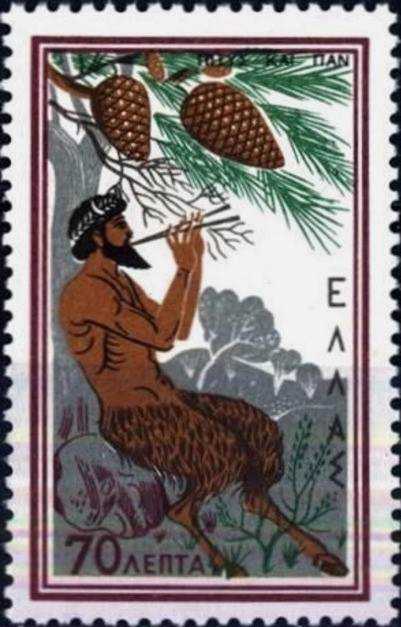
The pine was a sacred tree and a symbol of Dionysus, as mentioned by Plato. The thyrsus (θύρσος), the staff carried by the Maenads, was topped with a pine cone as an emblem. Plutarch notes that wine originating from “pine-clad regions- πιτυώδη χωρία” was particularly “sweet-tasting-ἡδύοινος” (hedyoinos). The “pitched wine – ὁ πισσίτης οἶνος” (pissites oinos) was highly esteemed by the Romans, while in Euboea and the Po Valley, the addition of resin as a flavoring agent is described. The Stoic philosopher Cornutus explains that Pan was crowned with pine because he dwelt in caves and mountains, forever linking the tree with mountain and forest deities. Another prominent myth connects the pine to Attis. According to Ovid, Attis was a beautiful Phrygian youth loved by Cybele (the Magna Mater). She dedicated him to her service, demanding eternal chastity. When Attis broke his vow to marry a nymph, Cybele drove him into a divine frenzy, leading him to self-mutilate under a pine tree. After his death, Cybele declared the pine sacred as a monument to Attis, its evergreen nature symbolizing his eternity and immortality. This event is tied to the “Ides of March”. During the late Imperial period, the Ides marked the beginning of a “holy week” honoring Cybele and Attis. On March 22nd, the ceremony of “Arbor intrat” (The Tree enters) commemorated Attis’ death. A priestly college known as the “dendrophoroi “(tree-bearers) would cut down a pine annually, hang an image of Attis from it, and carry it to the Temple of the Great Mother amidst ritual lamentations.
Its resins (both liquid and dry), most notably the renowned “Colophonian resin’ originating from the region of Colophon in Asia Minor, were utilized in the preparation of syrups for chronic pulmonary diseases. Concurrently, liquid pitch emerged as a “panacea – πανάκεια” of the era; it was employed as an antidote to toxins, an anti-inflammatory agent for the throat and ears, and a potent antiseptic for treating reptilian bites, ulcers, cutaneous herpes, and infections such as carbuncles or sepsis.
According to Dioscorides, the resin trade network spanned the entirety of the then-known world. Precious varieties were transported from Gaul, Tuscany, Colophon, and the Alpine regions, while the most exquisite dry resins were imported from the Pityusic Islands (Ibiza and Formentera). Beyond its utility in lightweight construction, pine timber was extensively employed in the production of torches for illumination, as well as in strategic military applications, specifically as incendiary material during sieges. A notable historical instance occurred in December 1834, when the Acropolis was illuminated for the first time using pine torches (dadia), a practice documented by contemporary observers of the period.
Historically and currently, the resin produced by Pinus halepensis is harvested for the production of retsina wine, while in several countries, its timber is also utilized. It represents a vital species for apiculture. Today, it is primarily exploited for timber and resin production, and has been extensively utilized in reforestation and soil conservation programs due to its ability to thrive in poor, arid, and calcareous soils, combined with its high drought resistance. The species contributes significantly to erosion control and soil stabilization, particularly in degraded or fire-affected areas. Furthermore, its needles and resin contain various secondary metabolites, such as flavonoids, terpenes, and phenolic compounds, which hold ecological significance and are utilized in pharmacological and chemical studies.
Additionally, the species plays a pivotal role in Mediterranean fire ecology, as it regenerates primarily through seeds following a fire, making it a characteristic species of Mediterranean ecosystems subject to frequent disturbances. Indeed, its cones may exhibit serotiny, remaining closed on the tree and opening only after exposure to high temperatures, thereby releasing large quantities of seeds into the post-fire environment. Following a fire, conditions such as reduced vegetative competition and increased soil nutrient availability favor the establishment of seedlings. Moreover, the species is characterized by high cone production, rapid early-stage growth, and effective wind-mediated seed dispersal—traits that facilitate the swift recovery of populations following fire events.
(Note: Ethnobotanical data regarding the medicinal uses of plants must be handled with caution, and their application should be carried out exclusively under medical supervision).
- https://powo.science.kew.org/taxon/urn:lsid:ipni.org:names:262982-1
- https://www.iucnredlist.org/species/42366/2975569
- Aeneas Tacticus, “Poliorketika”, 35
- Apollodorus, “The Library”, 3.12.6
- Bauman, E. (1993). Greek flora in myth, art, and literature (P. Brousalēs, Trans.; 2nd ed.). Athens: Hellenic Society for the Protection of Nature. ISBN 9780008423506.
- Busse, M. & Busse, V. (2011). Unpublished letters of Queen Amalia to her father, 1836-1853 (2 Vols.). Estia.
- Cornutus, “On the Nature of the Gods and Greek Religion”, 50
- Dimopoulos, P., Raus, Th., Bergmeier, E., Constantinidis, Th., Iatrou, G., Kokkini, S., Strid, A., & Tzanoudakis, D. (2013). Vascular plants of Greece: An annotated checklist. Botanic Garden and Botanical Museum Berlin-Dahlem; Hellenic Botanical Society. https://doi.org/10.3372/en.31
- Diodorus Siculus, “Library of History”, 4.12.5
- Dioscorides, “On Medical Matters (De Materia Medica)”, LXXXVII, XCIV, XCII
- Dziri, S., & Hosni, K. (2012). Effects of cement dust on volatile oil constituents and antioxidative metabolism of Aleppo pine (Pinus halepensis) needles. Acta Physiologiae Plantarum, 34(5), 1669–1678. https://doi.org/10.1007/s11738-012-0962-6
- Euripides, “Bacchae”, 99-120
- Euripides, “Medea”, 1-10
- Ghazghazi, H., Riahi, L., Yangui, I., Messaoud, C., Rzigui, T., & Nasr, Z. (2022). Effect of drought stress on physio-biochemical traits and secondary metabolites production in the woody species Pinus halepensis Mill. at a juvenile development stage. Journal of Sustainable Forestry, 41(9), 878–894. https://doi.org/10.1080/10549811.2022.2048263
- Hevia, A., Campelo, F., Chambel, R., Sánchez-Salguero, R., Mutke, S., & Majada, J. (2020). Which matters more for wood traits in Pinus halepensis Mill., provenance or climate? Annals of Forest Science, 77(2), Article 55. https://doi.org/10.1007/s13595-020-00956-y
- Homer, “Odyssey”, i, 186
- Homer. (1919). The Odyssey (A. T. Murray, Trans.). Harvard University Press. (Original work written ca. 8th century BCE). [Book 9, 186]
- Kaundun, S. S., Lebreton, P., & Fady, B. (1998). Geographical variability of Pinus halepensis Mill. as revealed by foliar flavonoids. Biochemical Systematics and Ecology, 26(1), 83–96. https://doi.org/10.1016/S0305-1978(97)00092-6
- Lancellotti, M. G. (2002). Attis, between myth and history: King, priest, and god. Brill.
- Mommsen, T. (Ed.). (1893). Inscriptiones Latinae antiquissimae ad C. Caesaris mortem: Fasti anni Iuliani (2nd ed., Vol. 1, Part 1, pp. 256–278). Georg Reimer. (Original work published 354).
- Ne’eman, G., Goubitz, S., & Nathan, R. (2004). Reproductive traits of Pinus halepensis in the light of fire – a critical review. Plant Ecology, 171(1/2), 69–79. https://doi.org/10.1023/B:VEGE.0000029380.04821.99
- Nicander, “Alexipharmaca”, 300
- Nonnus, “Dionysiaca”, ii 108
- Ovid, “Fasti”, IV, 221-246
- Ovid, “Metamorphoses”, 10.86
- Pausanias, “Description of Greece”, 1.4, 2 1.3,
- Plato, “Phaedrus”, 69
- Pliny the Elder, “Natural History”, 16.16.2, 23.74
- Plutarch, “Moralia, Table Talk Books I & V”
- Ross, L. (1863). Memories and communications from Greece. Gaertner.
- Stefi, A. L. (2018). The effect of electromagnetic radiation on model biological systems. Doctoral dissertation, National and Kapodistrian University of Athens.
- Strabo, “Geography”, 3.5.1, 9.1.4, 9.1.9, 13.1.18
- Thanos, C. A. (2000). Ecophysiology of seed germination in Pinus halepensis and P. brutia. In G. Ne’eman & L. Trabaud (Eds.), Ecology, biogeography and management of Pinus halepensis and P. brutia forest ecosystems in the Mediterranean Basin (pp. 37–50). Backhuys Publishers.
- Theophrastus, “Enquiry into Plants–Historia Plantarum”, 1.6.1, 1.10.3, 1.12.1, 2.2.2, 3.1.3, 3.3.7, 3.4.2, 3.5.6, 3.6.1, 3.9.2, 3.11.1, 3.17.1, 4.14.7, 4.16.1, 5.7.3, 5.7.5, 5.7.7, 9.1.2, 9.2.1, 9.2.5.
- Virgil, “Georgics”, 2.420
During each season you will see:
SPRING
Leaves
SUMMER
Leaves, flowers,
immature cones
AUTUMN
Leaves,
mature cones
WINTER
Leaves,
mature cones
References in Αrt
Theseus killing Sinis, the Maenads and Dionysus with the thyrsus, and Pan with Pitys are subjects depicted on numerous vases from the Archaic and Classical periods, as well as on Roman statues and mosaics. The painting “Pan and Pithys” (1850) by Edward Calvert and the 18th-century mosaic “Pan e la ninfa Pitys” depict Pitys’ attempt to escape from Pan. The pine tree, as a plant, has inspired painters such as Vincent van Gogh (“Pine Trees against an Evening Sky, Pine Trees with Figure in the Garden of Saint-Paul Hospital”) and Henri Matisse (“The Large Pine”).