

It occurs in a wide range of bioclimatic conditions, from semi-arid to very humid environments, and from warm lowland areas to cold mountainous ecosystems at elevations reaching 1,800 m. It develops either in pure populations or in mixed forests, usually on calcareous or siliceous soils, and prefers substrates with good drainage. It is a species resistant to shade, drought, and extreme temperatures, surviving from –24 °C to 42 °C, which makes it highly adaptable. The Holm oak participates in various plant community formations: in cold and semi-arid areas, it forms shrubby matorral-type landscapes; in pre-forest ecosystems, it occurs alongside conifers; while in typical Mediterranean sclerophyllous forests and maquis vegetation, it dominates, coexisting with other Mediterranean species.
(height, leaf arrangement, leaf shape, root system)
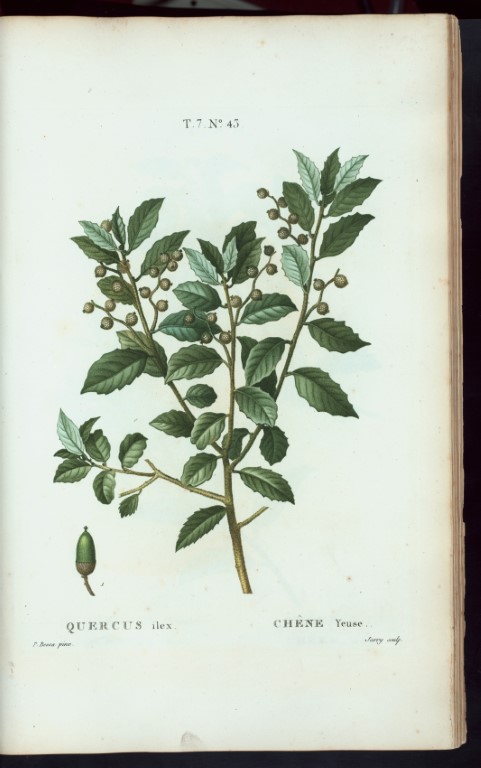
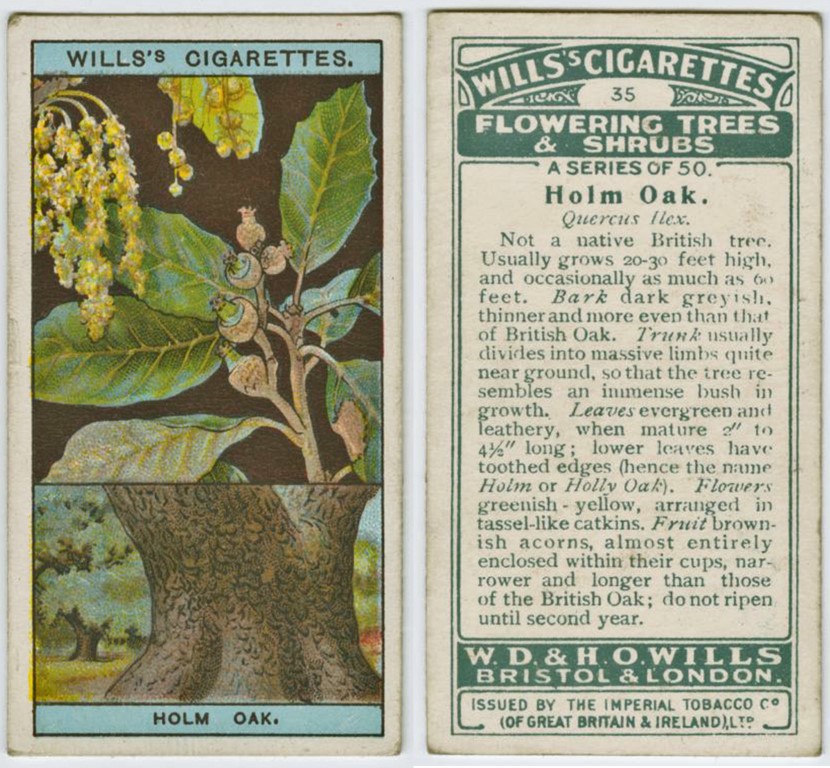
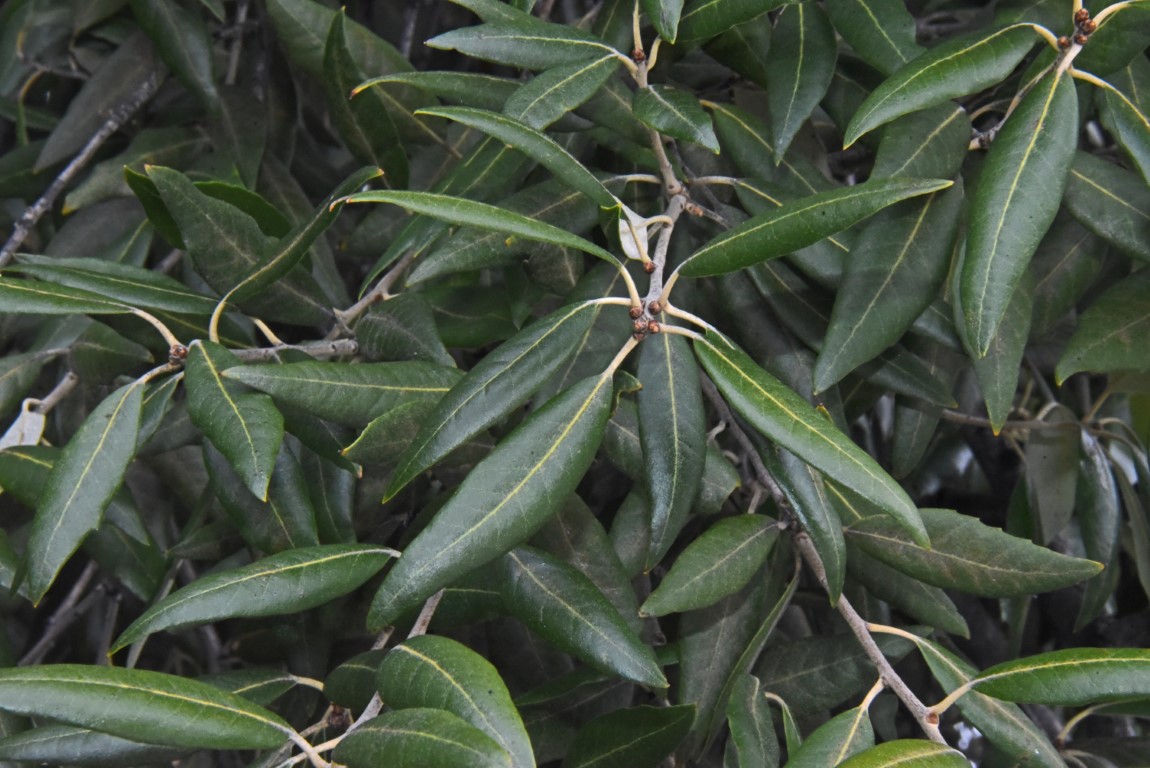
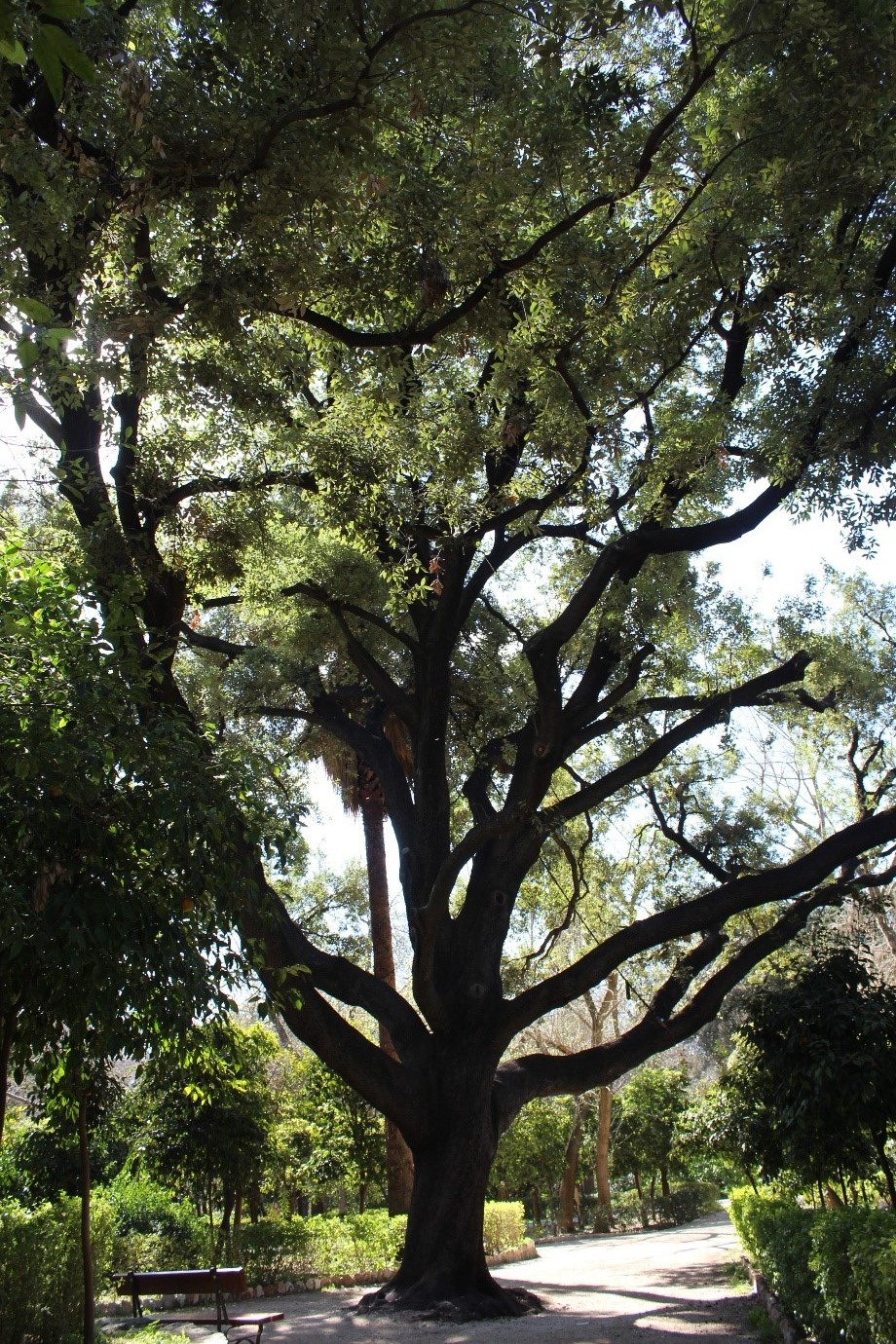
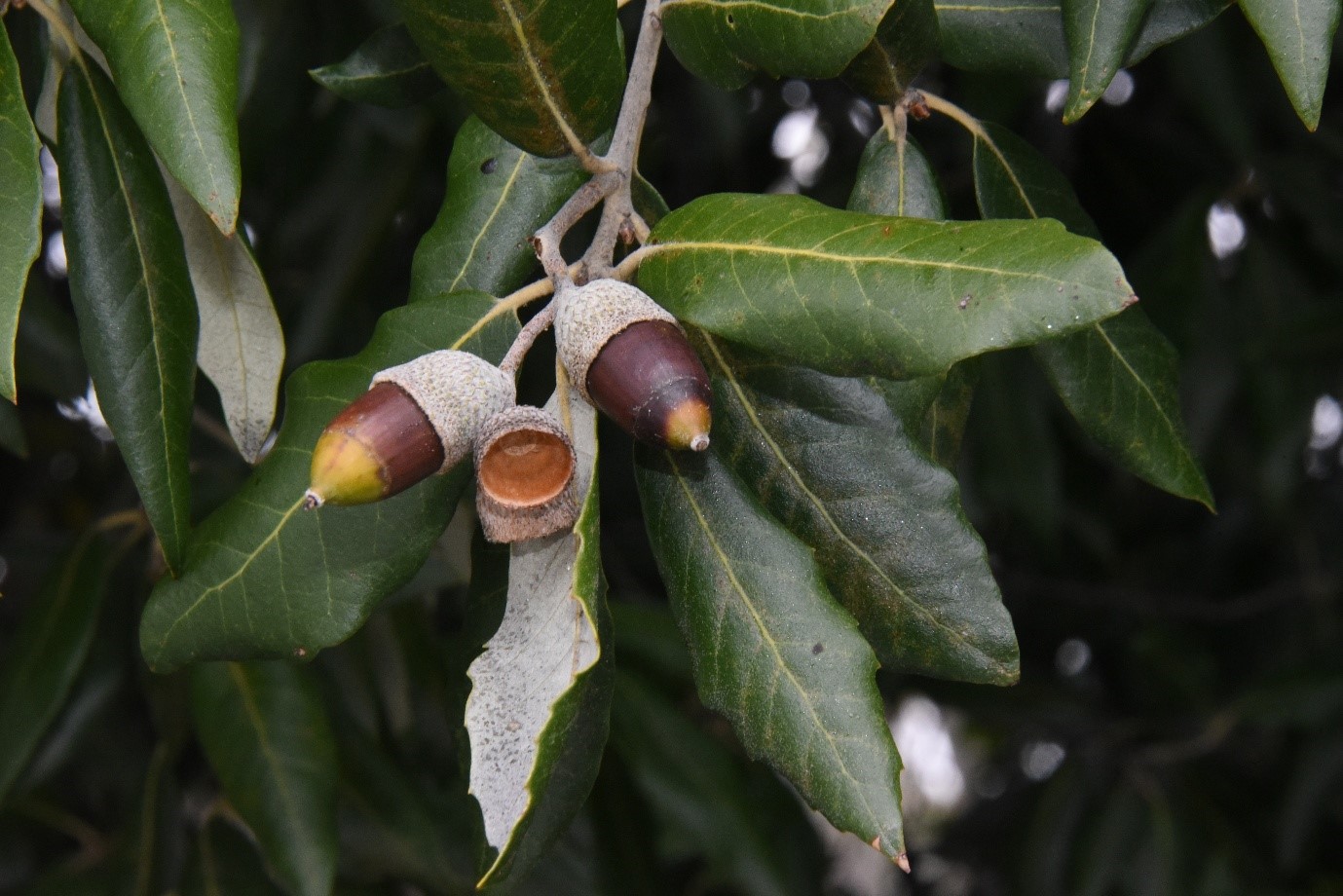
An evergreen broadleaf tree or shrub, usually reaching 15–25 m in height, though under favorable conditions it can exceed 30 m, with a trunk diameter of over 2 m and a lifespan exceeding 1,000 years. Its crown is wide and domed, with elevated branches often of low height, while the trunk is short and thick. The bark is thick, hard, dark green to blackish, shallowly fissured into small square plates. Young shoots are covered with dense ash-colored hairs, which persist until the second year of development. The leaves are leathery and variable in shape, usually lanceolate to ovate, 4–12 cm long and 1–6 cm wide, with a rounded or cuneate base and an acute apex. The margins are wavy or smooth, but in young plants may be serrated or spiny. When unfolding in spring, the leaves are silvery-white, then yellowish, covered with dense hairs that gradually disappear, leaving the upper surface glossy, dark green to almost black, while the lower side remains ash-colored or brownish. The petiole is 1–2 cm long and also hairy. Leaves persist for 1 to 4 years, depending on their position in the crown and environmental conditions.
(flowering period, flowers, seeds)
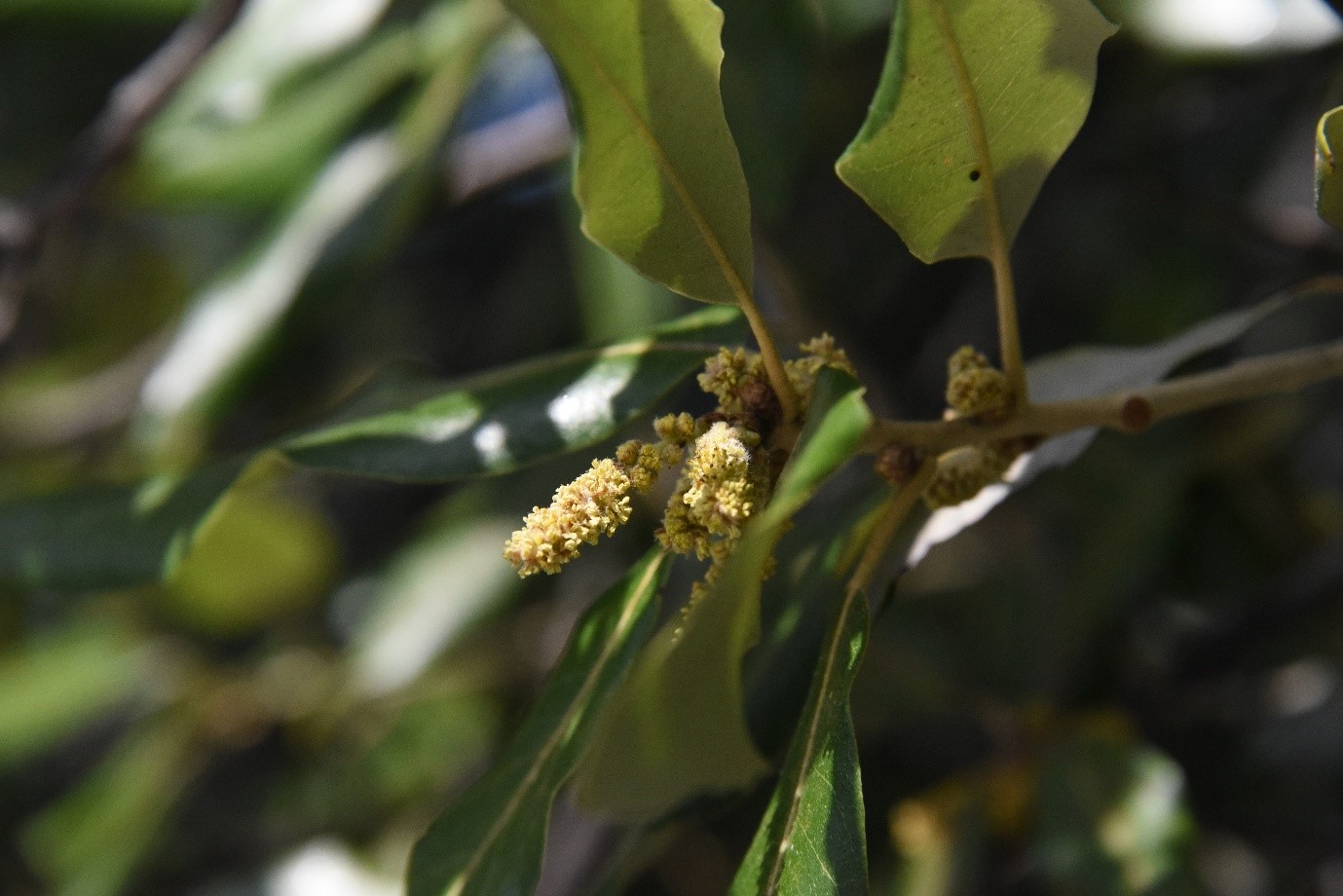
It is a monoecious species, bearing both male and female flowers on the same individual. Flowering usually occurs in May–June, simultaneously with the unfolding of new leaves, although after dry summers, new leaves may also appear in autumn. The male flowers form dense, pendulous catkins 4–7 cm long, initially pale green and later with numerous yellowish anthers. The female flowers are tiny, solitary or in groups of two to three, on short upright peduncles in the leaf axils, greenish-brown and slightly hairy. The fruit is an acorn, which matures within one year, measuring 1.5–3.5 cm in length and 0.8–1.8 cm in diameter, turning brown when ripe. The acorn is partially enclosed (one-third to one-half) by a light green cupule with pressed scales and a wavy margin, borne on a short, hairy peduncle. Acorns ripen from November to January, with particularly abundant crops occurring every 4–6 years. The species reproduces by seed but also has strong sprouting ability, easily regenerating from roots or the trunk after cutting or fire, contributing to its regeneration and the stability of Mediterranean ecosystems.
The wood of the Holm oak is characterized by uneven annual growth, sometimes producing more than one growth ring per year due to periodic droughts. This feature is associated with the species’ adaptation to extreme environmental stress.
The history of Quercus ilex is inextricably linked to the evolution of human societies in the Mediterranean and Europe. Paleobotanical (palynology) data indicate that the species survived the cold phases of the Late Pleistocene within small climatic refugia—primarily in warmer valleys, gorges, and coastal areas—often coexisting with other sclerophyllous and coniferous species. It gradually expanded during the Holocene (beginning approximately 11,500 years ago), frequently under the direct or indirect influence of human activity. During this period, the species exhibited a progressive dispersal, although in many regions it either replaced or was superseded by deciduous oaks, depending on climatic conditions and interspecific competition. In general, the contribution of all oak species was fundamental to the establishment of prehistoric populations, as they were extensively utilized in construction; notably, most Bronze Age lacustrine pile dwellings were constructed from oak logs. This long-standing interaction fostered profound cultural and symbolic ties. In the mythology of Ancient Greece, Rome, and the Germanic peoples, oaks were associated with supreme deities such as Zeus and Thor, while in Celtic and Germanic cultures, they symbolized the world axis (axis mundi). Since antiquity, scholars such as Theophrastus and Pliny the Elder documented both the botanical characteristics and the symbolic and ritualistic significance of oaks. This cultural heritage remains vibrant today, as the oak has been adopted as a national symbol in many countries and regions of the Northern Hemisphere, underscoring the enduring ecological, historical, and cultural importance of the genus Quercus. The contemporary distribution of the holm oak—characterized by a clear dominance in the western Mediterranean and a more limited presence in the east—is attributed to both paleoclimatic factors and prolonged anthropogenic pressures, such as logging, grazing, and wildfires. Historically, the management of holm oak forests as coppice stands and agroforestry systems has shaped the current structure and spatial organization of its ecosystems, rendering the holm oak not merely an ecological component but a definitive cultural element of the Mediterranean landscape.
The holm oak is one of the most significant ethnobotanical species of the Mediterranean, with a long-standing and multifaceted use by humans. Its fruits (acorns) have been used since prehistoric times as food, both for animals and humans, particularly during periods of food scarcity, leading to the perception of the oak as a “tree of life” and a fundamental support for human survival. The leaves of the holm oak, rich in phenolic compounds and tannins, demonstrate proven antibacterial and anticandidal activity, indicating potential traditional medicinal uses or future applications in herbal therapy. The bark has historically been used for tannin extraction, primarily in leather tanning, as well as for preparing hemostatic and wound-healing remedies in the form of powders or decoctions, and for treating stomach and intestinal ailments. Its extremely hard and dense wood has been exploited for fuel, charcoal production, toolmaking, stakes, structural elements, and durable mechanical components. Historically, holm oak forests have been managed as coppice woodlands for firewood production or as traditional agroforestry systems, known as dehesas in Spain and montados in Portugal. These semi-natural ecosystems combine forest cover with grazing lands, where the trees provide shade for animals, dense grass for grazing, and acorns for pigs and goats, while simultaneously protecting the soil from erosion. The holm oak also contributes to biodiversity conservation, offering habitats and food for numerous wildlife species. Finally, its aesthetic value, with a compact and rounded crown, has led to its use as an ornamental species in parks and gardens, while its ability to adapt to dry and eroded soil makes it ideal for reforestation and erosion-control projects.
(Note: Ethnobotanical data regarding the medicinal uses of plants must be handled with caution, and their application should be carried out exclusively under medical supervision).
- https://powo.science.kew.org/taxon/urn:lsid:ipni.org:names:296290-1
- https://en.wikipedia.org/wiki/Quercus_ilex
- https://www.euforgen.org/species/quercus-ilex
- https://forest.jrc.ec.europa.eu/media/atlas/Quercus_ilex.pdf
- https://www.treesandshrubsonline.org/articles/quercus/quercus-ilex/
- Barbero, M., Loisel, R., &P. Quézel, P. (1992). Biogeography, ecology and history of Mediterranean Quercus ilex ecosystems. Plant Ecology, 99–100(1), 19–34. https://doi.org/10.1007/bf00118207
- Corcuera, L., Camarero, J.J. & Gil-Pelegrín, E. (2004). Effects of a severe drought on Quercus ilex radial growth and xylem anatomy. Trees, 18(1), 83–92. https://doi.org/10.1007/s00468-003-0284-9
- de Rigo, D., Caudullo, G., 2016. Quercus ilex in Europe: distribution, habitat, usage and threats. In: San-Miguel-Ayanz, J., de Rigo, D., Caudullo, G., Houston Durrant, T., Mauri, A. (Eds.), European Atlas of Forest Tree Species. Publ. Off. EU, Luxembourg, pp. e014bcd+
- Güllüce, M., Adıgüzel, A., Öğütçü, H., Şengül, M., Karaman, İ., & Şahin, F. (2004). Antimicrobial effects of Quercus ilex L. extract. Phytotherapy Research, 18(3), 208–211. https://doi.org/10.1002/ptr.1419
- Leroy, T., Plomion, C., & Kremer, A. (2019). Oak symbolism in the light of genomics. New Phytologist, 226(4), 1012–1017. https://doi.org/10.1111/nph.15987
- Margaris, N. (2000). FLOWERS IN GREEK MYTHOLOGY. Acta Horticulturae, 541, 23–29. https://doi.org/10.17660/actahortic.2000.541.1
- Penuelas, J., Filella, I., Llusia, J., Siscart, D., & Pinol, J. (1998). Comparative field study of spring and summer leaf gas exchange and photobiology of the mediterranean trees Quercus ilex and Phillyrea latifolia. Journal of Experimental Botany, 49(319), 229–238. https://doi.org/10.1093/jxb/49.319.229
- Terradas, J., & Sav, R. (1992). The influence of summer and winter stress and water relationships on the distribution of Quercus ilex L. Plant Ecology, 99–100(1), 137–145. https://doi.org/10.1007/bf00118219
- Theophrastus, “Enquiry into Plants”, 5.1.2, 5.4.2, 5.5.1, 3.4.2, 3.16.2
- Plinius secndus, “Natural History”, 5.9.1, 16.8.7, 16.84.1-2, 24.3.1
During each season you will see:
SPRING
Leaves,
flowers
SUMMER
Leaves,
immature fruit
AUTUMN
Leaves,
mature fruit that gradually fall
WINTER
Leaves,
few fruit
References in Αrt
The species is depicted in old wood engravings and chromolithographs, while the painting “Cranes and Holm Oaks” by Manuel Sosa portrays holm oaks within a natural landscape. Additionally, the poem “Las Encinas” by the Spanish poet Antonio Machado refers to the “encinas,” that is, the holm oaks of Spain.