

A species resistant to low temperatures down to -25°C, drought, and atmospheric pollution. It can grow in nutrient-poor soils. It thrives in well-drained, fertile soils and in locations with access to sunlight.
(height, leaf arrangement, leaf shape, root system)
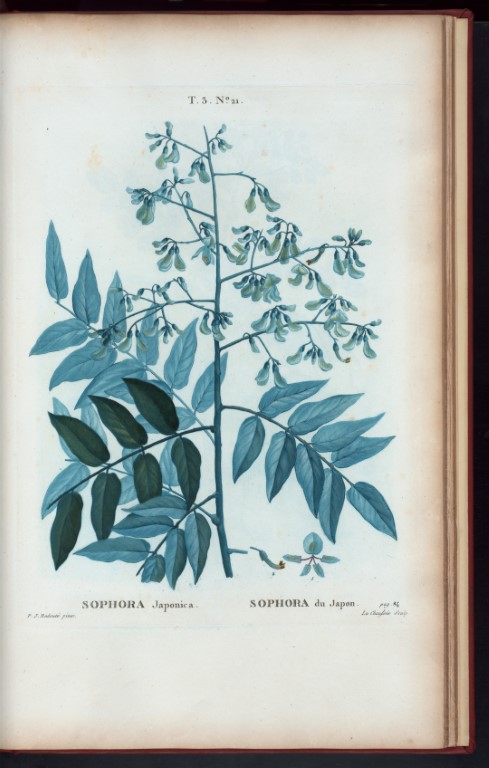
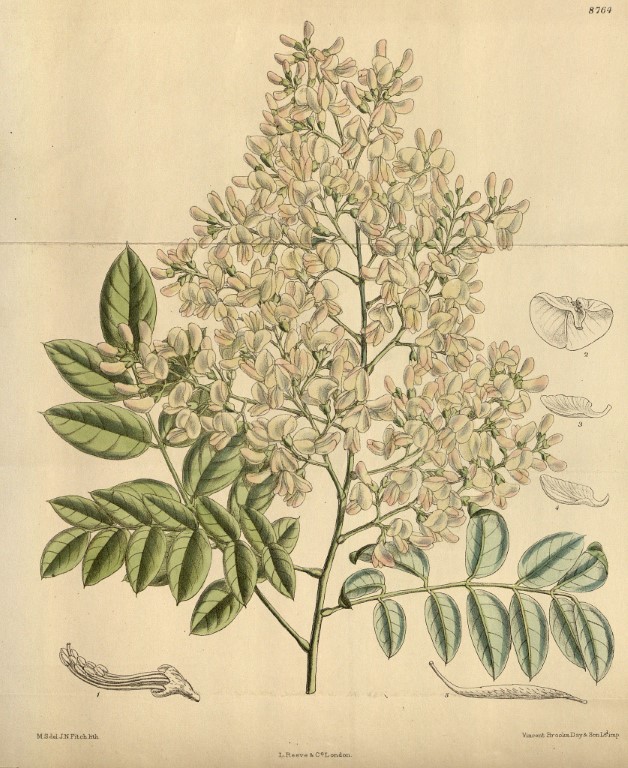
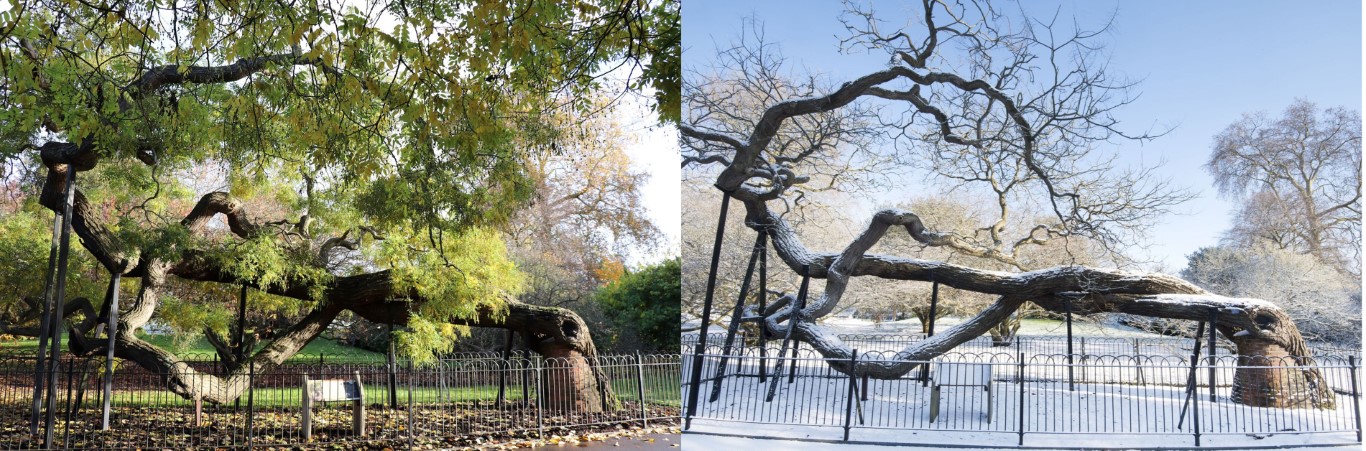
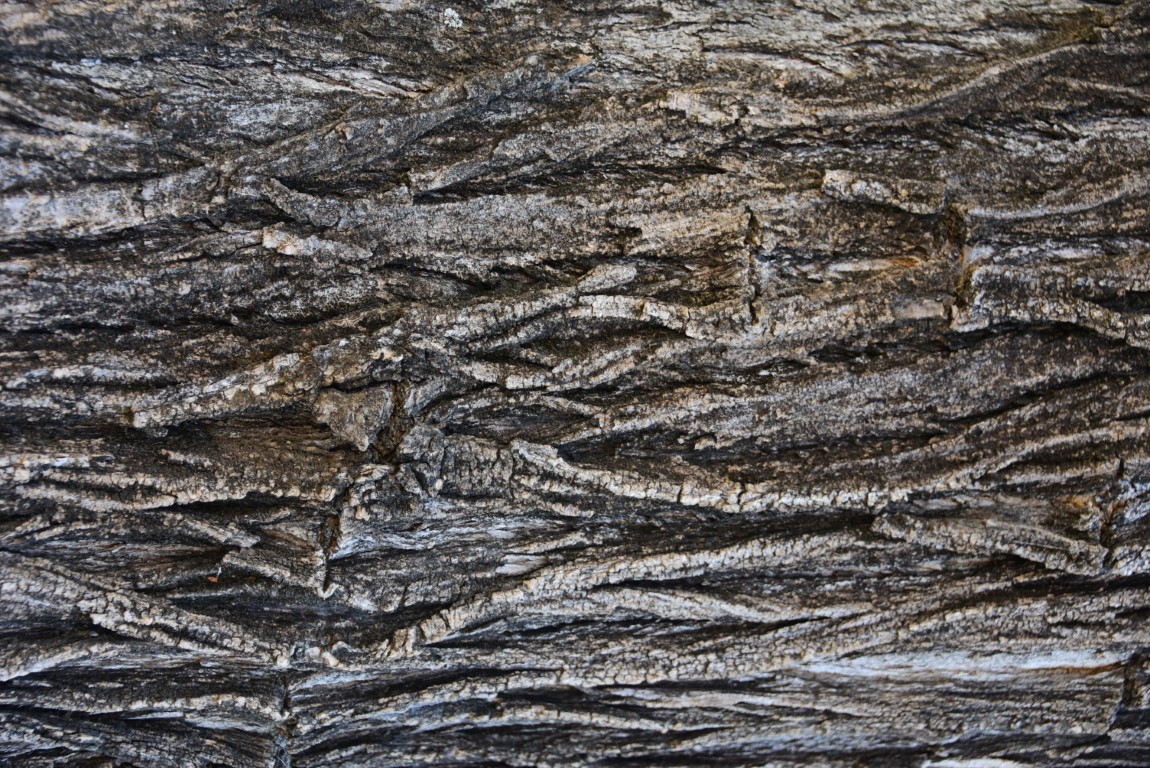
Deciduous tree reaching a height of up to 20 m. It has a dense spherical crown and a cylindrical grey-brown trunk, which over time acquires vertical shallow cracks and furrows. It bears thin green compound leaves arranged alternately. Each leaf possesses up to 21 ovate leaflets approximately 5 cm long, which bear sparse hair on their abaxial (underside) surface and acquire a yellow color during the autumn season. The central root system is deep, but there are also roots that extend to great distances, close to the soil surface.
(flowering period, flowers, seeds)
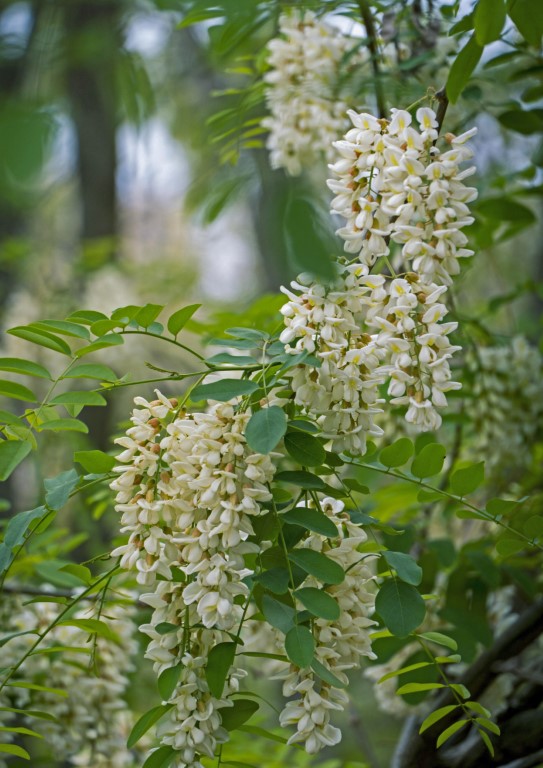
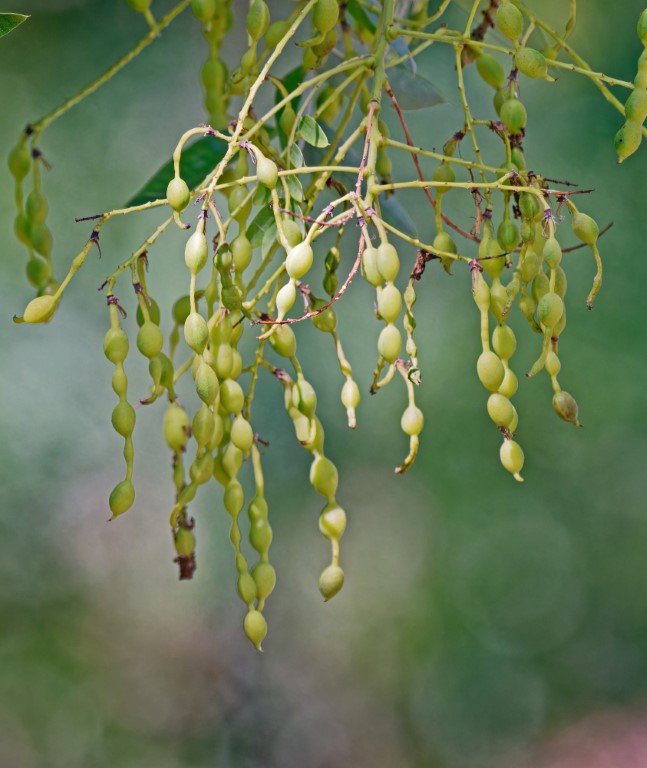
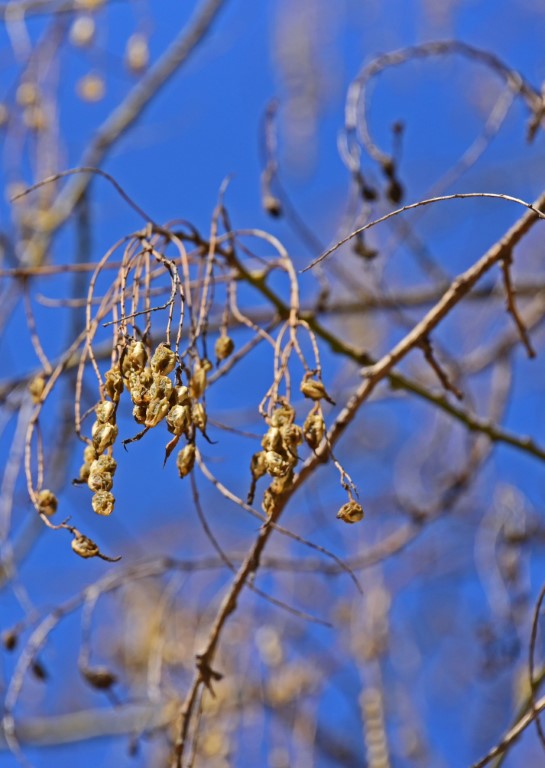
Pagoda trees produce fragrant, yellow – white hermaphroditic flowers 12-17 mm in size, which are organized in terminal hanging panicles. The flowering period lasts from July to August. The fruit is a legume, 5-8 cm long, initially green, but upon maturation acquires a grey hue. Each pod bears 1-6 dark elliptical to ovate seeds, between which constrictions are observed.
Although the epithet “japonicum” refers to the species’ origin from Japan, its actual origin is from northeastern China. Initially, it had been classified in the genus Sophora, but it lacks the ability to symbiose with rhizobacteria (nitrogen-fixing bacteria), a fact that led to its reclassification into the genus Styphnolobium.
Sophora japonica is native to China, with natural distribution mainly in the provinces of Liaoning, Shaanxi, Shanxi, Shandong, Hebei, Henan, Jiangsu, Guangdong, and Guangxi. From East Asia, it spread historically to Korea, Japan, and Vietnam, where it was integrated into both medicine and the urban and religious landscape. Due to its hardiness, ornamental value, and the shade it offers, the species has been introduced and naturalized in many regions outside its natural range, such as in the United States, Europe, and other temperate and subtropical zones. Today it is cultivated widely as an ornamental tree in cities, streets, and parks worldwide, while simultaneously maintaining its role as one of the most important medicinal trees of Asian tradition.
In China, the species was planted widely outside pagodas and temples of Buddha, a fact that led to its common name “pagoda tree”. It is said that the last emperor of the Ming dynasty took his life in 1644 on such a tree, linking the species with the concepts of tragedy and loyalty. Its introduction to Europe took place in the 18th century by the botanist Pierre d’Incarville, who sent seeds from Beijing to Paris. The initial classification of the species was carried out in 1767 by Carl Linnaeus in his work “Mantissa Plantarum”, which was modified in 1830 by the botanist Heinrich Wilhelm Schott.
The Japanese or Chinese sophora (Huái Huā or 槐花) holds a prominent position in the traditional medicine of East Asia, with different parts of the plant being used for distinct therapeutic applications. The flowers (Huái Huā) and buds (Flos Sophorae and Flos Sophorae Immaturus) constitute some of the most important medicinal parts and are used traditionally for bleeding disorders (hemorrhoids, hematemesis, metrorrhagia), thanks to their hemostatic, anti-inflammatory, and antioxidant properties, which are attributed mainly to rutin and other flavonoids. The fruits and seeds (Huái Jiǎo (槐角) Fructus Sophorae) are also used for stopping bleeding, treating inflammation, hormonal disorders, and osteoporosis, as they contain isoflavones such as sophoricoside, triterpenoids, and alkaloids. The leaves are used traditionally for “clearing heat” (qīng rè – 清热 in Chinese), meaning reducing inflammation and redness, detoxification, reducing blood pressure, and as a decoction with antioxidant and anti-diabetic activity. The roots and bark are found mainly in folk remedies, with insecticidal, anti-inflammatory, and antiplatelet uses. The wood from the trees is dense and durable, characteristics that make it suitable for furniture making in China and Korea.
(Note: Ethnobotanical data regarding the medicinal uses of plants must be handled with caution, and their application should be carried out exclusively under medical supervision).
- https://powo.science.kew.org
- https://www.missouribotanicalgarden.org
- https://www.worldfloraonline.org
- https://prosea.prota4u.org
- https://basicmedicalkey.com
- Abdallah, H. M., Al-Abd, A. M., Asaad, G. F., Abdel-Naim, A. B., & El-Halawany, A. M. (2014). Isolation of antiosteoporotic compounds from seeds of Sophora japonica. PLoS ONE, 9(6), Article e98559. https://doi.org/10.1371/journal.pone.0098559
- Balbaa, S. I., Zaki, A. Y., & Shamy, A. M. E. (1974). Total flavonoid and rutin content of the different organs of Sophora japonica L. Journal of AOAC INTERNATIONAL, 57(3), 752–755. https://doi.org/10.1093/jaoac/57.3.752
- Chen, H., & Hsieh, C. (2010). Effects of Sophora japonica flowers (Huaihua) on cerebral infarction. Chinese Medicine, 5(1), Article 34. https://doi.org/10.1186/1749-8546-5-34
- He, X., Bai, Y., Zhao, Z., Wang, X., Fang, J., Huang, L., Zeng, M., Zhang, Q., Zhang, Y., & Zheng, X. (2016). Local and traditional uses, phytochemistry, and pharmacology of Sophora japonica L.: A review. Journal of Ethnopharmacology, 187, 160–182. https://doi.org/10.1016/j.jep.2016.04.014
- Paniwnyk, L., Beaufoy, E., Lorimer, J., & Mason, T. (2001). The extraction of rutin from flower buds of Sophora japonica. Ultrasonics Sonochemistry, 8(3), 299–301. https://doi.org/10.1016/s1350-4177(00)00075-4
During each season you will see:
References in Αrt
Trees of this species are frequently depicted in Chinese and Japanese landscapes and iconography.