

Subtropical and tropical forests, wet lowland areas.
(height, leaf arrangement, leaf shape, root system)
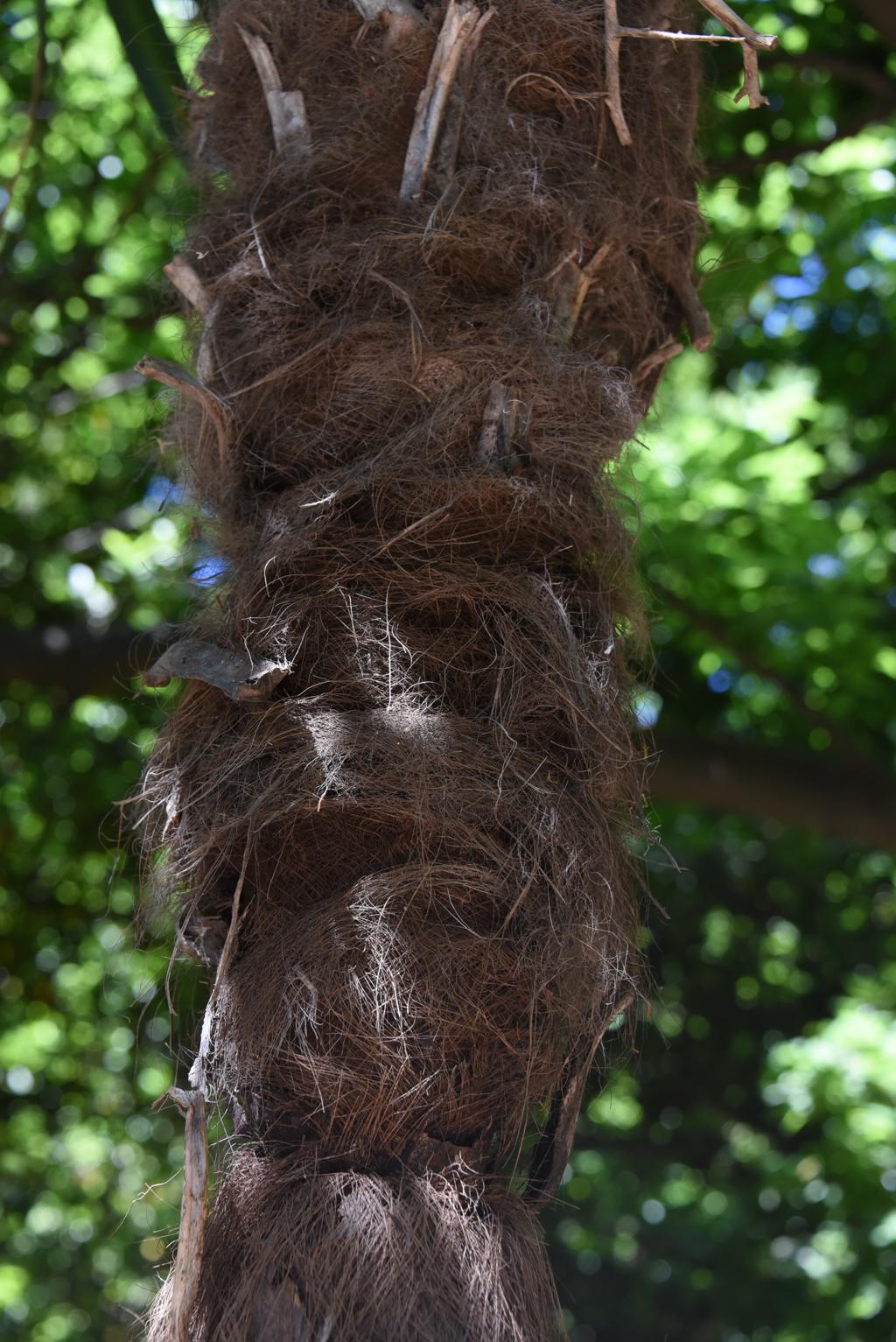
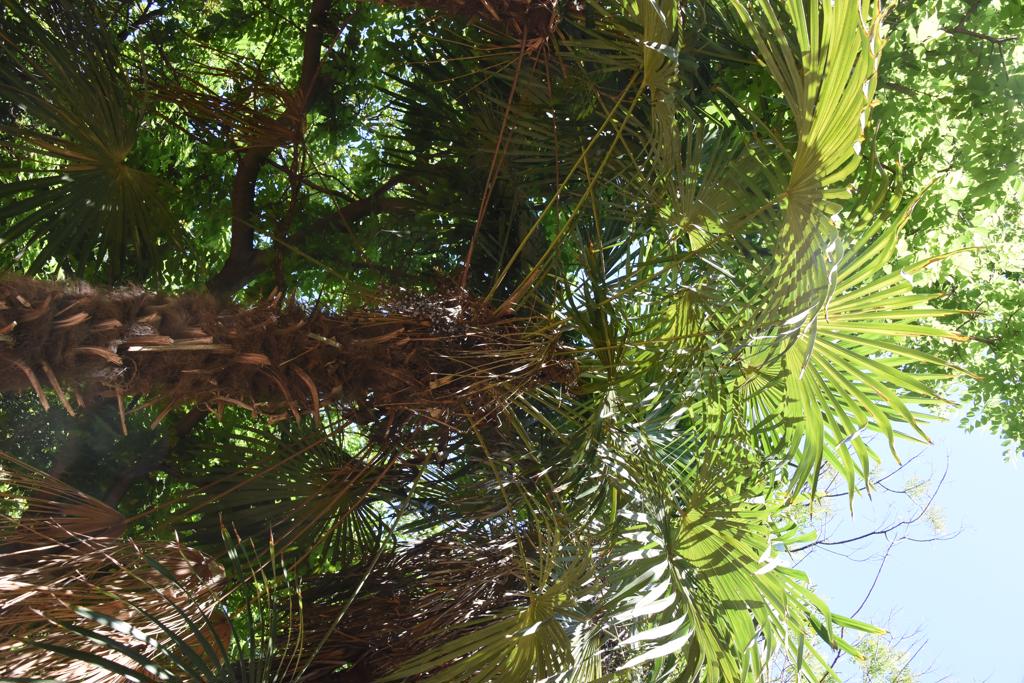
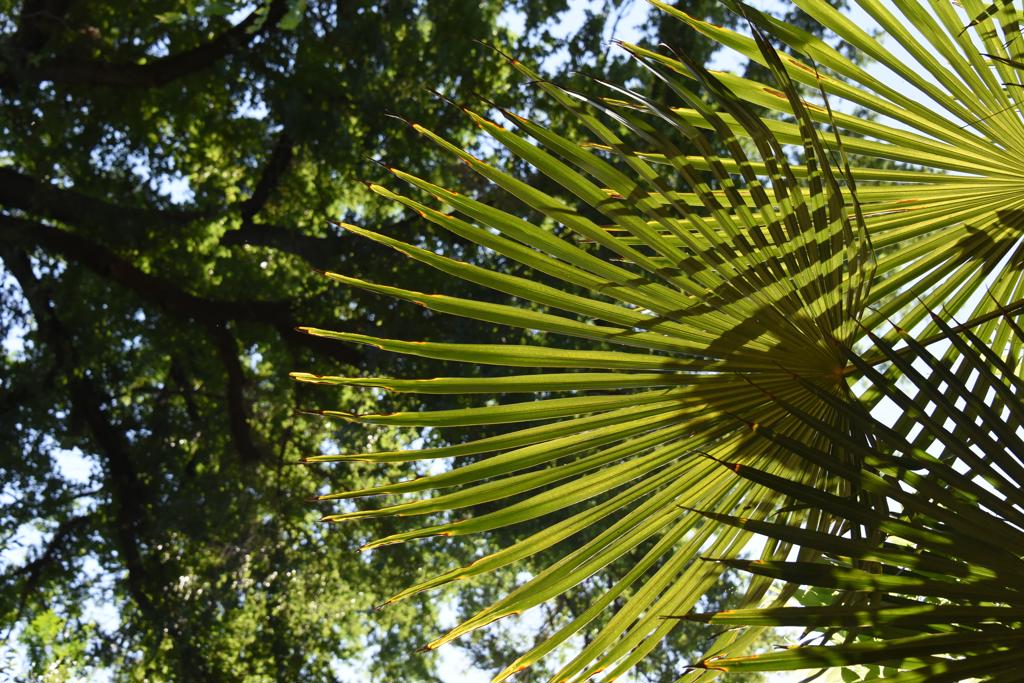
An evergreen, single-stemmed species with an upright, slender, and fibrous trunk. It typically grows to a height of 6 to 12 m (rarely up to 13 m), with a trunk diameter of 15–30 cm, which remains covered with dense brown fibers originating from the bases of old leaves. In very mature individuals, these fibers fall off, revealing a smooth, ringed bark. The foliage forms a symmetrical, rounded crown 2.5 to 3 m in diameter, with palmate leaves from 1.5 to 2 m long. The leaves are borne on long petioles (60–100 cm) with finely toothed edges and carry 30 to 50 lance-shaped leaflets 60 to 90 cm long, arranged radially to form a characteristic fan shape. The upper surface of the leaves is deep green, while the underside has a green-silver color, giving the plant a glossy appearance. The tips of the leaflets may be stiff or slightly drooping, adding variability to the plant’s appearance. The trunk is usually slightly narrower at the base and has a ringed texture, while the root system is fibrous and shallow, providing good stability in areas with poor soil.
(flowering period, flowers, seeds)
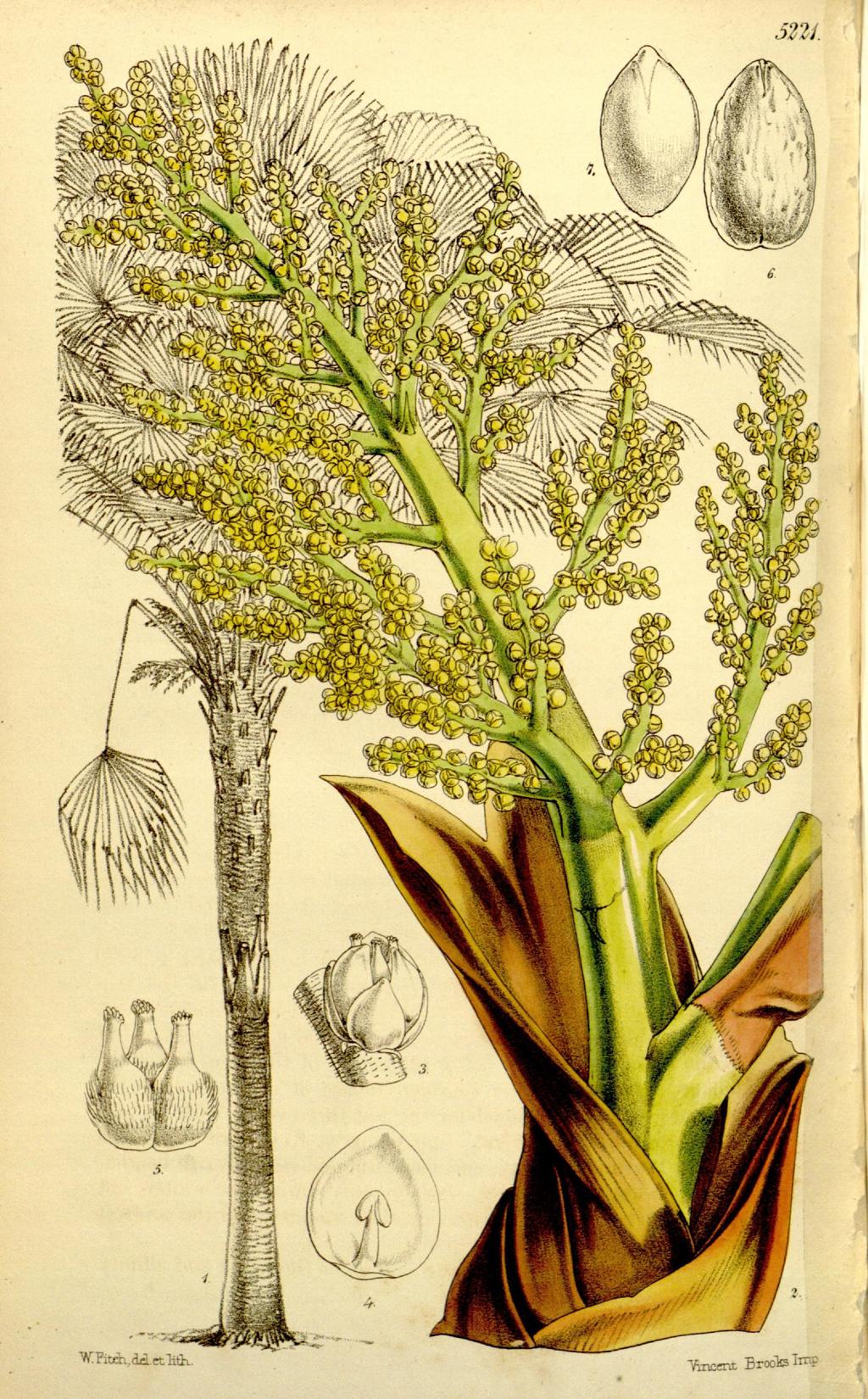
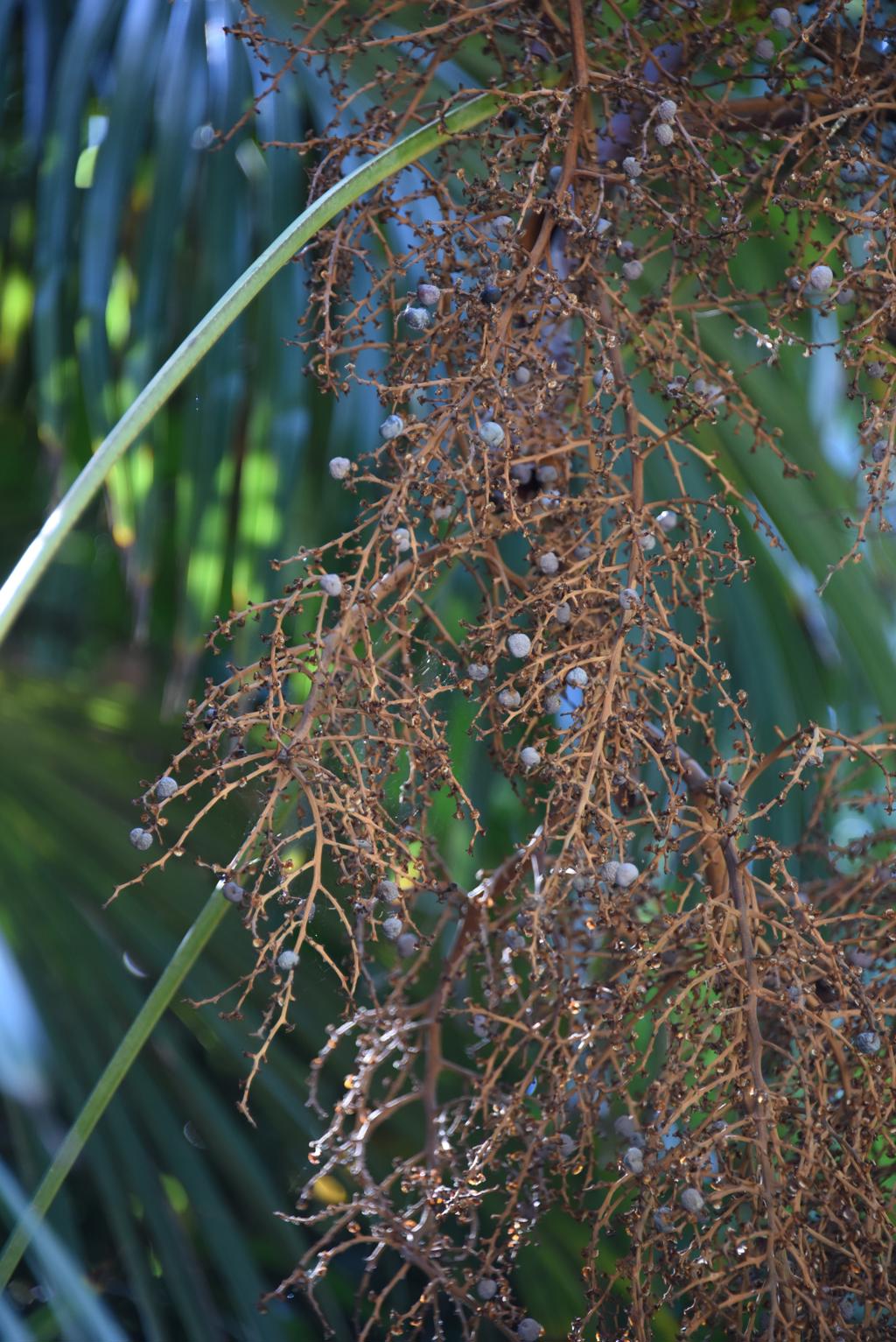
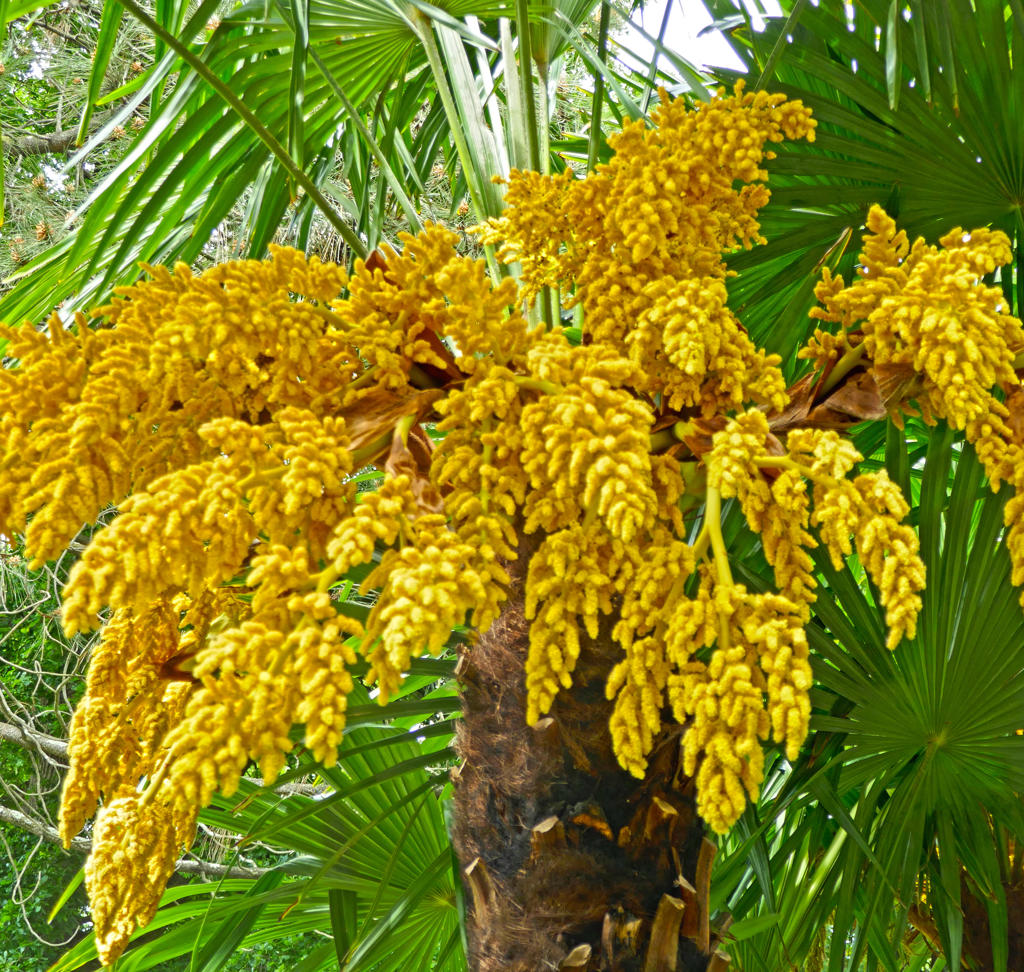
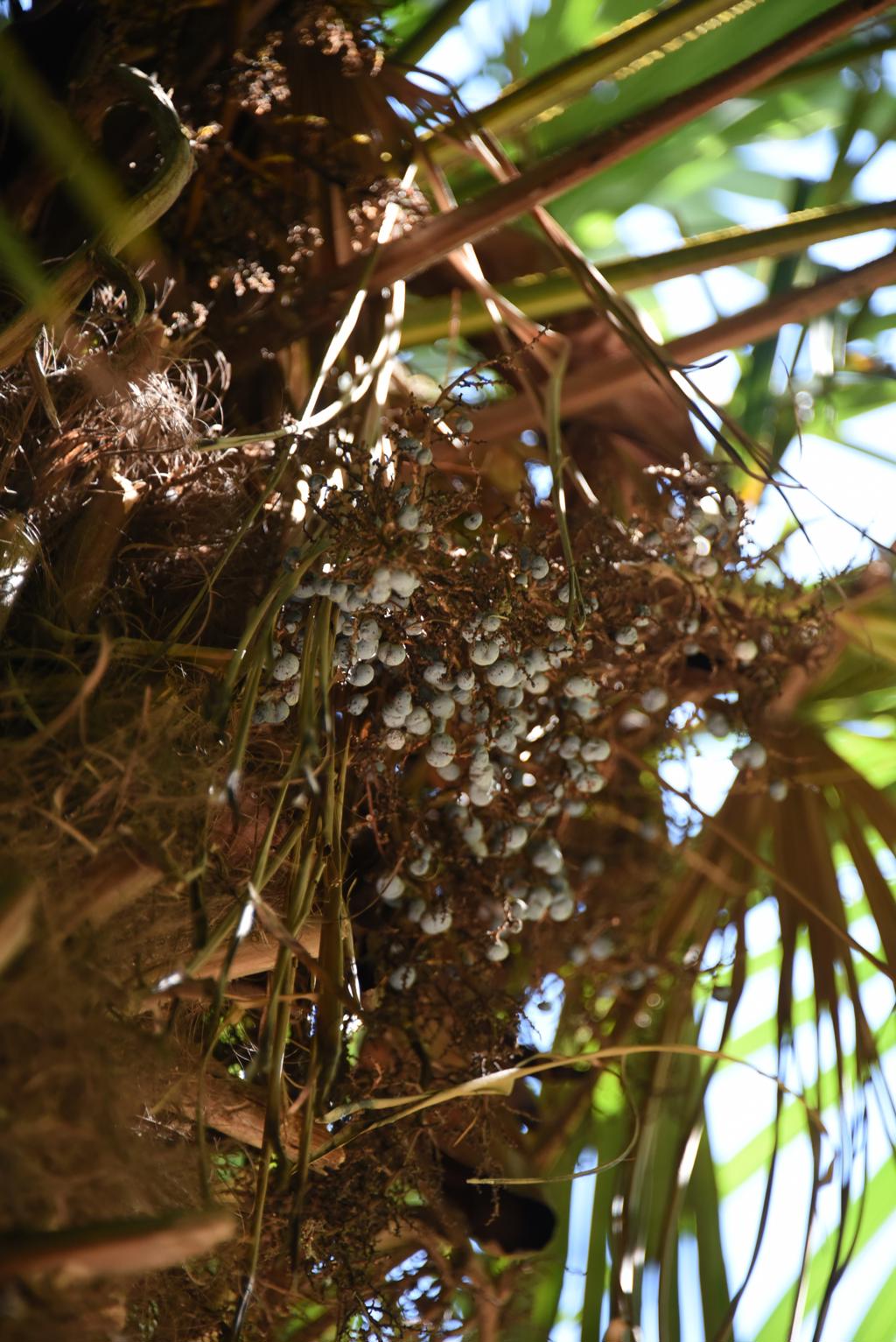
A dioecious species, with male and female flowers developing on separate individuals. The inflorescences appear from spring to early summer, reach up to 1 m in length, and are compound, highly branched panicles that emerge among the leaves. The male flowers are small, yellow, and densely distributed, while the female flowers are greenish-yellow and form less complex inflorescences. Pollination occurs mainly by wind (anemophilous), although insect contribution is also observed. The fruits ripen from mid-autumn and are fleshy, kidney-shaped drupes, 1 to 1.5 cm long, which change color from yellow during development to dark bluish-black with a waxy coating. Each fruit contains a single seed with a hard endocarp. Sexual reproduction occurs through seeds, which are naturally dispersed and germinate in spring under favorable conditions, while asexual propagation can be achieved artificially through cultivation methods, although the species does not naturally form root suckers.
The variety Trachycarpus fortunei “Wagnerianus”, cultivated in China and Japan, exhibits a shorter height (rarely over 5 m) and smaller, tougher leaves, which give it increased wind resistance and make the plant particularly suitable for cultivation in areas with strong winds.
Trachycarpus fortunei is native to East Asia, with its natural distribution primarily in China, where it occurs in both temperate and subtropical zones, thanks to its high tolerance to frost, salinity, and alkaline soil conditions. It was introduced to Europe as an exotic ornamental plant by the German physician Philipp Franz von Siebold, who brought it from Japan, initially to southern Switzerland and later to many regions of the Mediterranean, Japan, and North America. Its common name, “Chusan palm,” comes from Zhoushan Island (formerly Chusan), where the Scottish botanist Robert Fortune first observed cultivated specimens in 1830. In 1849, Fortune illegally transported plants from China to the Royal Gardens at Kew and to the gardens of Prince Albert in the United Kingdom. The species was officially described in 1850 by Carl Friedrich Philipp von Martius in his work Historia Naturalis Palmarum, initially under the name Chamaerops excelsa, which was later considered invalid, and the plant received its current name in honor of Robert Fortune. During the 20th century, the species became naturalized in areas outside its native range, particularly in low-altitude, moist, and semi-shaded ecosystems, forming dense stands in some locations. In southern Switzerland and northern Italy, it has now been classified as an invasive species, as its high shade tolerance and evergreen nature limit the regeneration of native forest vegetation. At the same time, its cultural value and aesthetic appeal make its management the subject of active scientific and societal discussion, especially in the context of climate change.
It has been cultivated for millennia in China and Japan for the exceptionally durable fibers produced from its leaves, which are used for making ropes, sacks, fabrics, and other items requiring high strength. Fibers are also collected from the bases of the leaves for the production of clothing, brooms, brushes, woven items, marine ropes, and traditional waterproof garments and housing materials. The durability of the fibers in wet conditions was already documented in the medicinal encyclopedia “Bencao Gangmu” that was published during the Ming dynasty (1578), while archaeological findings confirm their long-term use. Its seeds contain polyphenols, flavonoids, and steroidal saponins, with documented antimicrobial activity, particularly in the seed coat, as well as potential cardioprotective and anticancer effects, while wax is extracted from the fruits. The roots, trunk, and leaves are used in traditional Chinese medicine for hemostatic preparations (e.g., the medicine Xuean), and plant extracts show anti-inflammatory and antioxidant properties. Beyond its cultural symbolism, especially in China today, the species is widely cultivated as an ornamental palm in parks and gardens of temperate and subtropical regions, as it is highly cold-tolerant and adapts to diverse climatic conditions, making it a favorite plant for landscape architects and palm growers worldwide. A notable example is southern Switzerland, where it has become part of the local identity.
(Note: Ethnobotanical data regarding the medicinal uses of plants must be handled with caution, and their application should be carried out exclusively under medical supervision).
- https://powo.science.kew.org/taxon/urn:lsid:ipni.org:names:670182-1
- https://www.iucnredlist.org/species/13416924/236304972
- http://www.efloras.org/florataxon.aspx?flora_id=2&taxon_id=200027121
- https://www.palmpedia.net/wiki/Trachycarpus_fortunei
- Fehr, V., Conedera, M., Fratte, M. D., Cerabolini, B., Benedetti, C., Buitenwerf, R., Svenning, J., Maspoli, G., & Pezzatti, G. B. (2024). The alien Chinese windmill palm (Trachycarpus fortunei) impacts forest vegetation and regeneration on the southern slope of the European Alps. Applied Vegetation Science, 27(1), Article e12765. https://doi.org/10.1111/avsc.12765
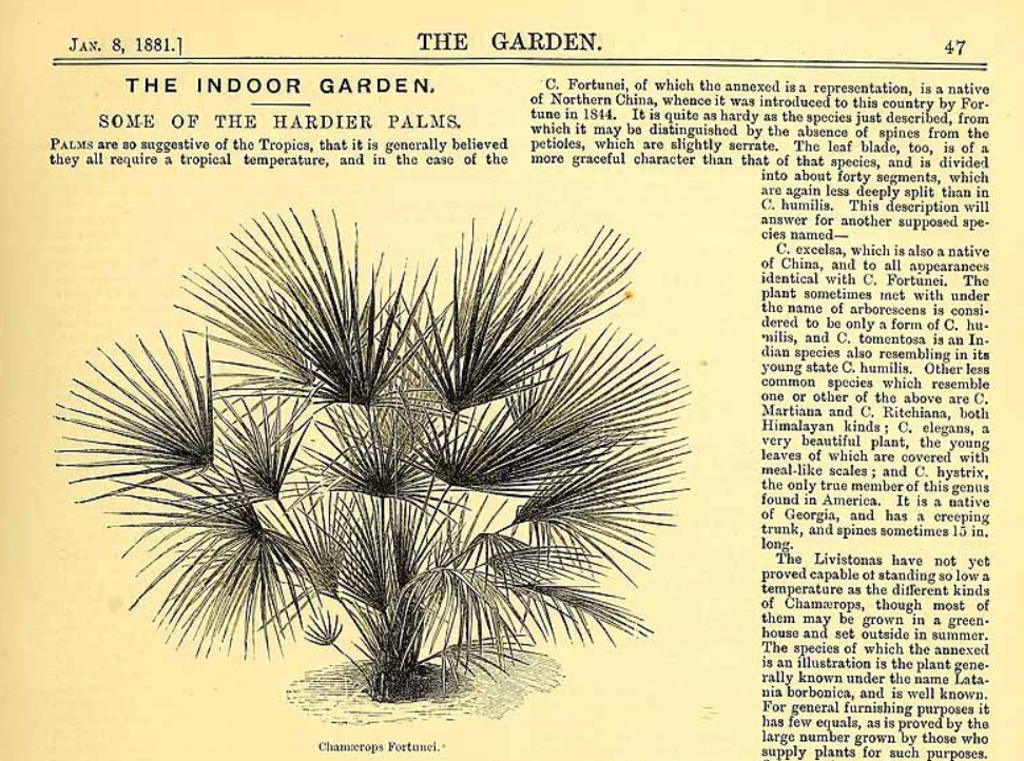
- Fortune’s palm (Chamaerops fortunei). (1881). The Garden: An Illustrated Weekly Journal of Gardening in All Its Branches, 19, 47.
- Tonellotto, M., Fehr, V., Conedera, M., Hunziker, M., & Pezzatti, G. B. (2022). Iconic but invasive: The public perception of the Chinese windmill palm (Trachycarpus fortunei) in Switzerland. Environmental Management, 70(4), 618–632. https://doi.org/10.1007/s00267-022-01646-3
- Zhai, S., Li, D., Pan, B., Sugiyama, J., & Itoh, T. (2011). Tensile strength of windmill palm (Trachycarpus fortunei) fiber bundles and its structural implications. Journal of Materials Science, 47(2), 949–959. https://doi.org/10.1007/s10853-011-5874-0
- Zhang, Y., Maharachchikumbura, S. S. N., McKenzie, E. H., & Hyde, K. D. (2012). A novel species of Pestalotiopsis causing leaf spots of Trachycarpus fortunei. Cryptogamie, Mycologie, 33(3), 311–318. https://doi.org/10.7872/crym.v33.iss3.2012.311
- Zhu, J., Li, J., Wang, C., & Wang, H. (2019). Anatomy of the windmill palm (Trachycarpus fortunei) and its application potential. Forests, 10(12), 1130. https://doi.org/10.3390/f10121130
During each season you will see:
References in Αrt
The species is depicted in some old botanical plates and illustrations.