

It grows in desert and semi-arid environments, in dry shrublands and desert oases, often near springs, streams, and groundwater, where it forms sparse to dense palm groves. Populations are mainly found in canyons and areas with underground water flow, but it also occurs in alluvial deposits or rock crevices where water is trapped. Soils are usually sandy or silty, with high pH (around 9.2), poor in organic matter, but often covered by a thin salt layer that reduces erosion. The species is adapted to semi-arid climates, with hot summers often exceeding 40°C and winters with occasional frost, while mean annual precipitation ranges from 8 to 20 cm, mostly between December and March. The oases where it grows exhibit a milder microclimate compared to the open desert, with lower summer temperatures and higher winter temperatures. Ecologically, W. filifera is highly important for maintaining the biodiversity of desert oases, providing shelter and food for numerous species such as the beetle Dinapate wrightii, the bat Lasiurus xanthinus, and the bird Icterus cucullatus, while its inflorescences attract many insects during spring. These oases are considered relict ecosystems of great ecological and genetic stability, likely preserved unchanged from earlier, colder climatic phases.
(height, leaf arrangement, leaf shape, root system)
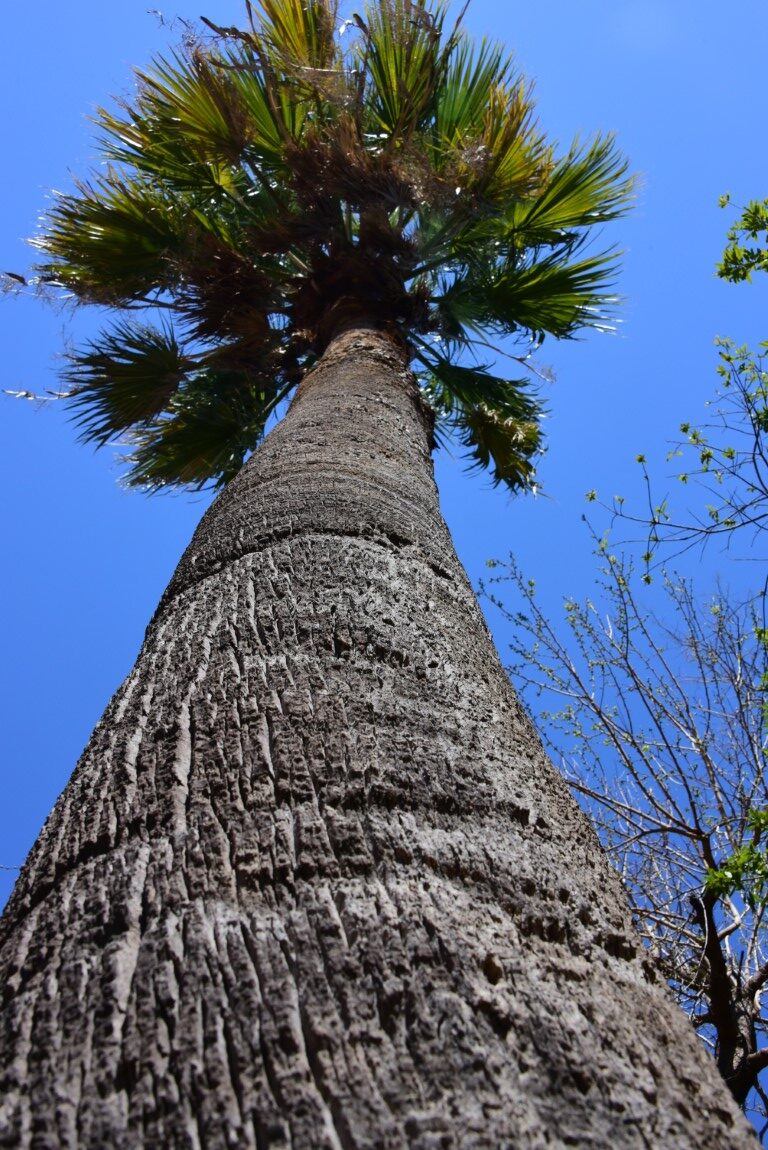
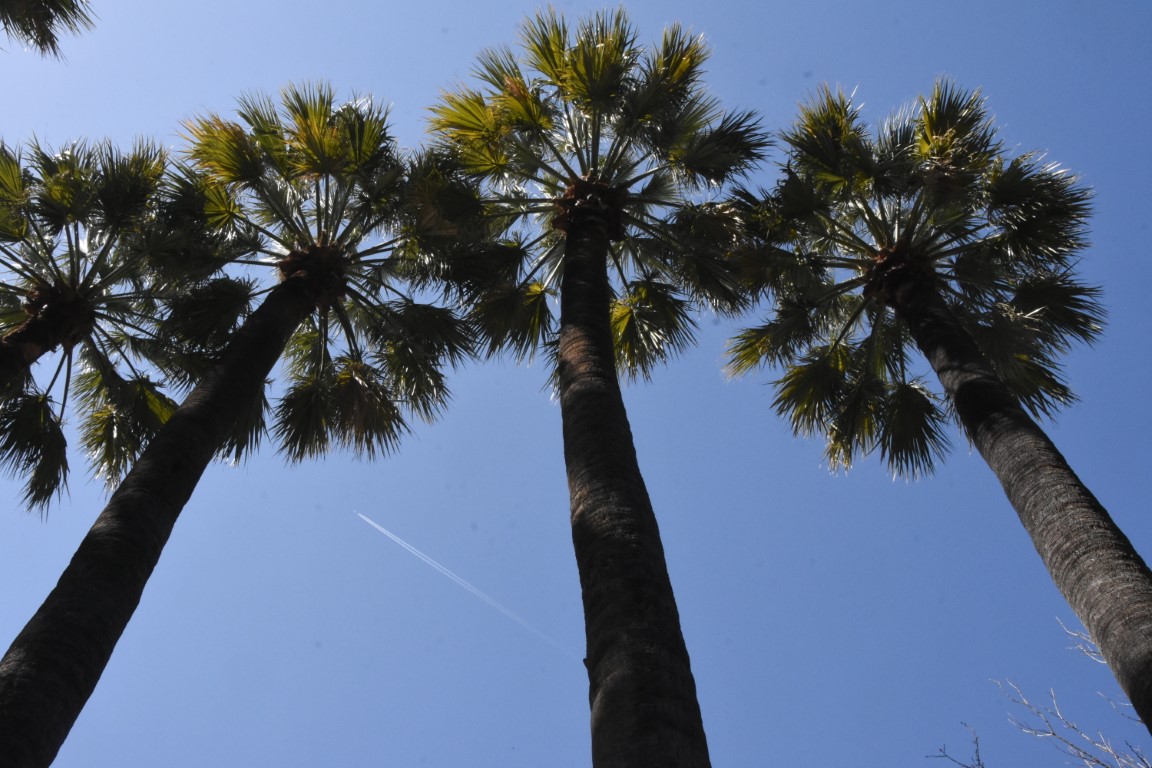
Evergreen monocotyledonous palm characterized by a robust trunk reaching heights of 15–20 m (rarely up to 25 m) and a diameter of 0.3 to 0.9 m. The columnar, brown trunk is often encased in a dense “skirt” of persistent desiccated fronds, which provide thermal insulation, wildfire protection, and a specialized microhabitat for small fauna.
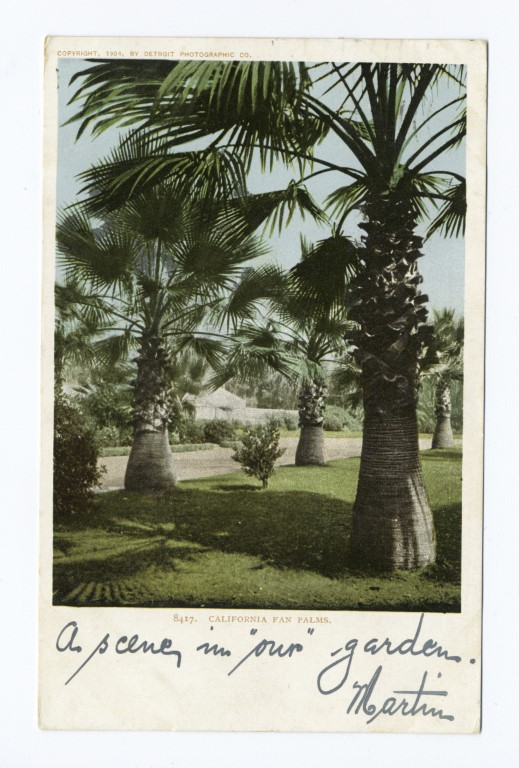
The species features a crown spanning 3 to 6 m in diameter, consisting of large, palmate leaves of greyish-green to bluish-green hue, supported by petioles up to 2 meters in length. These petioles possess small, obtuse serrated margins with a green base. Interspersed between the leaf segments are long, white, filamentous fibers, reminiscent of cotton in juvenile specimens, a characteristic that yielded the common English name “California Fan Palm” or “Cotton Palm” W. filifera exhibits an extensive root system that adapts to edaphic conditions, developing either deep or superficial roots depending on the groundwater table. It is a long-lived species with a lifespan of up to 200 years (averaging 150 years), demonstrating significant resilience to drought and extreme cold, surviving temperatures below freezing for up to 22 consecutive hours.
(flowering period, flowers, seeds)
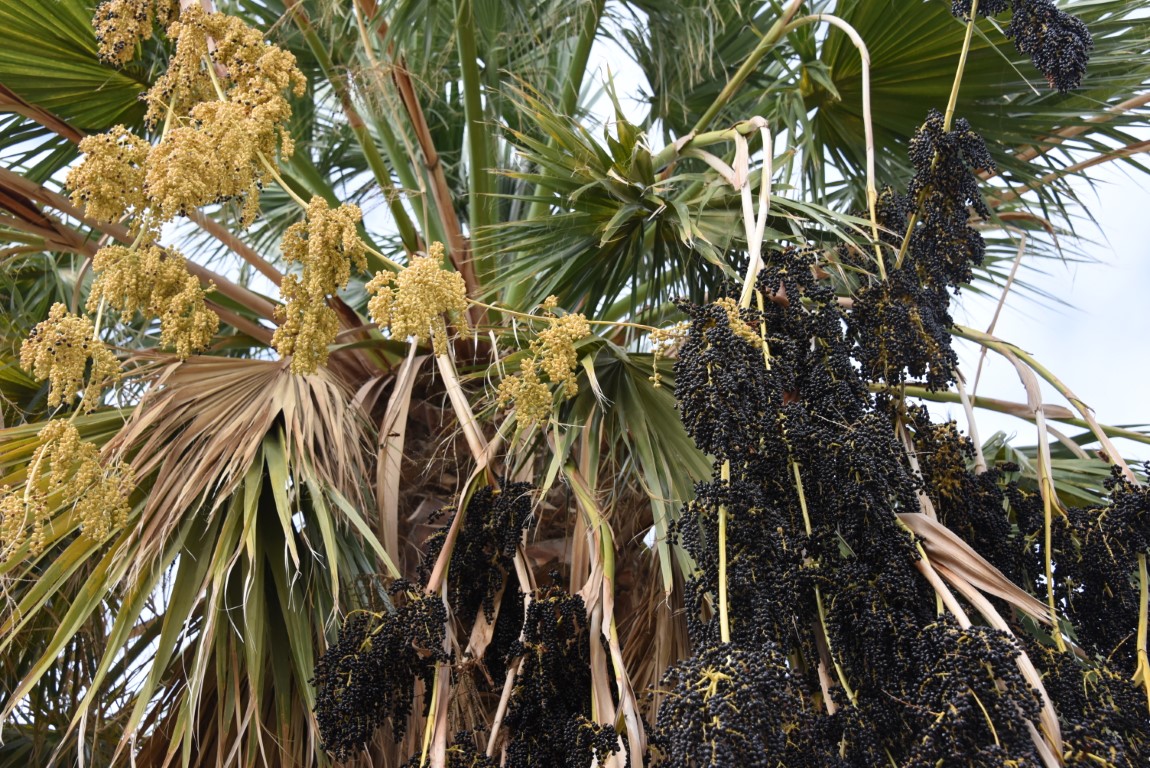
It reproduces exclusively sexually through seeds, as vegetative reproduction has not been observed. Flowering occurs in May and June, with large, branched inflorescences that extend beyond the leaves and bear numerous small, creamy flowers. Pollination is primarily mediated by insects, although self-pollination has been observed in some cases. The fruits are drupes, ranging from spherical to kidney-shaped, 1–2 cm in diameter, which mature in autumn (September–November) and contain a single seed. A mature individual can produce up to 10,000 fruits per season, which are mainly dispersed by animals such as coyotes, foxes, and birds. The coyote is the most effective disperser, as seeds transported through its digestive system travel long distances and show higher germination rates—up to 63%—compared to 34% for seeds that are not ingested. Young plants establish most successfully during wet years, contributing to the natural regeneration of populations in oases and moist desert areas.
It is the only palm species native to the southwestern United States. It is notable for its fire resistance, which enhances fruit production and the establishment of young plants by reducing competition.
The etymological history of the genus Washingtonia is rooted in a profound cultural and botanical controversy of the mid-19th century. In 1854, the name Washingtonia was initially proposed to describe America’s most imposing dendrological specimen, the Giant Sequoia, reflecting a nationalist impetus to honor the first U.S. President, George Washington. However, in the historic 1860 taxonomic dispute known as “Sequoia vs. Washingtonia” the presidential namesake ceded to the allure of Sequoia, which became synonymous with the Cherokee polymath Sequoyah. Consequently, the name remained available within the botanical nomenclature, eventually finding its permanent application in an entirely different genus.
This formal recognition occurred in 1879, when the botanist Hermann Wendland officially designated the California palm genus as Washingtonia. The specific epithet filifera (meaning “thread-bearing”) was assigned due to the characteristic marginal fibers of its fronds, superseding earlier commercial designations such as Brahea or Prichardia. Despite subsequent attempts by taxonomists to introduce synonyms like Neowashingtonia or Washingtonia filamentosa, Wendland’s classification prevailed. In the indigenous Cahuilla language, however, the palm remains traditionally known as “Mau-wal”. Western encounter with the species dates back to 1846, during the military expedition of Major W. W. Emory in California. Near “Ojo Grande” and present-day Palm Springs, the first specimens featuring the distinctive broad, fan-shaped leaves were documented. Washingtonia filifera is autochthonous to the Colorado Desert of Southern California, where its distribution is strictly contingent upon edaphic moisture found in riparian corridors, springs, and oases. The core of its natural populations is situated in alkaline soils north of Indio, with its most prominent stand located in Palm Canyon, at the foothills of the San Jacinto Mountains.
In the contemporary era, the range of W. filifera has expanded far beyond its desert confines. Facilitated by the international horticultural industry, it has become one of the most prevalent ornamental palms globally. From Europe and the Middle East to South Africa and Australia, the tree graces temperate landscapes, contributing to the ecological diversity and trophic networks of its introduced habitats.
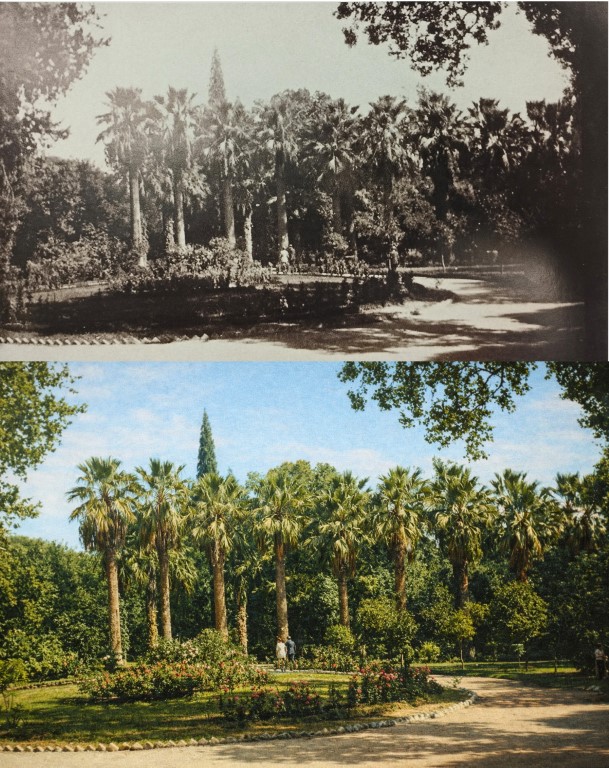
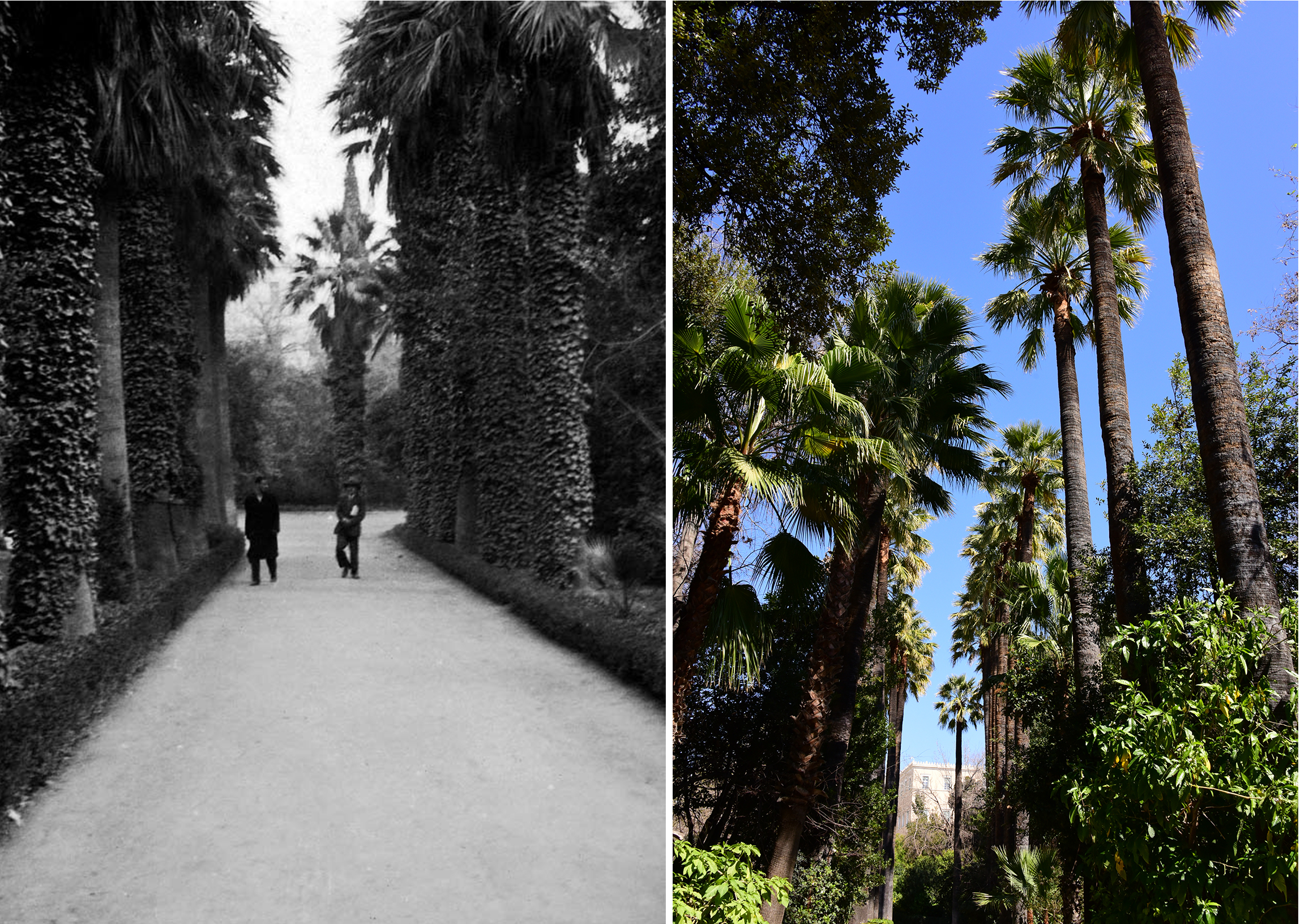
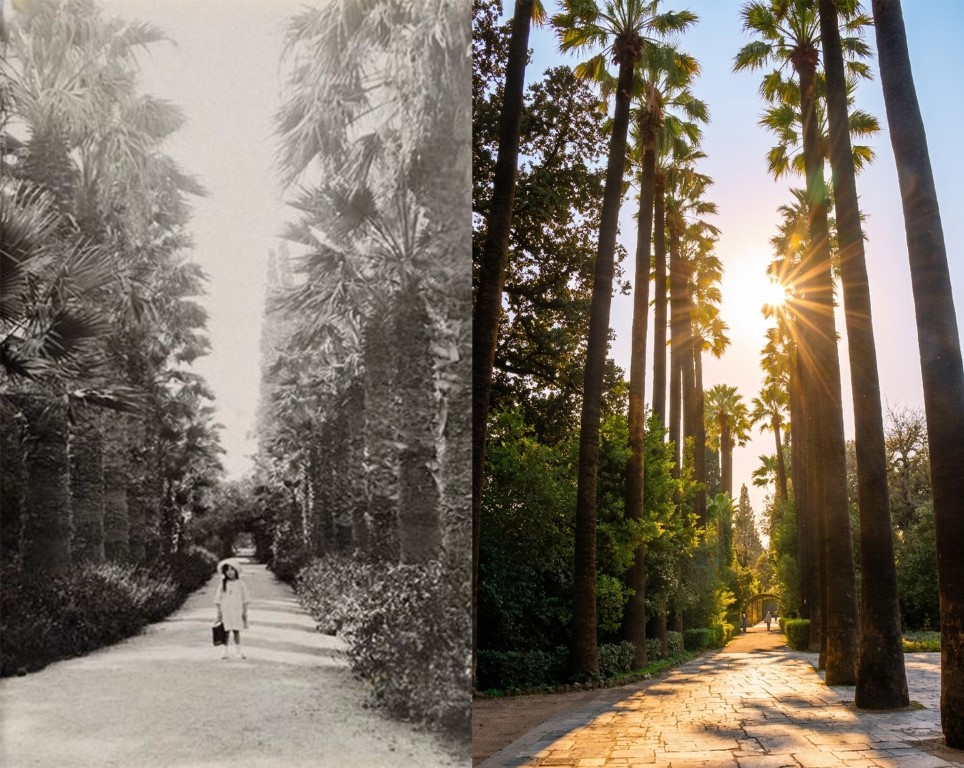
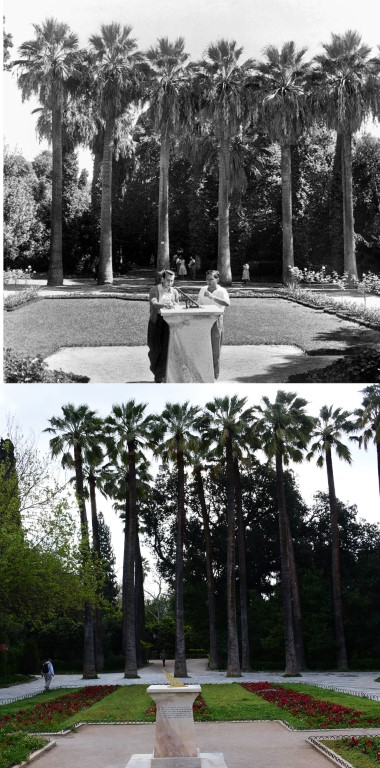
In 1847, plants were transported from Beirut to the National Garden of Athens, leading to the creation of the iconic colonnade of 19 California fan palms located opposite the Amalias Avenue entrance. Several of these original specimens survive to this day, while those lost over time have been replaced with younger individuals to preserve the architectural integrity of the historic landscape.
For the indigenous tribes of the arid regions, specifically the Cahuilla and Paiute, the palm represented more than a botanical specimen; it was a fundamental subsistence resource. These populations practiced a holistic utilization of the plant’s anatomy. The drupes (fruits) were consumed raw, cooked, or desiccated. A prevalent preparation technique involved macerating the fruit with water in stone mortars to produce a saccharine, pulpy mass. Furthermore, the lignified seeds were ground into meal for the production of bread and farinaceous confections, while the apical bud (palm heart) was typically consumed roasted.
The fronds were repurposed for the fabrication of sandals, basketry, and granaries, as well as for the thatching of domestic structures. The woody petioles were fashioned into utilitarian culinary implements, while the filamentous fibers served as durable cordage. Concurrently, these tribes implemented an early form of silvicultural management by systematically burning the persistent dry fronds to facilitate harvesting and stimulate fructification.
In the contemporary era, phytochemical analyses reveal that the foliage and root systems of Washingtonia are prolific in secondary metabolites, including alkaloids, saponins, tannins, and phenolic compounds. These constituents exhibit potent antioxidant, anti-inflammatory, and antimicrobial properties. The seed oil, characterized by high concentrations of oleic acid and tocopherols, finds application in cosmeceutical and pharmaceutical formulations. Additionally, extracts have been shown to inhibit enzymatic activity, specifically elastase and collagenase, highlighting their potential in anti-aging dermatological treatments.
Finally, the species demonstrates a remarkable natural resistance to the Red Palm Weevil (Rhynchophorus ferrugineus). This resilience is attributed to the accumulation of bioactive chalconoids within the leaf tissues, which function as a chemical defense mechanism against the larvae of the coleopteran pest.
(Note: Ethnobotanical data regarding the medicinal uses of plants must be handled with caution, and their application should be carried out exclusively under medical supervision).
- https://powo.science.kew.org/taxon/urn:lsid:ipni.org:names:267788-2
- https://www.iucnredlist.org/species/38725/59318379
- https://www.fs.usda.gov/database/feis/plants/tree/wasfil/all.html
- Alpresem, W. F., et al. (2025). Detection of medicinally Effective Compounds in Two Genera of Ornamental Palm Leaves and Roots (washingtonia filifera and Phoenix sp.) IOP Conference Series: Earth and Environmental Science, 1487(1), 012047. https://doi.org/10.1088/1755-1315/1487/1/012047
- Busse, M. & Busse V. (2011). Unpublished letters of Queen Amalia to her father, 1836-1853. Vols. 1-2. Estia publication
- Cangelosi, B., Clematis, F., Monroy, F., Roversi, P. F., Troiano, R., Curir, P., & Lanzotti, V. (2015). Filiferol, a chalconoid analogue from Washingtonia filifera possibly involved in the defence against the Red Palm Weevil Rhynchophorus ferrugineus Olivier. Phytochemistry, 115, 216–221. https://doi.org/10.1016/j.phytochem.2015.02.011
- Era, B., Floris, S., Sogos, V., Porcedda, C., Piras, A., Medda, R., Fais, A., & Pintus, F. (2021). Anti-aging potential of extracts from Washingtonia filifera seeds. Plants, 10(1), 151.
- Jalil, P. J., Mhamedsharif, R. M., Shnawa, B. H., Al-Qaradaghi, S. Y., Mustafa, S. A., & Al-Zubaydi, A. S. (2025). Biosynthesis of ZnO nanoparticles using Washingtonia filifera seed extract and assessment of their anti-inflammatory and antimicrobial efficacy. Journal of Cluster Science, 36, Article 31.
- Lippincott, J. H. (1860). Sequoia versus Washingtonia. The Gardener’s Monthly, Devoted to Horticulture, Arboriculture, Botany & Rural Affairs, 2(3), 75–77.
- Mahood, H. E., Sarropoulou, V., Tsapraili, T., & Tzatzani, T.-T. (2026). In vitro phytochemical profiling, and antioxidant activity analysis of callus and cell suspension cultures of Washingtonia filifera elicited with chitosan. Agronomy, 16(1), 106. https://doi.org/10.1080/20734395.2026.106
- Parish, S. B. (1907). A contribution toward a knowledge of the genus Washingtonia. Botanical Gazette, 44(6), 408–433
- Spennemann, D. H. R. (2020). Palms fanning out: a review of the ecological provisioning services provided by Washingtonia filifera and W. robusta in their native and exotic settings. Plant Ecology & Diversity, 13(3–4), 289–324. https://doi.org/10.1080/17550874.2020.1819465
- Venetas, A. (2008). Amalia’s Garden: Design, establishment and evolution of the National Garden of Athens. Ikaros publication.
During each season you will see:
SPRING
New leaves,
flowers
SUMMER
Leaves, flowers,
immature fruit
AUTUMN
Leaves,
mature fruit
WINTER
Leaves
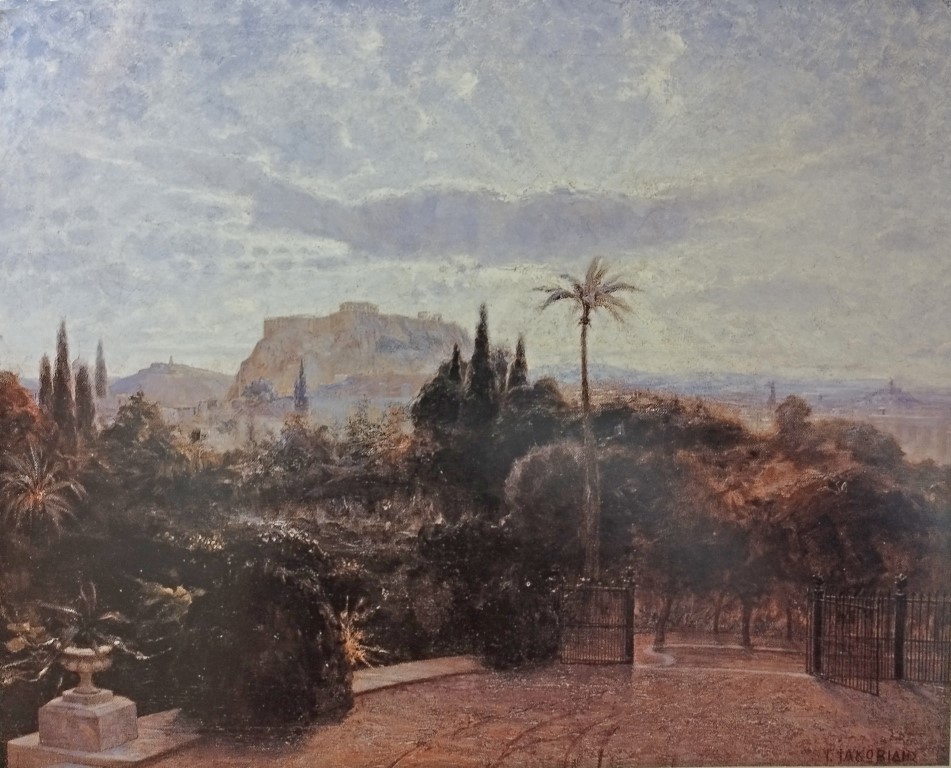
References in Αrt
Το είδος Washingtonia filifera απεικονίζεται συχνά σε έργα τέχνης και εικονογραφήσεις ως εμβληματικό στοιχείο των ερημικών οάσεων της Καλιφόρνια, συμβολίζοντας τη ζωή και το νερό μέσα στο ξηρό τοπίο, ενώ χρησιμοποιείται συχνά στην αρχιτεκτονική τοπίου.